Chicken Coop Plans: Sizing It Right Before You Build
Most coop plans get ventilation and predator-proofing wrong. The dimensions that actually matter, what to build from, and a step-by-step order of work.

On this page
Most free coop plans online are drawn by people who like building things rather than people who have kept chickens through a wet winter and a determined raccoon. They tend to be charming, under-vented, and wrapped in chicken wire. Three details decide whether a coop works: size, ventilation, and what you screen it with. Everything else is carpentry.
Size: the only number worth arguing about
| Hens | Coop floor | Practical footprint | Run | Roost length | Nest boxes |
|---|---|---|---|---|---|
| 3 | 12 sq ft | 3x4 ft | 30 sq ft | 3 ft | 1 |
| 4 | 16 sq ft | 4x4 ft | 40 sq ft | 4 ft | 1–2 |
| 6 | 24 sq ft | 4x6 ft | 60 sq ft | 5 ft | 2 |
| 8 | 32 sq ft | 4x8 ft | 80 sq ft | 7 ft | 2–3 |
| 12 | 48 sq ft | 6x8 ft | 120 sq ft | 10 ft | 3–4 |
Build for one bird more than you intend to keep. Flock sizes creep, and the cost of a slightly larger coop at build time is trivial next to the cost of rebuilding — or of the feather-pecking and disease that crowding brings.
Make it a walk-in if you can
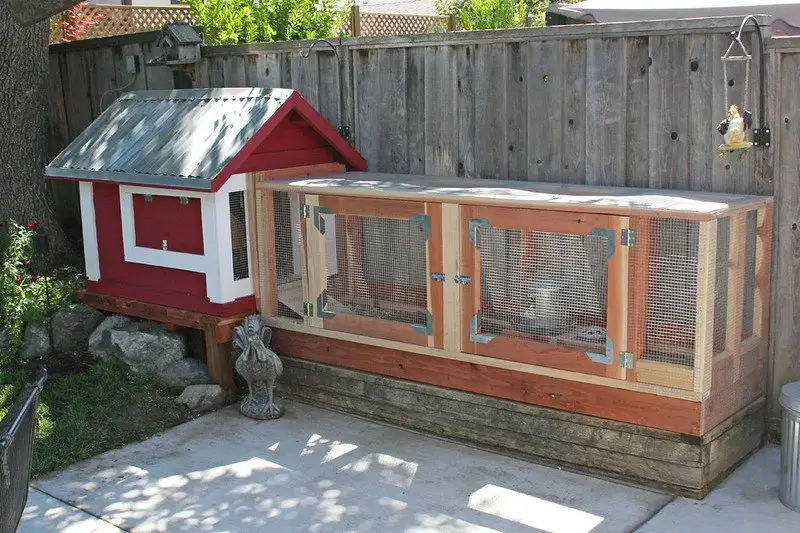
A coop you can stand up in gets cleaned properly every week. A low box you have to reach into through a hatch gets cleaned when it starts to smell. Over a few years that difference shows up in the birds’ respiratory health, and it costs very little at the framing stage.
Ventilation is the detail people get wrong
It is counterintuitive, so it is worth stating plainly: a cold, well-ventilated coop is far healthier than a warm sealed one.
Chickens produce a surprising amount of moisture through droppings and breathing. In a sealed coop that moisture condenses, ammonia accumulates from the litter, and both attack the birds’ airways. Worse, frostbite is a moisture problem — damp air freezes on combs and wattles at temperatures dry air would not touch.
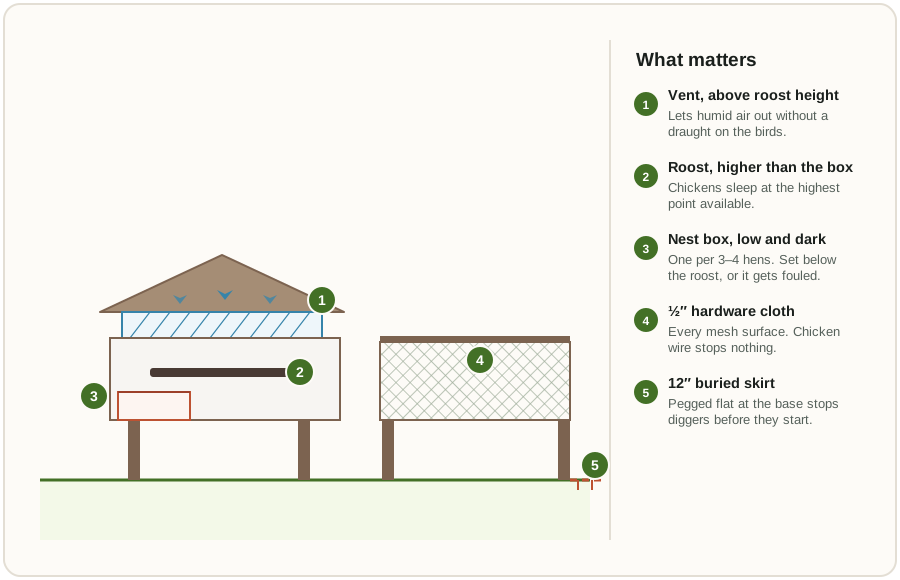
So: roughly 1 square foot of permanent, year-round opening per 10 square feet of floor, positioned above the birds’ heads and screened with hardware cloth. High vents let humid air rise out without a draught blowing across roosting birds.
Ventilation is not the same as a draught
Openings at roost height chill the birds directly and are what people are really objecting to when they say a coop is “too draughty”. Vent high, under the roof overhang. Never close vents in winter.
Hardware cloth, not chicken wire
The single most consequential material choice, and the one prefab kits get wrong to save money.
Chicken wire is a light hexagonal mesh designed to keep chickens contained. A raccoon tears through it, a dog pulls it off its staples, and weasels and rats pass through the gaps unimpeded.
Half-inch hardware cloth is a welded steel grid. It costs more, it is stiffer and less pleasant to cut, and it is the difference between a flock and a bad morning.
Use it on every window, every vent, and every run panel. Staple every 4 inches and cover the cut edges with a wooden batten — staples pull out under sustained effort, and a raccoon has all night.
The skirt
Foxes, dogs, and raccoons dig at the base of a wall rather than tunnelling from a distance. A 12-inch apron of hardware cloth laid flat on the ground, pegged down and covered with soil or turf, defeats that: they hit steel a foot from the wall and give up.
It is much less work than burying a barrier vertically and it works at least as well.
Roosts and nest boxes, in that order
Allow 8–12 inches of roost per bird, using a 2x4 laid flat rather than a round bar — chickens sleep flat-footed and cover their toes with their breast feathers in the cold, which a narrow perch prevents.
Set roosts 2–4 feet off the floor and higher than the nest boxes. Chickens instinctively sleep at the highest available point. If the nest boxes are higher, they will sleep in them, foul them nightly, and you will be washing eggs all year.
Nest boxes: one per three or four hens, roughly a 12-inch cube, set low and in the darkest corner. Building more does not help — hens queue for whichever box the dominant one prefers.
Order of work
Frame the base and floor, then walls, then roof, then screen everything, then fit latches, then bed it. Do the predator-proofing before the birds arrive: retrofitting hardware cloth around a resident flock is unpleasant work and it tends to get done to a lower standard.
If this is your first flock, the wider question of space, cost, and what you are taking on is covered in what keeping backyard chickens actually takes. And if a fixed coop is not necessarily the right structure for how you want to keep birds, types of chicken coops compares this against a tractor, an A-frame, and a mobile coop before you commit to building.
Step by step
- Time
- P2D
- Cost
- $450
- You need
- Pressure-treated 4x4 posts or concrete blocks for the base, 2x4 framing lumber, Exterior plywood or cladding, Half-inch hardware cloth, Roofing — metal sheet or shingles, Two-step or barrel-bolt latches
- Tools
- Circular saw, Drill/driver, Staple gun or fencing staples, Tin snips, Spirit level
Size it from the flock, then add one bird
Allow 4 square feet of coop floor and 8–10 square feet of run per bird. For four hens that is a 4x4 ft coop and a 4x10 ft run. Build for one more bird than you plan to keep — flocks grow, and crowding causes more problems than any other single factor.
Raise it off the ground
Set the coop 12–18 inches up on posts or blocks. It keeps the floor dry, denies rats and snakes a nesting space underneath, and gives the birds shade and a dust-bathing spot in the run.
Frame the floor and walls
Build a 2x4 floor frame, deck it with exterior plywood, then frame the walls. Keep a full-height door on one side — you will be cleaning this every week, and a coop you can only reach into through a hatch gets cleaned badly.
Cut ventilation high, above roost height
Allow roughly 1 square foot of permanent vent per 10 square feet of floor, placed above the birds' heads and covered with hardware cloth. Ventilation removes the ammonia and moisture that cause respiratory disease and frostbite. It must never blow directly across the roost.
Fit roosts before nest boxes, and higher than them
Allow 8–12 inches of roost per bird, using a 2x4 laid flat so they can cover their feet in winter. Set roosts 2–4 feet up and higher than the nest boxes — chickens sleep at the highest point available, and if the boxes are higher they will sleep and foul in them.
Add one nest box per three or four hens
Twelve inches cube is about right, set low, in the darkest corner. More boxes than that go unused; hens queue for the same favourite box regardless of how many you build.
Clad everything in half-inch hardware cloth
Every window, vent, and run panel. Chicken wire keeps chickens in and nothing out — a raccoon tears through it and a weasel walks through the gaps. Staple it every 4 inches and cover the edges with a batten.
Skirt the perimeter against diggers
Run hardware cloth 12 inches out from the base of the run, laid flat on the ground and pegged down, then cover it with soil or turf. Foxes and dogs dig at the base of the wall, hit the skirt, and give up. This is easier than burying it and works as well.
Fit latches a raccoon cannot open
Raccoons work simple hook and slide latches without difficulty. Use two-step latches, barrel bolts with a spring clip, or anything needing two separate actions. Fit them on every door, including the nest-box lid and the pop door.
Roof it, then bed it
Overhang the roof by 6 inches on all sides to keep rain out of the vents. Bed the floor 4–6 inches deep in pine shavings or chopped straw for the deep-litter method — never cedar, whose oils irritate poultry airways.
Common questions
How big should a chicken coop be for 4 chickens?
Where can I get free chicken coop plans?
How much ventilation does a chicken coop need?
Can I use chicken wire on a coop?
Do chicken coops need to be insulated?
How much does it cost to build a chicken coop?
Backyard Weekly
Know what to plant, week by week
Free planting calendar. Join the weekly email for seasonal jobs, fixes for what is going wrong, and gear worth buying.
Set MONETIZATION.email.endpoint in src/config/site.ts to enable this form.
By subscribing you agree to our privacy policy. Grow In Backyard will never sell your address.
Keep reading
Types of Chicken Coops: Which One Actually Fits Your Yard
Fixed, tractor, walk-in, A-frame — each solves a different problem. What each style is actually for, before you commit to building or buying one.

Backyard Chickens: What It Actually Takes
Space, cost, time, and the rules nobody mentions. An honest account of keeping backyard chickens before you buy the coop — including why the eggs are not free.
How Long Do Chickens Live? (5–10 Years, With Caveats)
Backyard hens typically live 5–10 years, but breed and predators change that dramatically. The realistic lifespan, and what actually shortens it.
Best Chicken Coops You Can Buy (and When Building Is Cheaper)
Prefab coops range from genuinely good to a raccoon's first target. What to check before buying one, sized by flock, and when building instead saves real money.