Do Ducks Eat Fish? What That Means for a Backyard Pond
Most backyard duck breeds will eat small fish, fry and eggs opportunistically. The bigger threat to your pond is not predation — it is what ducks do to the water.

On this page
Yes — ducks eat fish when they can catch them. But if you are asking because you are weighing ducks against a pond, the predation is not the part that will cause you trouble.
What ducks actually eat
A duck is an omnivore with a broad, opportunistic diet:
- Aquatic plants and algae — a large share of it
- Seeds and grain
- Insects, larvae, worms — and, famously, slugs and snails
- Small crustaceans
- Small fish, fry, eggs, tadpoles — whenever they can be caught
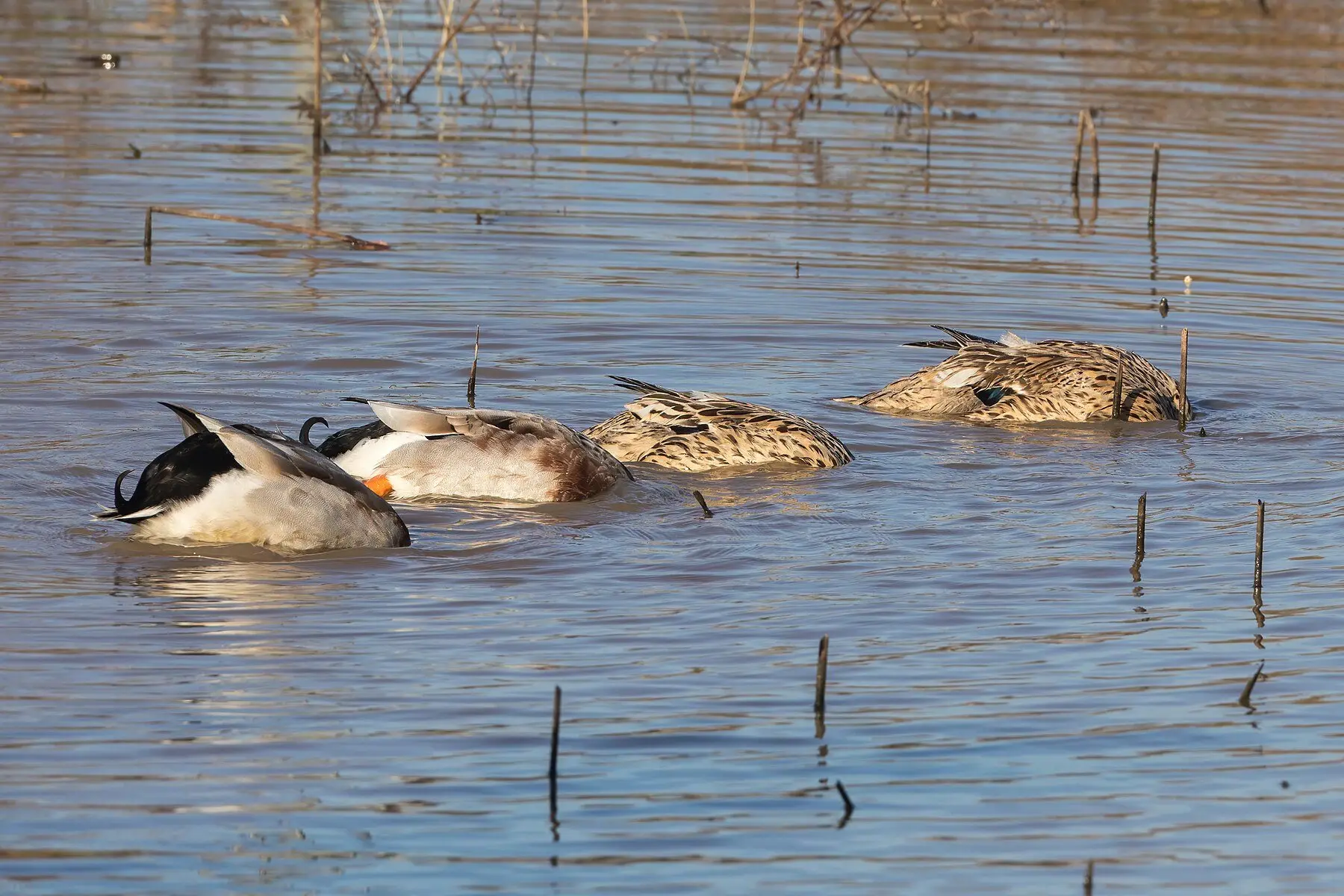
Domestic breeds descend from the mallard, a dabbling duck that feeds by upending in the shallows rather than pursuing fish. So your Khaki Campbells are not hunting your pond; they are hoovering the shallows and swallowing whatever turns up in them.
Mergansers are the genuine fish specialists, with serrated bills for gripping them — but those are wild birds, not backyard stock.
What is at risk, and what is not
| At risk? | |
|---|---|
| Koi or goldfish over 6 inches | Safe from being eaten |
| Juvenile fish and fry | Eaten |
| Fish eggs | Eaten |
| Tadpoles, small frogs, newts | Eaten |
| Oxygenating and marginal plants | Uprooted and grazed |
| Water clarity | Wrecked — constant sediment stirring |
| Water chemistry | Degraded — ammonia, nitrate, phosphate |
| Soft banks | Eroded |
The short version: mature fish survive ducks, and a breeding population of fish or amphibians does not.
The real problem is the water
Ducks defecate more or less continuously, and in a pond that all goes into the water. A single duck produces a surprising nutrient load, and the consequences stack up:
- Ammonia spikes, which are directly toxic to fish
- Nitrate and phosphate loading, feeding algal blooms and green water
- Oxygen crashes, especially in warm weather when a bloom dies back and decomposes
- Permanent cloudiness from dabbling in the sediment
A pond that was clear and balanced with fish in it can turn over within a season of adding a few ducks. This is eutrophication in miniature, and it is what actually kills established koi — not being eaten.
Never feed ducks bread
Bread is nutritionally close to empty for a duck and contributes to angel wing, a deformity in growing birds that leaves them permanently unable to fly. It also fouls water fast. Cracked corn, oats, peas, lettuce, and proper waterfowl pellets are all genuinely good for them.
Keeping both, if you want both
It is doable, at scale and with effort:
- Surface area. Allow at least 100 square feet per duck, and more if you can. Dilution is most of the solution.
- Filtration well beyond the fish load. Size the system for the ducks, then add the fish requirement on top.
- Fish big enough not to be food — 6 inches plus before ducks arrive.
- Protect the plants. Cage marginal and oxygenating plants, or rebuild the planting in gravel-topped baskets that resist dabbling.
- Harden the banks with stone or gravel where the ducks get in and out.
- Test the water. Ammonia and nitrate, regularly, not just when something looks wrong.
The simpler answer: give the ducks their own pool. A hard-sided kiddie pool or a stock tank that you tip out and refill every couple of days keeps them entirely happy — ducks need water deep enough to dunk their heads and preen, not a designed pond — and it leaves the fish pond alone.
That drained water is excellent on a vegetable bed, incidentally. It is dilute fertilizer.
And in the vegetable garden
Worth knowing if ducks are a maybe: they are far better garden companions than chickens. Ducks eat slugs and snails enthusiastically, they do not scratch beds apart the way chickens do, and they largely ignore established plants.
They will trample seedlings and puddle up wet soil into mud, so keep them out of newly sown beds. But turned loose in an established plot, a couple of ducks are the most effective slug control available.
Common questions
Do ducks eat fish?
Will ducks eat my koi or goldfish?
Can ducks and fish live in the same pond?
What do ducks mostly eat?
Are ducks bad for a garden pond?
Do ducks eat tadpoles and frogs?
Backyard Weekly
Know what to plant, week by week
Free planting calendar. Join the weekly email for seasonal jobs, fixes for what is going wrong, and gear worth buying.
Set MONETIZATION.email.endpoint in src/config/site.ts to enable this form.
By subscribing you agree to our privacy policy. Grow In Backyard will never sell your address.
Keep reading
Can Ducks Eat Chicken Feed? Mostly, With One Fix
Chicken feed will not harm ducks, but it falls short on niacin. What to add if you free-feed a mixed flock, and the one chicken feed to avoid entirely.
How to Keep Ducks Out of a Swimming Pool, Humanely
Ducks pick pools for open water and no predators. Removing what attracts them works; chasing them does not, and in most places harming them is illegal.
How Long Do Koi Live? 25 to 35 Years, With Caveats
Koi routinely outlive the pond they were bought for. What actually sets lifespan, the volume they need, and why the famous 226-year fish is not the benchmark.
Are Corn Snakes Poisonous? No, and Not Venomous Either
Corn snakes are harmless constrictors often killed on sight because they mimic copperheads. How to tell them apart, and why one is worth keeping around.