How to Grow an Avocado: From a Pit, and From a Tree
A pit sprouts easily and almost never fruits. What the toothpick trick produces, why grafted trees exist, and the A/B flowering quirk that decides pollination.

On this page
Sprouting an avocado pit is one of the most satisfying things you can do with kitchen waste, and it is worth being clear about what you get: a handsome foliage plant that will almost certainly never fruit.
That is not a failure of technique. It is what avocados do.
Why a pit will not give you the avocado you ate
Every avocado pit carries genes from two parents, so a seedling is a genetic lottery — the same reason an apple seed never gives you the apple you ate.
Hass, Fuerte, Reed and the rest are clones, propagated by grafting a cutting of a known variety onto a rootstock. Every Hass avocado in the world descends from a single tree in California.
So the honest framing:
| From a pit | Grafted nursery tree | |
|---|---|---|
| Cost | Free | $30–80 |
| Time to flower | 5–13 years, if ever | 3–4 years |
| Fruit quality | Unpredictable; often poor | True to variety |
| Size | Very large eventually | Often on dwarfing rootstock |
| Realistic outcome | A houseplant | A fruit tree |
Sprouting the pit
The toothpick method: wash the pit, work out which end is which — the flatter, wider end is the base, the pointier end is the top — push three or four toothpicks into the sides, and rest it on a glass so the bottom third sits in water. Warm spot, change the water every few days.
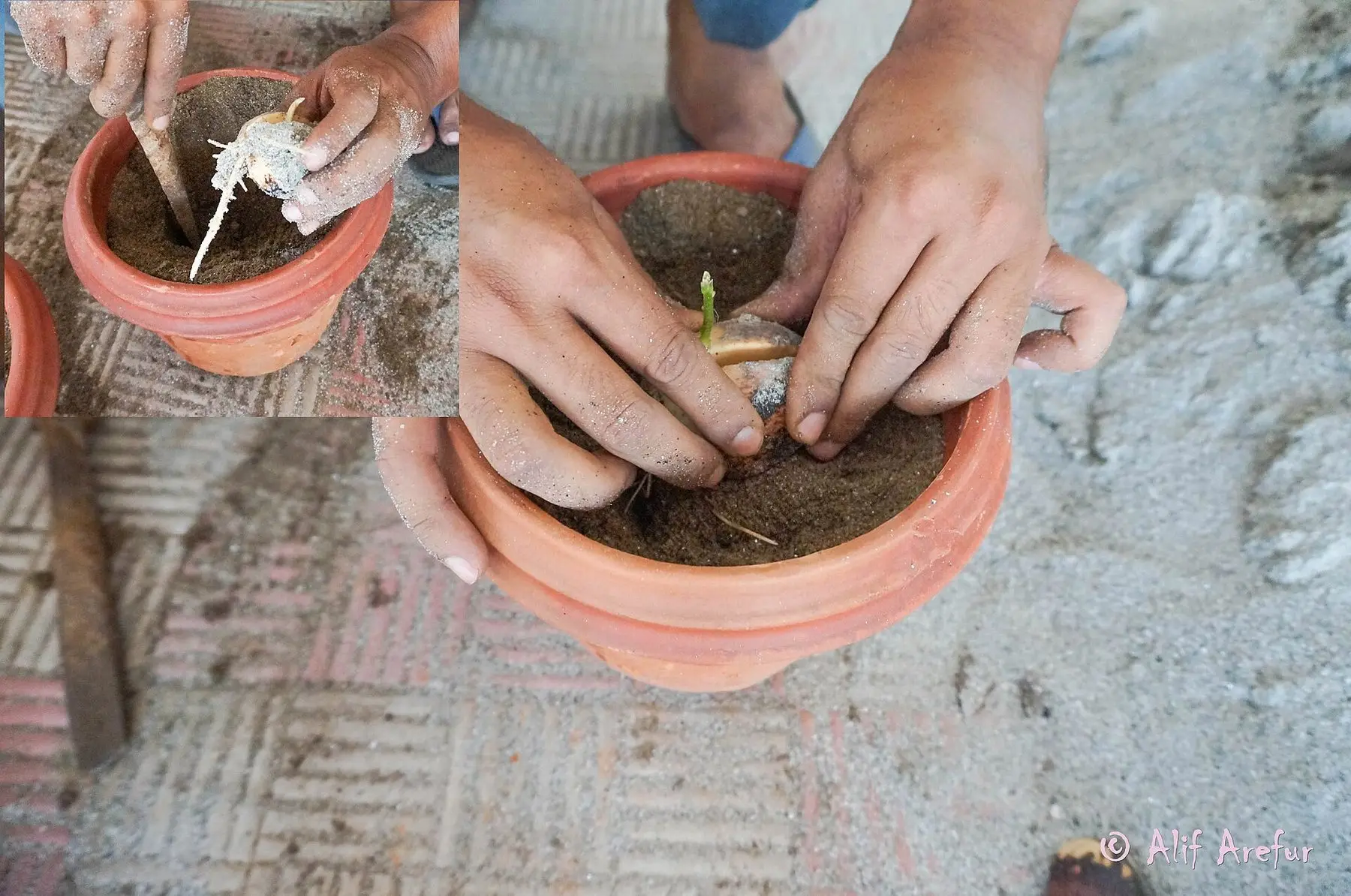
The simpler method: plant it halfway into moist compost, pointed end up. This works just as well, rots less often, and skips the transplant.
Either way, expect two to eight weeks, and expect some pits to do nothing. The pit splits, a thick root comes from the base, and a shoot follows from the top.
Discard anything that goes soft or mouldy rather than persevering.
Pinch it early or you get a pole
Avocados grow as a single leader and drop their lower leaves as they gain height, so an unpinched plant becomes a bare stem with a tuft at the top within a year. Pinch the growing tip out at about 12 inches, then pinch each new shoot once it has a few leaves. It feels drastic on a plant you waited two months for, and it is the difference between a shrub and a stick.
Keeping it alive
Light: bright indirect, or direct morning sun. It wants more than most houseplants.
Water: when the top inch or two is dry. Free-draining mix, generous drainage holes, never standing in a saucer. Avocados are notably prone to root rot — see potting soil for what an open mix needs.
Temperature: above 50°F. Most varieties are damaged below about 30°F.
Humidity: average is acceptable; more is better. Brown crispy leaf tips are common indoors and usually mean salt build-up from tap water rather than dry air — flush the pot through with plenty of water occasionally.
Feed: balanced fertiliser through spring and summer, nothing in winter.
Repot as it grows, but avocados dislike root disturbance, so go up one pot size at a time.
Growing for fruit
Buy a grafted tree of a named variety suited to your climate.
Then the quirk worth knowing: avocado flowers are dichogamous — each flower opens first as female, closes, and reopens later as male. Varieties are grouped by the timing:
- Type A — female in the morning, male the following afternoon (Hass, Reed, Pinkerton)
- Type B — female in the afternoon, male the following morning (Fuerte, Bacon, Zutano)
Planting one of each overlaps the phases and substantially improves fruit set. A single tree will usually set some fruit on its own, so this is an improvement rather than a requirement.
In cold climates, grow a dwarf variety in a large container, summer it outdoors and bring it under cover before frost. Fruit is genuinely achievable that way; fruit from an indoor pit-grown plant is not.
What goes wrong
Brown crispy leaf tips — salt build-up from tap water. Flush the pot.
Yellowing leaves — usually overwatering; check the soil before adding more.
Leaf drop after a move — avocados dislike change and will shed. Usually recovers.
Tall and bare — not pinched.
Never flowers — it is a seedling. That is the expected outcome, not a problem to solve.
Step by step
- Time
- P1825D
- Cost
- $40
- You need
- An avocado pit, or a grafted nursery tree, Free-draining potting mix, Balanced fertiliser
- Tools
- Toothpicks and a glass, or a small pot, Secateurs, A large container with generous drainage
Decide what you actually want
A houseplant or a fruiting tree. From a pit you get an attractive foliage plant that will take 5 to 13 years to flower, if ever, and will not produce fruit like the one you ate. For fruit, buy a grafted tree of a named variety, which fruits in 3 to 4 years.
Sprout the pit in water or compost
Wash the pit, identify the flatter base and the pointed top, and suspend it with toothpicks so the bottom third sits in water — or simply plant it halfway in moist compost, which works as well and rots less often. Keep it warm and change the water every few days.
Wait, and expect two to eight weeks
The pit splits, a root emerges from the base, then a shoot from the top. This is slow and inconsistent. Discard any pit that goes soft or mouldy rather than persevering with it.
Pot it once the root is a few inches long
Move it into free-draining potting mix in a pot with generous drainage, leaving the top half of the pit above the surface. Avocados rot readily in wet compost, so drainage matters more than richness.
Pinch the top to force branching
A pit-grown avocado grows as a single stem and becomes a bare pole. Pinch the growing tip when it reaches about 12 inches, and again on the new shoots. Without this you get height and no shape.
Give it bright light and moderate water
Bright indirect light or direct morning sun, temperatures above 50°F, and water only when the top inch or two is dry. Brown crispy leaf tips usually mean salt build-up from tap water — flush the pot through occasionally.
For fruit, plant a grafted tree and consider a partner
Grafted trees fruit in 3 to 4 years and stay true to variety. Avocado flowers open as female then male on different schedules — type A and type B — so planting one of each greatly improves fruit set, though a single tree will usually set some fruit alone.
Protect from frost and feed lightly
Most avocados are damaged below about 30°F, with some cold-hardy varieties tolerating lower. In cold climates grow in a large container and move it under cover for winter. Feed a balanced fertiliser through the growing season, and stop in winter.
Common questions
Will an avocado grown from a pit produce fruit?
Does the toothpick and water method work?
What is the difference between type A and type B avocados?
How long does an avocado tree take to fruit?
Why is my avocado plant tall and bare at the bottom?
Can you grow an avocado tree indoors?
Backyard Weekly
Know what to plant, week by week
Free planting calendar. Join the weekly email for seasonal jobs, fixes for what is going wrong, and gear worth buying.
Set MONETIZATION.email.endpoint in src/config/site.ts to enable this form.
By subscribing you agree to our privacy policy. Grow In Backyard will never sell your address.
Keep reading
How to Grow an Apple Tree From Seed (Read This First)
Apple seeds grow, but never into the apple you ate — every seed is a new variety. How to germinate them anyway, and what you will actually get.
How Do Pineapples Grow? On the Ground, One Per Plant
Pineapples do not grow on trees but on a low ground plant, one fruit per plant, from hundreds of flowers fused into one. How they grow, and how long it takes.
Can You Grow a Banana Tree From a Banana? Not From That
Supermarket bananas are seedless clones, so there is nothing in one to plant. What actually works is a pup or a corm — and a banana is not a tree at all.
How Deep to Plant Potatoes (And Why Hilling Matters More)
Four inches at planting, then hill as they grow. Why planting deep in cold spring soil backfires, and how depth differs in containers and no-dig beds.