How to Grow Peppers: Start Early, Then Keep Them Warm
Peppers need more heat than tomatoes and stall in cool nights. When to sow, the temperature range that makes flowers drop, and why to feed them less than you think.
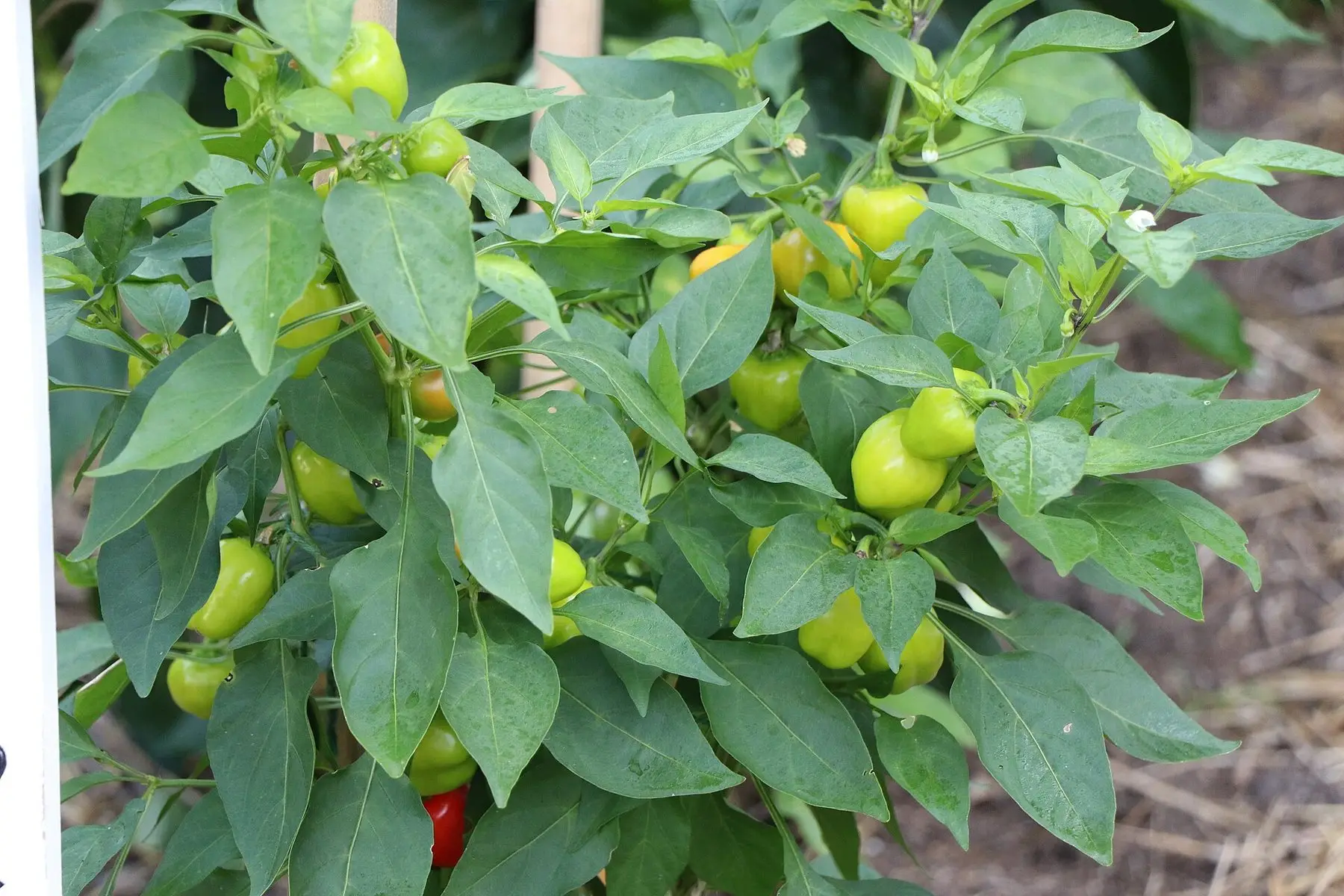
.JPG)
On this page
Peppers are grown alongside tomatoes and treated like tomatoes, and that is where most of the trouble starts. They need more heat, more time, and less feeding.
Start them when you start your tomatoes and you will be planting out undersized plants that never catch up.
Starting from seed
Timing: eight to ten weeks before your last frost date. Hot varieties want the longer end, because they take 90 to 150 days from transplant.
Heat: this is the part people miss. Pepper seed wants 80 to 90°F to germinate well. At room temperature it germinates erratically over three weeks or more, and half of it may not come up at all. A heat mat under the tray transforms the result — most seed up within a week.
Light is irrelevant until they emerge. Warmth is everything.
Once up, light becomes everything instead. Peppers stretch badly in weak light. A bright south window is marginal; a simple grow light a few inches above the seedlings is much better.
Bury a leggy pepper seedling, but only to the seed leaves
Peppers do not root along a buried stem the way tomatoes do, so the trench-planting trick that fixes leggy tomatoes does not apply. You can pot on slightly deeper — up to the seed leaves — and no further, or the buried stem may rot. The real answer is more light earlier.
Planting out
Wait for warm nights. Nights reliably above 55 to 60°F, which is usually two to three weeks after your last frost. Peppers set into cold soil sit still and sulk, and a plant put out a fortnight later routinely overtakes one rushed out early.
Harden off over a week or ten days.
Spacing: 18 to 24 inches apart. Some growers plant peppers closer deliberately so the plants shade each other’s fruit and prevent sunscald — that works, at some cost in airflow.
Soil: well-drained, moderately fertile, pH 6.0 to 6.8, with compost worked in.
Water, feed, and the nitrogen trap
Water consistently — about an inch a week, deep rather than frequent, at the base. Mulch two to three inches to hold it steady. Erratic watering causes blossom end rot on peppers exactly as it does on tomatoes, and for the same calcium-transport reason.
Feed lightly. Balanced fertiliser until the first flowers set, then switch to high potassium every one to two weeks.
Too much nitrogen gives a magnificent dark-green plant with almost no fruit. Peppers are more sensitive to this than tomatoes, and it is the most common reason a healthy-looking plant produces nothing.
Flower drop
Peppers drop flowers readily, and it is nearly always temperature:
| Cause | Detail | What to do |
|---|---|---|
| Night temperature above ~75°F | Pollen becomes non-viable | Shade cloth in heat waves; wait it out |
| Night temperature below ~60°F | Fruit set fails | Plant out later; use cloches early |
| Very dry air | Pollen does not transfer | Water consistently; shake the plant gently |
| Too much nitrogen | Vegetative growth over fruiting | Switch to potassium |
| Very young plant | Normal — it is prioritising growth | Pinch the first flowers off |
Hand-pollination is easy and often worth it under cover, where there is no wind and no insects: a gentle tap on the stem, or a small brush inside the flowers.
Support and sunscald
Pepper branches are brittle and snap under a load of fruit. Stake or cage plants that are carrying well — a single stake and soft ties is usually enough.
Sunscald — pale, papery, sunken patches on the fruit — happens when fruit is exposed to intense direct sun, often after leaves have been removed or lost to disease. Keep the canopy intact, and use shade cloth in extreme heat.
Harvest
Peppers are edible at any stage, but colour is where the flavour is.
- Green — the immature stage of most varieties. Firm, grassy, less sweet.
- Red, yellow, orange, purple, chocolate — fully ripe. Sweeter, higher in vitamin C, and in hot varieties, hotter.
Waiting for colour costs you time and total yield, because a ripening fruit slows the plant’s production of new ones. Picking green keeps a plant producing longer. Neither is wrong — decide which you want.
Cut, do not pull. Pepper stems snap easily and pulling takes the branch with it. Use snips and leave a short stub.
Picking regularly keeps the plant setting new fruit. As with cucumbers, a plant allowed to fully ripen everything it carries slows down.
Overwintering
Peppers are perennials grown as annuals. In a mild climate, or under cover, you can cut a plant back hard in autumn, keep it barely moist and above 55°F, and start it again in spring.
An overwintered plant fruits weeks earlier than a new seedling, which matters most for hot varieties with very long seasons.
Common questions
When should you start pepper seeds?
What temperature do pepper seeds need to germinate?
Why are my pepper plants flowering but not setting fruit?
Do peppers need a lot of fertiliser?
Should you prune pepper plants?
How long do peppers take to grow?
Backyard Weekly
Know what to plant, week by week
Free planting calendar. Join the weekly email for seasonal jobs, fixes for what is going wrong, and gear worth buying.
Set MONETIZATION.email.endpoint in src/config/site.ts to enable this form.
By subscribing you agree to our privacy policy. Grow In Backyard will never sell your address.
Keep reading
Types of Hot Peppers, Ranked by Heat and What They Taste Like
Scoville is only half the story — a habanero and a serrano at similar heat behave completely differently in a pan. Thirty peppers by heat, flavour, and best use.
How to Grow Tomatoes: Determinate or Indeterminate First
That one word on the seed packet decides your spacing, your pruning, and your harvest shape. Then it is warmth, consistent water, and feeding at the right time.
Best Fertilizer for Tomatoes: Nitrogen Early, Potassium Late
Feeding tomatoes the same thing all season is why plants go enormous and green with little fruit. What to switch to, when, and why calcium is not the answer.
How Deep to Plant Potatoes (And Why Hilling Matters More)
Four inches at planting, then hill as they grow. Why planting deep in cold spring soil backfires, and how depth differs in containers and no-dig beds.