How to Lower Soil pH: What Works and How Long It Takes
Elemental sulfur is the reliable way to acidify soil, and it takes months. What to use, how much, and why coffee grounds and vinegar do not work.
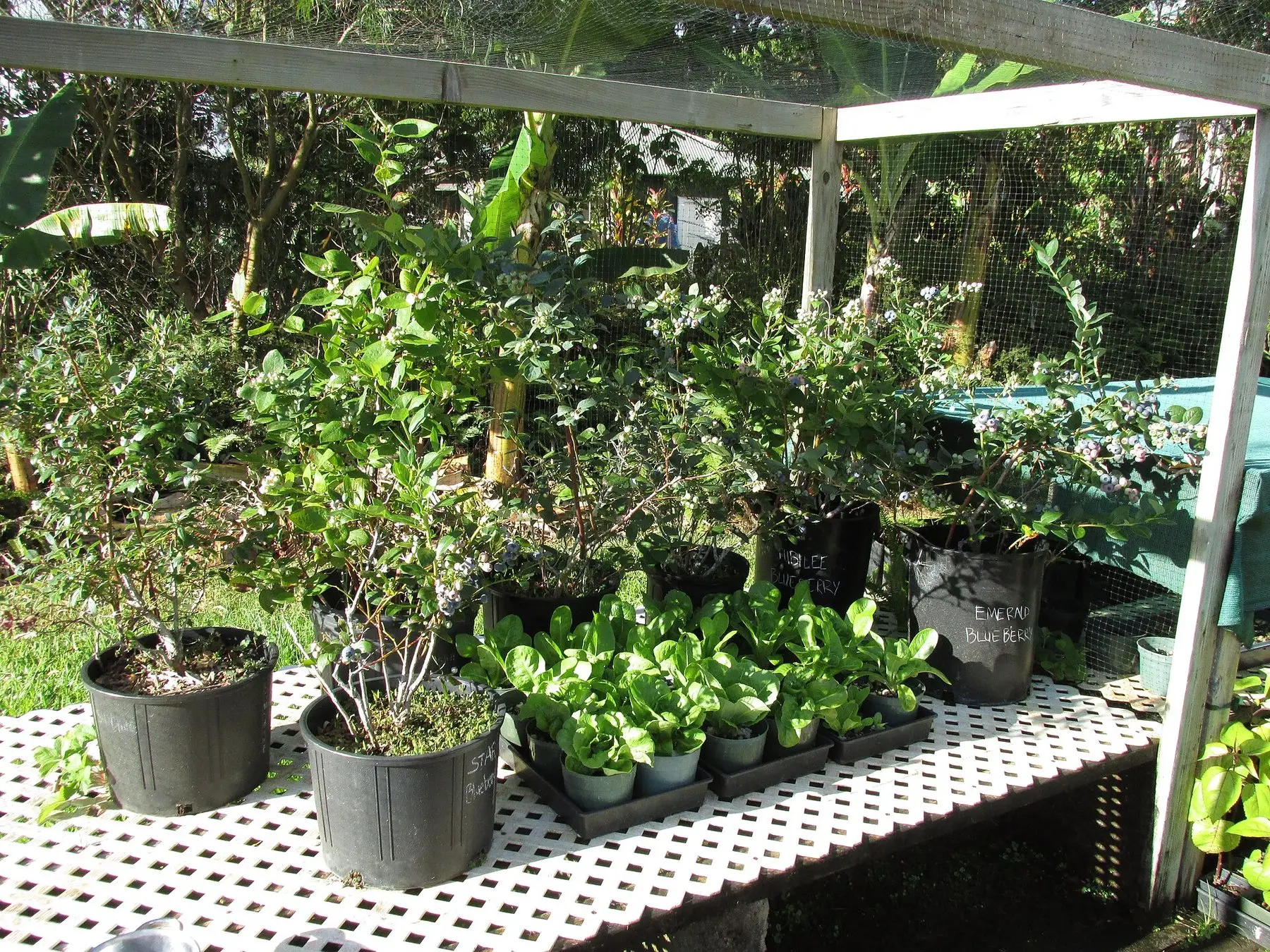
.jpg)
On this page
Soil pH is the quiet reason plants underperform in soil that looks perfectly good. Nutrients do not disappear at the wrong pH — they become chemically unavailable, so a plant can starve in soil that a lab report says is well fed. Iron in particular locks up in alkaline soil, which is why the leaves of acid-loving plants go yellow between green veins while the gardener adds fertiliser that cannot help.
Lowering pH is possible. It is also slow, and most of what the internet recommends does nothing.
What pH is actually doing
The pH scale measures acidity, and it is logarithmic — pH 6 is ten times more acidic than pH 7, and pH 5 is a hundred times more acidic. That is why “just one point” is a substantial chemical change and why it takes months of biological activity to achieve.
Most garden plants want 6.0 to 7.0, because that is the band where the widest range of nutrients stays soluble. Push too far either way and specific nutrients drop out of availability.
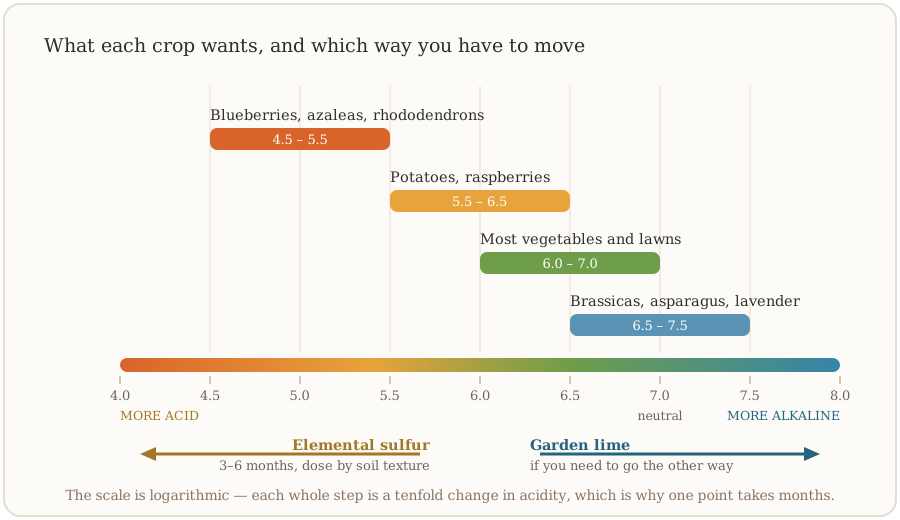
| Plants | Target pH | Notes |
|---|---|---|
| Blueberries, azaleas, rhododendrons | 4.5–5.5 | The usual reason people acidify |
| Potatoes, raspberries | 5.5–6.5 | Slightly acid; scab is worse above 6.0 |
| Most vegetables, most lawns | 6.0–7.0 | The default target |
| Tomatoes, beans, squash | 6.0–6.8 | Comfortably in the normal band |
| Brassicas, asparagus, lavender | 6.5–7.5 | Tolerate or prefer alkaline |
Test before you touch anything
This is not optional advice. Overshooting downward is considerably harder to correct than being a little too alkaline, and you cannot dose sensibly without knowing your starting number and your soil texture.
A lab test through a county extension office costs little and reports pH, texture, organic matter, and usually a specific sulfur recommendation for your target. Home kits give you a rough number, which is enough to know whether you have a problem but not enough to dose confidently on clay.
Check your water and your parent material first
If your soil sits over chalk or limestone, or your tap water is hard, pH will climb back toward where it started no matter what you apply — you are fighting a continuous resupply of calcium carbonate. In that situation, growing acid-lovers in containers or a raised bed of ericaceous mix is the honest answer, and far less work than an annual chemical battle with the ground.
Elemental sulfur: the one that works
Elemental sulfur does not acidify soil directly. Soil bacteria — mostly Thiobacillus species — oxidise it to sulfuric acid, and that is what lowers pH. Understanding that explains everything about how it behaves:
- It is slow, because it depends on bacterial activity — 3 to 6 months.
- It stalls in cold soil, because those bacteria are barely active below about 55°F. Spring and early summer applications work; late autumn ones mostly wait for spring.
- It needs moisture, because the bacteria do.
- It is durable, because you have changed the soil chemistry rather than added a temporary acid.
Dose by texture. Clay and soils high in organic matter are strongly buffered — they resist pH change — while sandy soils move readily. As a working guide for lowering one full point per 100 square feet: about 1 pound of elemental sulfur on sand, 1.5 to 2 on loam, and 2 to 3 on clay. Your soil test’s figure beats any general table here.
Work it into the top 6 inches and water it in. Wear gloves and a dust mask — the powder is an irritant.
Split the dose, always
Never apply more than roughly 2 pounds per 100 square feet in one go. If your target needs more, split it across two or three applications several months apart, re-testing before each. The single most common way people wreck a bed is applying the whole calculated amount, seeing no change after six weeks, and applying it again — then arriving at pH 4.5 in the spring.
Aluminium sulfate: fast, and easy to get wrong
Aluminium sulfate acidifies on contact through a direct chemical reaction, so it works in weeks rather than months. That speed is its only advantage.
It takes far more material for the same pH change, it is much easier to overdose, and repeated use builds aluminium in the soil to levels that are themselves toxic to roots. Reserve it for containers and small spot treatments — a single hydrangea you want blue this season — and use sulfur for beds.
What does not work
Coffee grounds. Used grounds are roughly neutral; the acid went into your cup. They are a genuinely useful soil conditioner and a nitrogen source, and they will not shift your pH.
Vinegar. A weak acid that soil microbes consume within hours. The effect is gone before a test would register it, and at concentrations strong enough to matter it damages roots and soil life.
Pine needles, alone. Fresh needles are mildly acidic, but they neutralise as they break down and the net effect on soil pH is small. Use them as mulch for their other virtues, not as a treatment.
Ericaceous fertiliser, alone. It feeds acid-lovers appropriately and nudges pH slightly, but it will not correct genuinely alkaline soil on its own.
Then keep it there
A corrected pH drifts back, especially where the underlying rock or the irrigation water is alkaline. The maintenance that actually holds it is organic matter: annual compost, pine bark fines dug in, and an acidic mulch. Those improve structure and buffering at the same time, which makes the next correction smaller than the last.
Re-test every year or two. That is the whole routine — a number, a measured dose, and the patience to wait two seasons before deciding it did not work.
Step by step
- Time
- P180D
- Cost
- $20
- You need
- Soil test kit or lab test, Elemental sulfur (or aluminium sulfate for speed), Organic matter — compost, pine bark, peat
- Tools
- Garden fork or tiller, Gloves and dust mask, Measuring scale
Test before you change anything
Get an actual number from a soil test — a lab test through your county extension office is inexpensive and also reports texture and organic matter, both of which change the dose. Guessing at pH from plant symptoms leads to overshooting, which is far harder to fix than being slightly too alkaline.
Check whether the problem is your water or your soil
If your soil is naturally chalky or you irrigate with hard water, pH will climb back regardless of what you apply. In those cases growing acid-lovers in raised beds or containers of ericaceous mix is more realistic than acidifying the ground permanently.
Choose elemental sulfur for lasting change
Elemental sulfur is the standard and the most economical option. Soil bacteria oxidise it into sulfuric acid, which lowers pH gradually and durably. Because it is a biological process it needs warm, moist, living soil, and it works slowly.
Work out the dose from your soil texture
Sandy soils shift with much less sulfur than clay soils, which resist change. As a rough guide, lowering pH by one point over 100 square feet takes roughly 1 pound of elemental sulfur on sand, 1.5 to 2 on loam, and 2 to 3 on clay. Follow your soil test's recommendation over any general figure.
Apply in spring and split large doses
Spread evenly and work it into the top 6 inches, then water it in. Never apply more than about 2 pounds per 100 square feet at once — split larger amounts across two or three applications several months apart, so you do not overshoot or scorch roots.
Wait, then re-test
Elemental sulfur takes 3 to 6 months to show its full effect, and longer in cool soil where the bacteria are less active. Re-test before applying any more. Most damage from acidifying is done by impatient second doses applied before the first has finished working.
Add organic matter every year
Compost, pine bark fines, and pine needle mulch all nudge pH down slowly and improve the soil's structure and buffering at the same time. This is the maintenance that keeps a corrected pH from drifting straight back up.
Common questions
How long does it take to lower soil pH?
Do coffee grounds lower soil pH?
Does vinegar lower soil pH?
What pH do blueberries need?
Can you lower soil pH too much?
Backyard Weekly
Know what to plant, week by week
Free planting calendar. Join the weekly email for seasonal jobs, fixes for what is going wrong, and gear worth buying.
Set MONETIZATION.email.endpoint in src/config/site.ts to enable this form.
By subscribing you agree to our privacy policy. Grow In Backyard will never sell your address.
Keep reading
How Long Does Grass Seed Take to Grow? (5–30 Days)
Germination runs 5–30 days depending on the grass type — ryegrass in under a week, bluegrass up to a month. Here is the timeline and what actually delays it.
How to Grow Strawberries (And Get Fruit the First Year)
Strawberries are easy to grow and easy to get wrong. Which of the three types to plant, why you pinch the first flowers, and how to keep a bed producing.
Loam Soil: What It Is, and How to Get It From Clay or Sand
Loam is a particle-size ratio, not a product you buy. How to test what you have with a jar of water, and the only method that genuinely changes it.
Potting Soil: What Is Actually in the Bag, and Which to Buy
Potting mix contains no soil at all, and that is the point. What each ingredient does, why garden soil fails in a container, and how to read a bag honestly.