How to Grow Aloe Vera: Underwater It and Give It Sun
Aloe is killed by watering, not neglect. How to tell thirst from rot, why the leaves go flat or brown, and what to do with the pups it keeps producing.

On this page
Almost every aloe that dies was cared for too well. They are desert succulents that store months of water in their leaves, and the commonest cause of death is a well-meaning weekly watering.
The good news is that the two failure states look completely different once you know what to feel for.
Light
As bright as you can give it. A south or west window indoors, or full sun outdoors in summer.
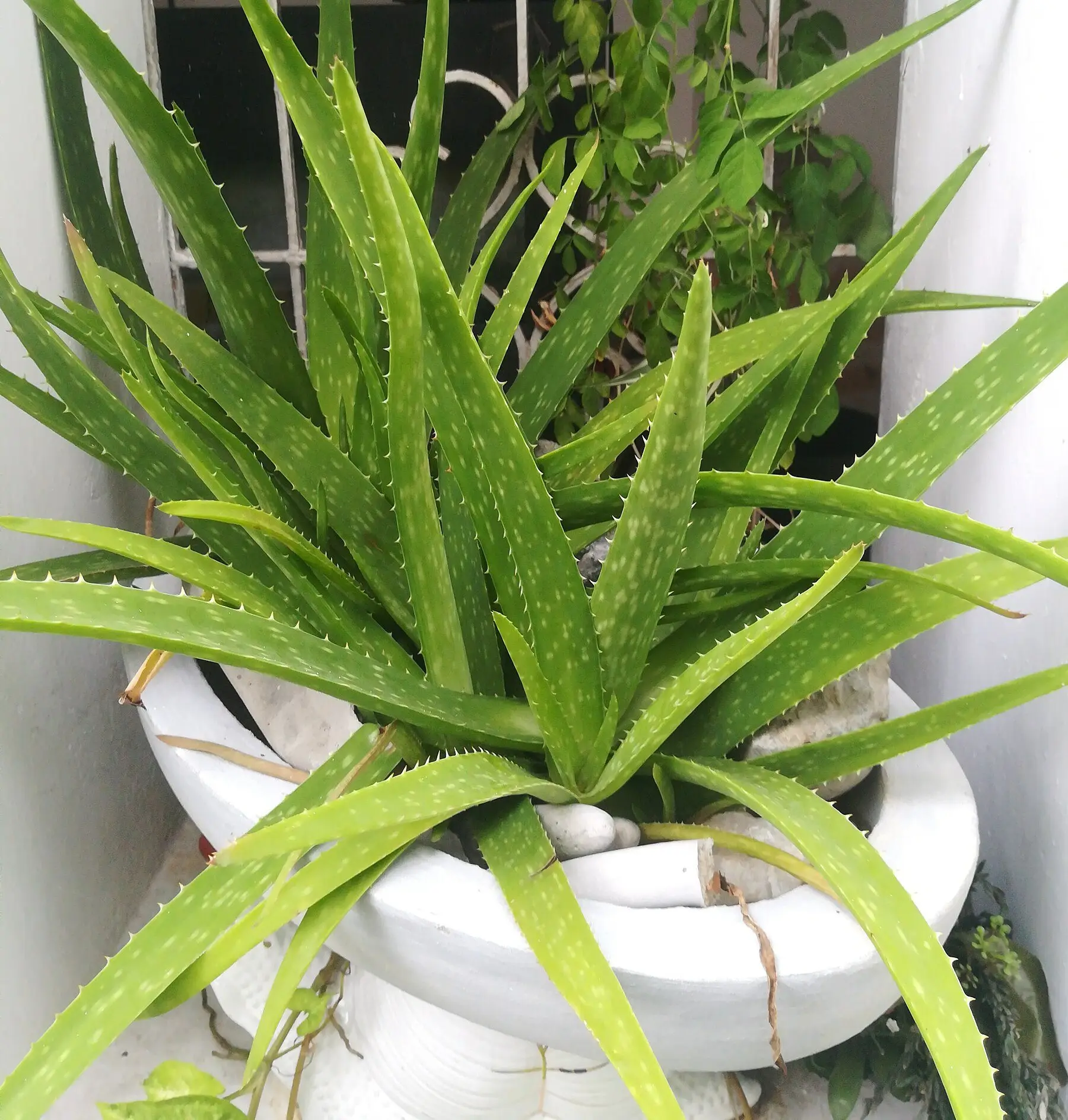
In low light aloe stretches: the leaves lengthen, splay outward instead of standing up, and go a pale washed-out green. That flat, floppy rosette people ask about is a light problem, not a watering one.
Harden it off before putting it outside. Moving a plant from a windowsill straight into full sun scorches the leaves — introduce direct sun over a fortnight. Reddish-brown colouring is sun stress and is usually cosmetic if the leaves stay firm.
Water, which is where they die
Check, then water. The compost should be completely dry all the way down, not just at the surface. Push a finger deep in, or lift the pot — a dry pot is noticeably light.
- Summer: roughly every two to three weeks.
- Winter: every four to six, sometimes less.
- Method: water thoroughly until it runs from the base, then let it drain completely and empty the saucer.
Never water on a schedule. Light, temperature and pot size change the rate far more than the calendar does.
Wrinkled and firm, or soft and squashy
These are the two states, and they need opposite responses.
Thirsty: leaves thin, wrinkled, slightly curled inward — but still firm to a squeeze. Water it.
Overwatered: leaves soft, mushy, translucent or yellowing, often with a soggy base and a sour smell at soil level. Stop watering and check the roots. Healthy aloe roots are firm and pale; rotted ones are brown, soft and come away.
The mistake that kills plants is reading soft leaves as thirst and watering again.
Pot and compost
- Terracotta, which breathes and dries the root ball. Plastic holds moisture and works against you.
- Drainage holes, always. No decorative pot without one.
- Gritty mix — cactus and succulent compost, or ordinary potting mix cut with a third to a half grit, perlite or coarse sand. See potting soil for why that ratio matters.
- Snug rather than large. Aloe is content slightly potbound, and a big pot holds wet compost the roots cannot use.
- Shallow and wide beats deep and narrow — the root system is not deep.
No gravel layer in the bottom. It raises the saturated zone rather than improving drainage.
Feeding and temperature
Feed rarely — a dilute succulent or balanced feed once or twice through spring and summer is plenty, and nothing in winter. Overfeeding produces soft, weak growth.
Above 50°F. Aloe is not frost hardy. It can summer outdoors and must come in before cold nights.
Repot every two to three years, in spring, into dry compost, and wait a week before watering so any damaged roots seal.
Rescuing an overwatered plant
If the leaves are soft and the base is soggy, act rather than waiting.
- Tip the plant out and clear the compost off the roots.
- Cut away every brown, soft root with a clean knife.
- Remove mushy leaves at the base.
- Let the plant air-dry for one to two days so the cuts callus.
- Repot into fresh dry gritty mix.
- Do not water for a week or more.
If the whole base has gone, cut the top off above the rot, let it callus for a week, and root it as a cutting. That often saves the plant when the roots cannot be.
Pups
Healthy aloes produce offsets around the base, and left in place they crowd the parent and slow it down.
Separate them once a pup is about a fifth the size of the parent and has roots of its own:
- Tip the whole plant out.
- Tease or cut the pup away with roots attached.
- Let the cut surfaces dry for a day or two.
- Pot into dry succulent mix.
- Wait a week before the first watering.
This is how one aloe becomes a permanent supply, which matters because individual plants eventually get leggy and tired.
Using the gel
Cut an outer leaf at the base — outer leaves are the oldest and the plant sheds them anyway.
Drain the leaf before you use it
Just under the skin is a layer of yellow latex containing aloin, which is a strong laxative and a skin irritant. Stand the cut leaf upright in a glass for about ten minutes and let that yellow liquid drain out before filleting the clear inner gel. The gel itself is what is used on minor burns and irritation.
Aloe is also toxic to cats and dogs if chewed, so keep it out of reach.
Use fresh gel promptly, or freeze it — it does not keep long at room temperature.
Common questions
How often should you water aloe vera?
How do you tell an overwatered aloe from a thirsty one?
Why are my aloe vera leaves turning brown?
Why is my aloe growing flat and floppy instead of upright?
What do you do with aloe vera pups?
Is aloe vera gel from the plant safe to use?
Backyard Weekly
Know what to plant, week by week
Free planting calendar. Join the weekly email for seasonal jobs, fixes for what is going wrong, and gear worth buying.
Set MONETIZATION.email.endpoint in src/config/site.ts to enable this form.
By subscribing you agree to our privacy policy. Grow In Backyard will never sell your address.
Keep reading
Tradescantia Zebrina Care: Light, Pinching, and Legginess
The stripes fade and the stems go bare in low light, and no amount of feeding fixes it. What this plant needs, and how to rebuild one that has gone straggly.
Outdoor Plants in Pots: What Survives, and What Kills Them
A pot outdoors is a harsher place than the ground — hotter, drier, and colder in winter. How to pick plants and pots that cope, and get through the cold.
Potting Soil: What Is Actually in the Bag, and Which to Buy
Potting mix contains no soil at all, and that is the point. What each ingredient does, why garden soil fails in a container, and how to read a bag honestly.
How to Grow Garlic in Pots: Depth, Size and Overwintering
Garlic needs a cold spell and eight months in the pot, so container size and winter protection decide whether you get bulbs or scallions.