How to Grow Hydrangeas: Where to Plant and When to Prune
Morning sun, afternoon shade, and never let them dry out. Which type you have decides when to prune — and getting that wrong is why hydrangeas stop flowering.

On this page
Hydrangeas have a reputation for being temperamental, and almost all of it comes down to two things: they are pruned at the wrong time, and they are planted somewhere too hot and too dry.
Fix those and they are among the least demanding shrubs you can grow.
Know which one you have
Everything else follows from this.
| Type | Flowers on | Prune | Sun | Hardy to |
|---|---|---|---|---|
| Bigleaf (macrophylla) — mopheads, lacecaps | Old wood | Right after flowering | Morning sun | Zone 6 |
| Panicle (paniculata) — Limelight, Bobo | New wood | Late winter | Full sun OK | Zone 3 |
| Smooth (arborescens) — Annabelle | New wood | Late winter | Part shade | Zone 3 |
| Oakleaf (quercifolia) | Old wood | Right after flowering | Part shade | Zone 5 |
| Climbing (anomala) | Old wood | Lightly, after flowering | Shade tolerant | Zone 4 |
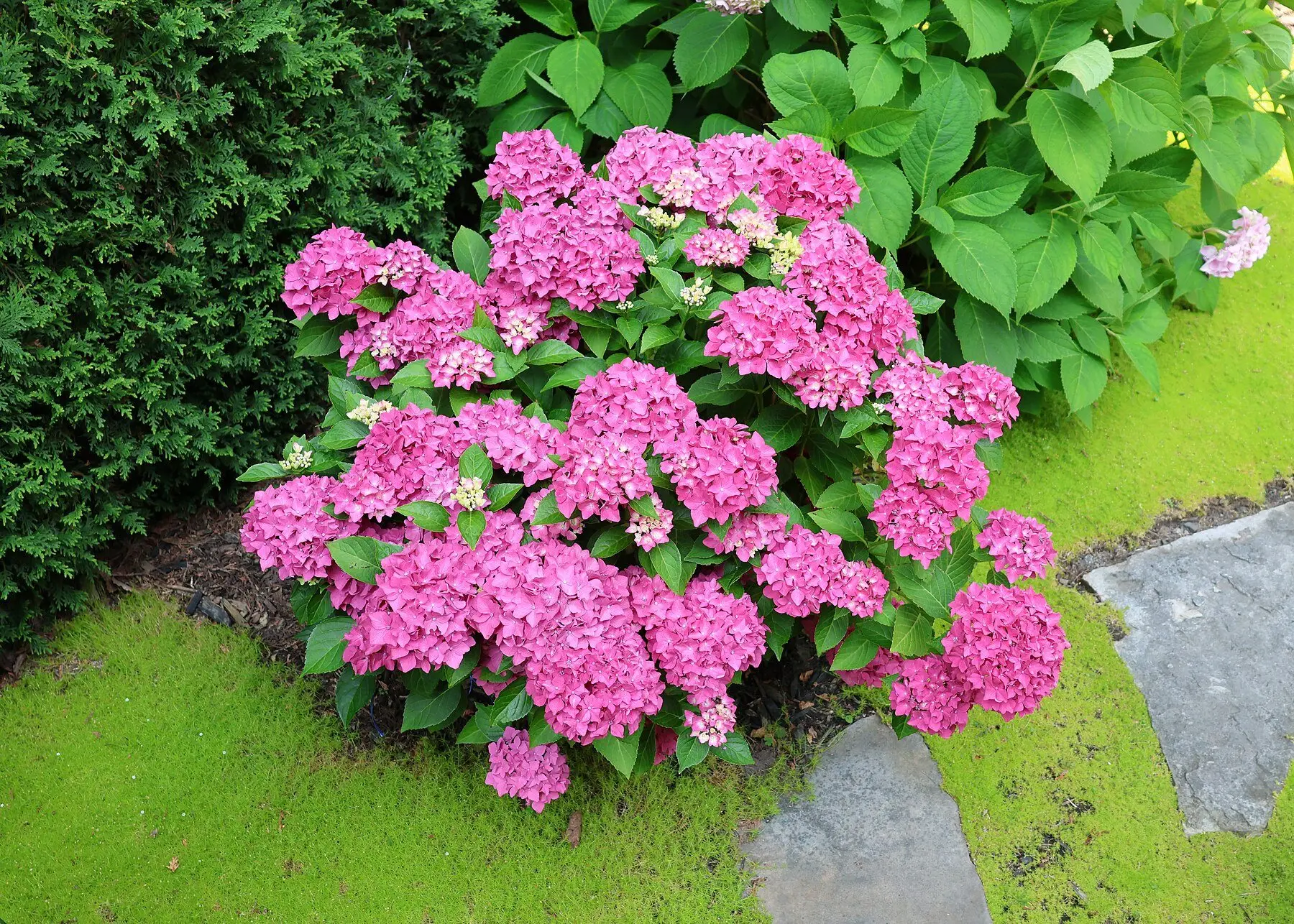
If you do not know which you have: oakleaf has lobed, oak-shaped leaves; panicle has cone-shaped flower heads and woody stems; smooth has huge white globes on floppy stems; bigleaf has thick glossy leaves and round or flat blue/pink heads.
Reblooming varieties break the rule
Endless Summer, Let’s Dance, and similar cultivars flower on both old and new wood. They are the sensible choice in a climate with late spring frosts, because a frost that kills the old-wood buds does not cost you the entire season.
Where to plant
Morning sun, afternoon shade. An east-facing bed, or the east side of a building, is close to perfect. In the hot South, err further toward shade; in the far North, they tolerate more sun.
Panicle hydrangeas are the exception — they want at least six hours of sun and flower poorly in shade.
Soil: rich in organic matter, moisture-retentive, and draining. Work compost in generously at planting. They will not tolerate sitting in water, and they will not tolerate drying out, which is a narrower window than it sounds.
Space them for their mature size — 3 to 6 feet for most bigleaf varieties, more for panicles. A hydrangea planted tight against a wall or a path gets pruned into a poor shape forever after.
Plant in spring or autumn, at the depth it grew in the pot, and water it in hard.
Water and feeding
The name comes from the Greek for water vessel. Take that literally: an inch a week, more in heat, delivered deeply rather than as daily sprinkles. The roots are shallow.
Mulch three inches deep and keep it topped up. Mulch does more for a hydrangea than any fertilizer.
Afternoon wilting on a hot day that recovers by morning is normal and not a problem. Morning wilting is a problem.
Feed lightly — one application of a balanced slow-release fertilizer in spring. Excess nitrogen gives you a big leafy shrub with almost no flowers.
Pruning, which is where it goes wrong
Old-wood types (bigleaf, oakleaf, climbing) set next year’s flower buds in late summer, weeks after this year’s flowers finish. So:
- Prune immediately after flowering, and only lightly — dead wood, crossing stems, and spent heads.
- Never prune in spring. Those are next year’s flowers you are cutting off.
New-wood types (panicle, smooth) make flower buds on growth produced that same season. So:
- Cut back in late winter or early spring, hard if you like — smooth hydrangeas can go to 12 inches and come back better.
- Panicles respond well to being reduced by about a third, which keeps the heads from flopping.
Leave the dried flower heads on over winter on bigleaf types in cold areas. They look good in frost, and they offer the buds beneath them a little protection.
Changing the colour
Only bigleaf (macrophylla) and mountain (serrata) hydrangeas change colour, and it is about aluminium availability, not pigment:
- Acidic soil, pH below 6 → aluminium available → blue
- Alkaline soil, pH above 7 → aluminium locked up → pink
To go blue: aluminium sulphate or elemental sulphur, applied over months and maintained. To go pink: garden lime.
White hydrangeas stay white whatever you do, and panicle hydrangeas age from white to pink on their own schedule regardless of soil.
Do not chase colour in a container of tap water
Hard tap water is alkaline and will steadily undo acidification in a pot. If blue flowers matter to you, water container hydrangeas with rainwater, or accept the colour the soil gives you.
Why it is not flowering
In order of likelihood:
- Pruned at the wrong time — the old-wood/new-wood mistake, by a distance.
- Late spring frost killed the buds. Common in zones 5–6 on bigleaf types.
- Too much shade. Healthy leaves, no flowers, is the signature.
- Too much nitrogen, often drift from lawn fertilizer.
- Too young. Some take two or three seasons to settle in and bloom.
Common questions
Where is the best place to plant hydrangeas?
When should you prune hydrangeas?
Why are my hydrangeas not blooming?
How do you change hydrangea colour from pink to blue?
How much water do hydrangeas need?
Are hydrangeas easy to grow?
Backyard Weekly
Know what to plant, week by week
Free planting calendar. Join the weekly email for seasonal jobs, fixes for what is going wrong, and gear worth buying.
Set MONETIZATION.email.endpoint in src/config/site.ts to enable this form.
By subscribing you agree to our privacy policy. Grow In Backyard will never sell your address.
Keep reading
Japanese Maple: Choosing One, Siting It, and Leaf Scorch
Crisp brown leaf edges are wind and sun, not disease. How to pick between upright and dissected forms, where to plant, and why you should barely prune one.
Southern Magnolia: Size It Before You Plant It
Magnolia grandiflora reaches 60 to 80 feet and drops leathery leaves all year. The cultivars that stay small, and what it needs to flower well.
How to Grow Lavender: Drainage, Sun, and Almost Nothing Else
Lavender dies of wet feet and kindness, not cold. Which species suits your winter, why you plant it in poor soil, and the spacing that prevents rot.
15 Tree Stump Ideas (And When to Just Remove It)
Planters, seating, wildlife habitat, and log stools — what to do with a stump you would rather not grind, and when removal is the only sensible answer.