15 Tree Stump Ideas (And When to Just Remove It)
Planters, seating, wildlife habitat, and log stools — what to do with a stump you would rather not grind, and when removal is the only sensible answer.

On this page
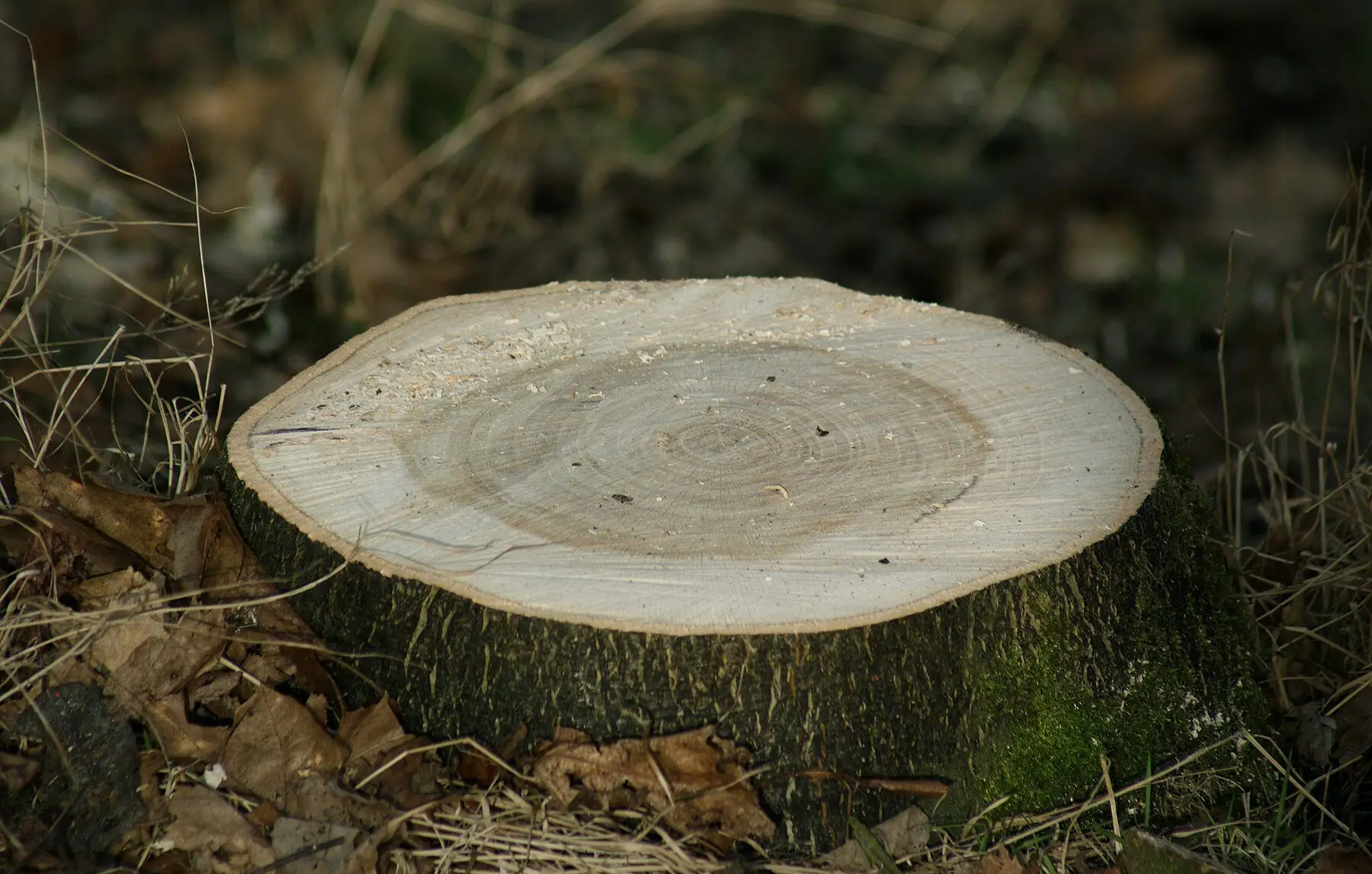
A stump is either an eyesore or a ready-made piece of garden furniture, and the difference is usually about two hours of work. Grinding costs money and leaves a hole full of wood chips; most stumps are more useful left where they are.
Planting ideas
1. Hollowed-out planter. The classic. Drill a ring of holes in the top, break out the middle with a chisel or mattock, then drill drainage holes through the side at the base. Fill with potting mix. Easiest on a stump that has already begun to soften in the centre.
2. Succulent bowl. A shallow hollow only needs three inches of gritty mix for sempervivum and sedum, which is ideal because a stump planter dries out fast.
3. Fairy garden. Steps cut into the side, moss, a small door. If there are children within a mile of the garden, this is the winning use.
4. Climbing frame. Plant clematis, honeysuckle, or a climbing rose at the base and let it swallow the stump entirely within two seasons.
5. Mushroom log. Inoculate the cut face with oyster, shiitake, or wine cap plug spawn. You get a crop for several years, and the fungi decompose the stump much faster than it would rot on its own.
6. Container stand. No modification at all — just stand a nice pot on it. A stump is a plinth that is already the right height.
Furniture and structure
7. Log stools. Cut the trunk you felled into 16–18 inch rounds and set them around a fire pit. Sand the top, seal the end grain if you like, and leave them.
8. Table base. A level stump plus a round of thick glass or a slab of live-edge timber is a perfectly good garden table, and structurally it is already anchored.
9. Chainsaw chair. Well within reach of a competent operator on a wide stump — a backrest and a seat cut out of one piece.
10. Chopping block. The single most practical use for a flat, solid stump near a woodpile.
11. Path stepping stones. Slices four to six inches thick, bedded in gravel through a border. They will rot in five years or so and they look excellent for all five.
12. Birdbath or sundial plinth. Level the top, add a bowl, done.
Wildlife and rewilding
13. Deliberate habitat pile. Standing dead wood supports beetles, solitary bees, fungi, and the birds that eat them. A stump is the beginning of that, and stacking a few logs beside it finishes it.
14. Insect hotel. Drill holes of varying diameters — 2 to 10 mm, several inches deep — into a sun-facing side for solitary bees.
15. Let it become a moss garden. In shade and damp, a stump colonises itself within a couple of seasons. Add ferns at the base and stop thinking about it.
Coarse woody debris is a resource, not a mess
Decaying wood is one of the scarcer habitats in a tidy garden. A single rotting stump supports a surprising amount of life and costs nothing to provide.
When you should actually get rid of it
| Situation | Verdict |
|---|---|
| In the middle of a mown lawn | Grind it — it will wreck a mower deck |
| Within ~10 ft of a foundation or septic line | Remove it — termites and root regrowth |
| The tree died of Armillaria or another root disease | Remove it — the fungus lives on in the stump |
| You want to plant a new tree in the same spot | Full removal, not grinding |
| Shading a bed, otherwise harmless | Keep it |
| Sprouting suckers constantly | Grind, or treat the cut face |
Grinding takes the stump six to twelve inches below grade and leaves the roots to rot in place. It is faster and cheaper than excavation, and it is enough for almost every domestic situation. Full removal is for foundations, driveways, and replanting.
Speeding up natural decay
If you are content to wait but would rather it were three years than ten:
- Drill deep holes — one inch wide, eight to ten inches deep, several inches apart across the top.
- Fill them with a nitrogen source — high-nitrogen fertilizer, or the potassium nitrate sold as stump remover. Neither dissolves wood; both feed the fungi that do.
- Keep it damp and covered with a tarp or a heap of soil and mulch.
- Inoculate it with wine cap or oyster spawn, which is the fastest biological route and produces food along the way.
Do not burn a stump out
Stump fires follow roots underground, smoulder for days, and are genuinely difficult to extinguish. Many areas prohibit it outright. It is the one method not worth trying.
Stopping it growing back
Maple, poplar, willow, elm, and ailanthus will all resprout from the stump or the root system. Conifers essentially never do.
The reliable prevention is to paint the cut face with a suitable stump herbicide within minutes of felling, while the vascular tissue is still drawing. After the fact, cutting suckers off repeatedly through a season or two will eventually exhaust the roots — it just takes persistence.
Common questions
Should you remove a tree stump or leave it?
How long does a tree stump take to rot naturally?
Can you plant flowers directly in a tree stump?
Will a stump grow back?
Do tree stumps attract termites?
What is the difference between stump grinding and stump removal?
Backyard Weekly
Know what to plant, week by week
Free planting calendar. Join the weekly email for seasonal jobs, fixes for what is going wrong, and gear worth buying.
Set MONETIZATION.email.endpoint in src/config/site.ts to enable this form.
By subscribing you agree to our privacy policy. Grow In Backyard will never sell your address.
Keep reading
How to Cut a Tree Down, and When Not to Try
Felling is decided before the saw starts: lean, hazards, escape routes, and whether the tree is within your competence at all. Where the line is, honestly.
Garden Decor Ideas That Don't Look Cluttered in a Year
Most backyard decor gets added piece by piece until the yard looks like a garden center. A short list of what earns its place, and what to skip.
Rock Garden Ideas That Look Like They Belong There
The difference between a rockery and a pile of stones is drainage and burial. How to set rock so it reads as outcrop, and what actually survives in it.
How to Grow Hydrangeas: Where to Plant and When to Prune
Morning sun, afternoon shade, and never let them dry out. Which type you have decides when to prune — and getting that wrong is why hydrangeas stop flowering.