Rock Garden Ideas That Look Like They Belong There
The difference between a rockery and a pile of stones is drainage and burial. How to set rock so it reads as outcrop, and what actually survives in it.
_19-05-2024._(actm.)_06.jpg)
On this page
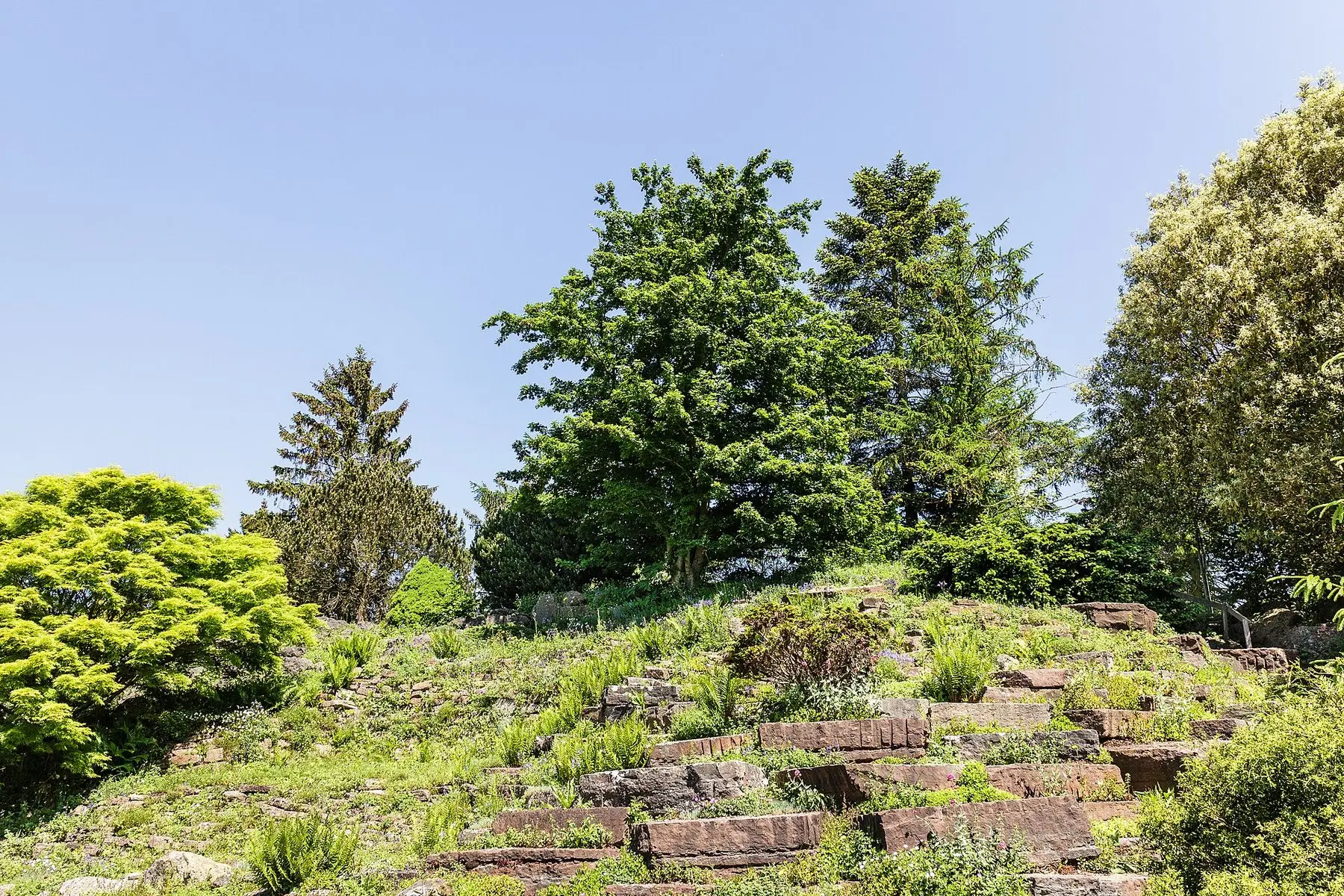
Most backyard rockeries look like stones sitting on a mound, because that is exactly what they are. A natural outcrop looks different for two specific reasons, and both are easy to copy.
The rocks are mostly buried, and they all lean the same way.
Why real outcrops look the way they do
An outcrop is the top of something much larger underground. That is the whole illusion, and it gives three rules:
Bury them. A third to a half of each stone below ground. This is the single biggest difference between a rockery and a rock pile, and it is the rule people most often skip because burying expensive stone feels wasteful.
Match the angle. Rock strata run in a direction. Set every stone with its bedding lines running the same way and tilted slightly back into the slope, and the whole thing reads as one formation. A back-tilt also directs rain into the bed instead of off the face.
One geology. Sandstone with limestone with granite never occurs together naturally, and the eye notices immediately. Pick one stone — ideally one local to your area, which will be cheaper and will match the region.
Fewer, larger stones beat many small ones
A rockery with a handful of substantial stones looks far more convincing than one with dozens of head-sized rocks. Large stones read as bedrock; small ones read as decoration. If the budget is fixed, buy fewer and bigger, and use a roller bar and planks rather than your back.
Drainage is the growing condition
Alpine and rock-garden plants come from mountainsides where water runs off constantly and the soil is thin. They tolerate remarkable cold. What kills them in a garden is sitting wet through winter.
A workable mix is roughly equal parts topsoil, sharp grit, and compost — noticeably leaner and grittier than a normal border. On heavy clay, raise the bed rather than digging into it, because a rockery excavated into clay becomes a sump.
Finish with a gravel mulch an inch or two deep, matching the stone. It keeps the crown of each plant dry, suppresses weeds, stops soil splashing onto foliage, and looks correct.
Skip the landscape fabric
It seems sensible and usually backfires. Fabric prevents the gentle self-seeding that makes a rockery look settled after a few years, silt accumulates on top of it and grows weeds in that layer, and plant roots struggle to get through. Clear perennial weeds properly at the start — especially bindweed and couch grass, which will otherwise thread through the whole bed — and rely on gravel.
Building it, in order
- Clear every perennial weed. Getting this wrong means dismantling the rockery later.
- Shape the ground. A slope is ideal. On flat ground, build up a low mound or a raised bed rather than pretending.
- Excavate and lay the largest stones first, starting at the bottom, burying a third to a half of each and tamping soil firmly behind them.
- Work upward in rough tiers, keeping the tilt consistent and leaving generous planting pockets between the stones.
- Backfill with the gritty mix as you go, firming to remove air pockets.
- Plant, then gravel mulch around each plant, tucking it under the foliage.
What to plant
| Plant | Habit | Notes |
|---|---|---|
| Sempervivum (houseleek) | Tight rosettes | Thrives in almost no soil |
| Sedum / stonecrop | Mat or mound | Very drought tolerant, late flowers |
| Creeping thyme | Flat mat | Walkable, aromatic, good between stones |
| Aubretia | Spilling mound | Spectacular spring colour over a face |
| Dianthus (alpine pinks) | Neat cushion | Scented; wants grit and sun |
| Saxifraga | Cushion or rosette | Many tolerate part shade |
| Armeria (thrift) | Grassy tuft | Coastal, unfussy |
| Alpine phlox | Spreading mat | Dense spring flower |
| Dwarf conifers | Upright or bun | Year-round structure |
| Small bulbs — crocus, iris | Seasonal | Early interest before alpines start |
The design principle is contrast: a few upright or structural plants among many low mounding ones, with bare gravel deliberately left visible. A rockery planted wall-to-wall looks like a border with stones in it.
Tuck plants into crevices, not just into open pockets — that vertical planting is what makes it look inhabited rather than arranged. Sempervivums and small saxifrages will live in a crack with almost no soil.
If your site is shaded or flat
Shade: an alpine rockery will not work, but a rock garden still can. Ferns, heuchera, small hostas, epimedium and woodland bulbs among mossy stones make a convincing outcrop of a different kind, and mossed stone in shade looks better than in sun.
Flat: build a scree bed instead — a raised bed of mostly grit and gravel with a little soil, imitating the loose slope below a cliff. It gives the drainage a slope would have provided, suits the fussiest alpines, and reads as deliberate rather than as a mound dumped on a lawn.
Common questions
How do you build a rock garden that looks natural?
What soil do rock garden plants need?
What plants work in a rock garden?
Do you need landscape fabric under a rock garden?
What is a scree garden?
Backyard Weekly
Know what to plant, week by week
Free planting calendar. Join the weekly email for seasonal jobs, fixes for what is going wrong, and gear worth buying.
Set MONETIZATION.email.endpoint in src/config/site.ts to enable this form.
By subscribing you agree to our privacy policy. Grow In Backyard will never sell your address.
Keep reading
Retaining Walls: Drainage Decides Whether Yours Lasts
Most failed retaining walls failed at the base or the back, not the face. Block types, the height where you need an engineer, and how to build one that holds.
Front Yard Landscaping Ideas That Last Past Year Three
Most front yard makeovers look best the week they are finished. These nine ideas are chosen for what they look like after three seasons of real maintenance.
Outdoor Plants in Pots: What Survives, and What Kills Them
A pot outdoors is a harsher place than the ground — hotter, drier, and colder in winter. How to pick plants and pots that cope, and get through the cold.
Small Backyard Ideas That Make the Space Feel Bigger
Small gardens fail by being over-divided and lined with furniture around the edge. The moves that add usable space, and what to spend money on first.