Front Yard Landscaping Ideas That Last Past Year Three
Most front yard makeovers look best the week they are finished. These nine ideas are chosen for what they look like after three seasons of real maintenance.

On this page
Almost any front garden looks good the week it is planted. The ones that still look good three years later share a handful of structural decisions — and almost none of them are about which flowers you chose.
1. Cut a proper edge
A crisp, spade-cut edge between lawn and bed does more for a front garden than most planting. It reads as intentional, it stops grass creeping into the beds, and it costs an afternoon.
Cut it about 3 inches deep, angled away from the bed, and re-cut once a year in spring. Steel or aluminium edging holds the line permanently if you would rather not repeat the job.
Cutting new beds usually means losing lawn, and the leftover edges rarely knit back together on their own — plan on overseeding the margins, remembering that grass takes 5–30 days to germinate depending on the species in the bag.
2. Make the beds deeper than feels necessary
The most common front-garden mistake is an 18-inch strip of soil against the house. It can hold nothing but bedding plants, and it makes the building look like it is sitting on concrete.
Four feet is the minimum for a bed you can layer — something low at the front, something mid-height, something structural behind. Six feet if you have the room.
Where the ground is compacted, waterlogged, or sits over old builder’s rubble — common right against a house — building up is easier than digging out. Our raised bed guide covers what the different materials cost over their life, and why the soil to fill them is usually the bigger bill.
3. Repeat three to five plants
| Layer | Role | Examples | How many |
|---|---|---|---|
| Structure | Evergreen mass, winter interest | Boxwood, dwarf conifer, hydrangea | 3–5, repeated |
| Mid | Colour and movement | Salvia, coneflower, ornamental grass | 7–9, in groups of 3 |
| Ground | Covers soil, suppresses weeds | Creeping thyme, sedum, heuchera | Drifts |
| Accent | One focal point only | Small tree, specimen shrub | 1 |
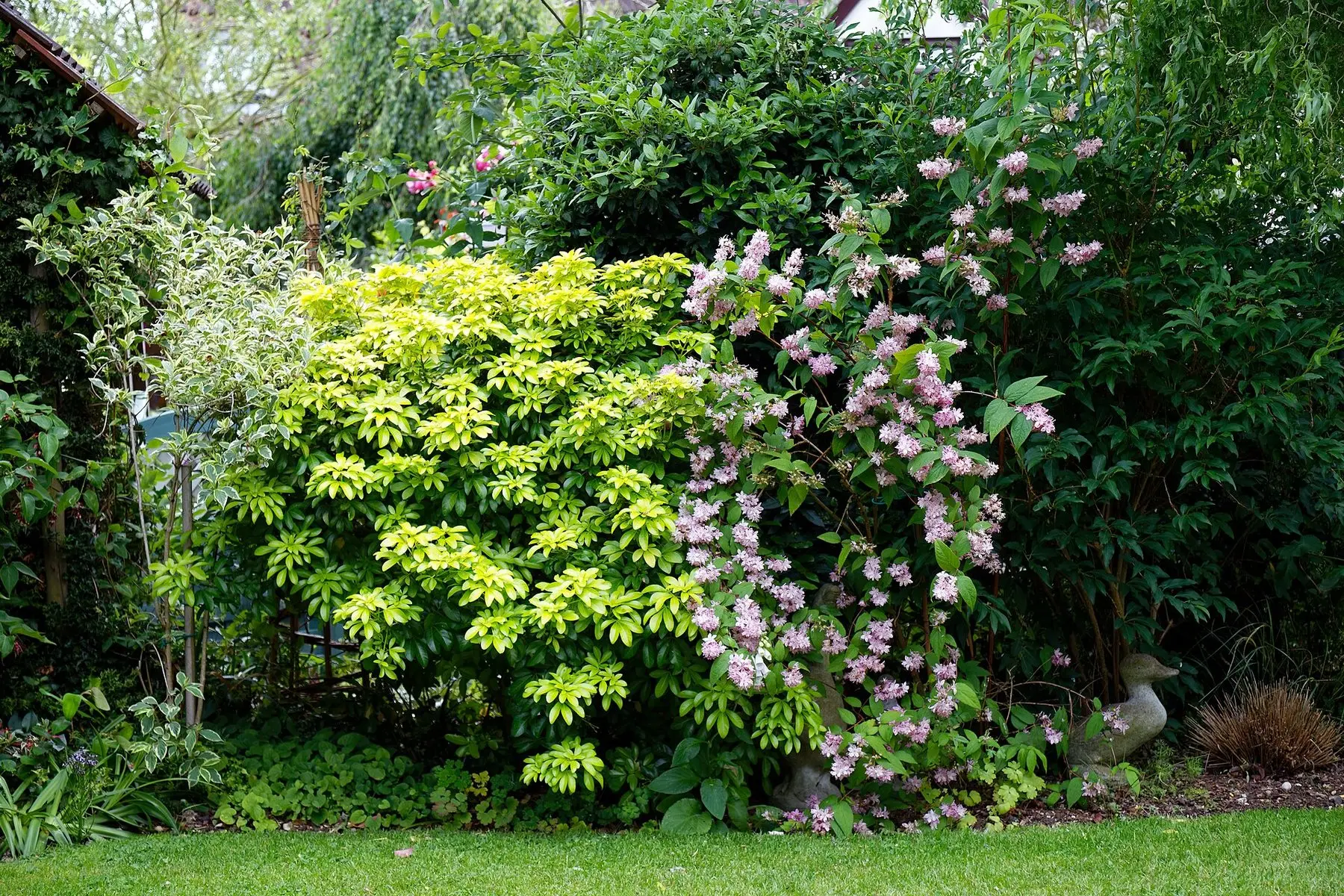
Groups of three and five read as deliberate. A single specimen each of nine different plants reads as a collection — and it is far harder to look after, because every plant wants different water, soil, and light.
Plant for the size on the label
The commonest three-year failure is spacing shrubs so they look right on day one. A boxwood planted at 12 inches will be 3 feet wide. Space for mature size and fill the gaps with annuals or mulch for two seasons — it looks sparse briefly and correct permanently.
4. Keep about 40% of the planting evergreen
A front garden is looked at every day of the year, February included. If everything dies back, the garden disappears for four months and the house looks abandoned.
Roughly 40% evergreen — used as structure through the bed, not as a hedge around the edge — keeps a shape in winter that everything else grows around in summer.
5. Mulch, and keep mulching
Three inches of bark or leaf mulch suppresses weeds, holds water, feeds the soil as it breaks down, and visually unifies a bed full of different plants. Keep it 2 inches clear of stems and trunks — piled against bark it traps moisture and causes rot.
6. Light the path, not the plants
Low, warm, downward-facing path lights are worth doing. Uplighting every shrub is not: it looks theatrical, and it is one more system to maintain. One good light at the front door and enough to see the path is the right amount.
7. Solve the bin problem
Every front garden has one, and it is usually the ugliest thing in it. A slatted screen with a climber on it, sited so the bins are hidden from the street but still easy to wheel out, fixes it for a couple of hundred dollars.
8. Widen the path if you can
A path two people can walk on side by side — around 4 feet — feels generous and gets used. A 2-foot concrete strip feels like service access. Widening an existing path is often cheaper than relaying it.
9. Plant one tree
If there is room, plant one. Nothing else does as much for scale, shade, and the sense that a house belongs where it stands. Choose for mature height against the building, and check what the roots will do near drains and foundations before you dig.
Gravel is not low maintenance
Gravel with no planting gets sold as the zero-effort option. In practice leaves blow in and rot down into a seedbed, weeds root in that layer, and clearing it means raking stones out of it. It also gets genuinely hot in summer. If you want low maintenance, use planted groundcover through mulch instead.
Where the money goes furthest
On a limited budget, spend in this order:
- Edging and mulch — the biggest visible change per dollar
- Fixing the path — it is what people actually walk on
- Screening the bins
- Structural shrubs — the bones, bought small and grown on
- Perennials and colour — last, because they are cheap and quick to add
Colour is what people buy first and what matters least. A well-edged, well-mulched garden with three good shrubs looks better than a badly shaped one full of flowers.
Common questions
What is the cheapest way to improve a front yard?
What is the lowest maintenance front yard landscaping?
How many types of plants should a front yard have?
Should the front yard match the house?
How deep should front garden beds be?
Backyard Weekly
Know what to plant, week by week
Free planting calendar. Join the weekly email for seasonal jobs, fixes for what is going wrong, and gear worth buying.
Set MONETIZATION.email.endpoint in src/config/site.ts to enable this form.
By subscribing you agree to our privacy policy. Grow In Backyard will never sell your address.
Keep reading
How to Build a Greenhouse: Siting, Glazing, and Ventilation
A greenhouse is a heat trap with a ventilation problem. Choosing a site and a glazing material, building a level base, and sizing the vents so it does not cook.
Small Backyard Ideas That Make the Space Feel Bigger
Small gardens fail by being over-divided and lined with furniture around the edge. The moves that add usable space, and what to spend money on first.
How to Build a Retaining Wall That Does Not Lean
Base depth, gravel backfill, and drainage decide whether a wall lasts thirty years or bulges in three. The full build, and when to call an engineer.
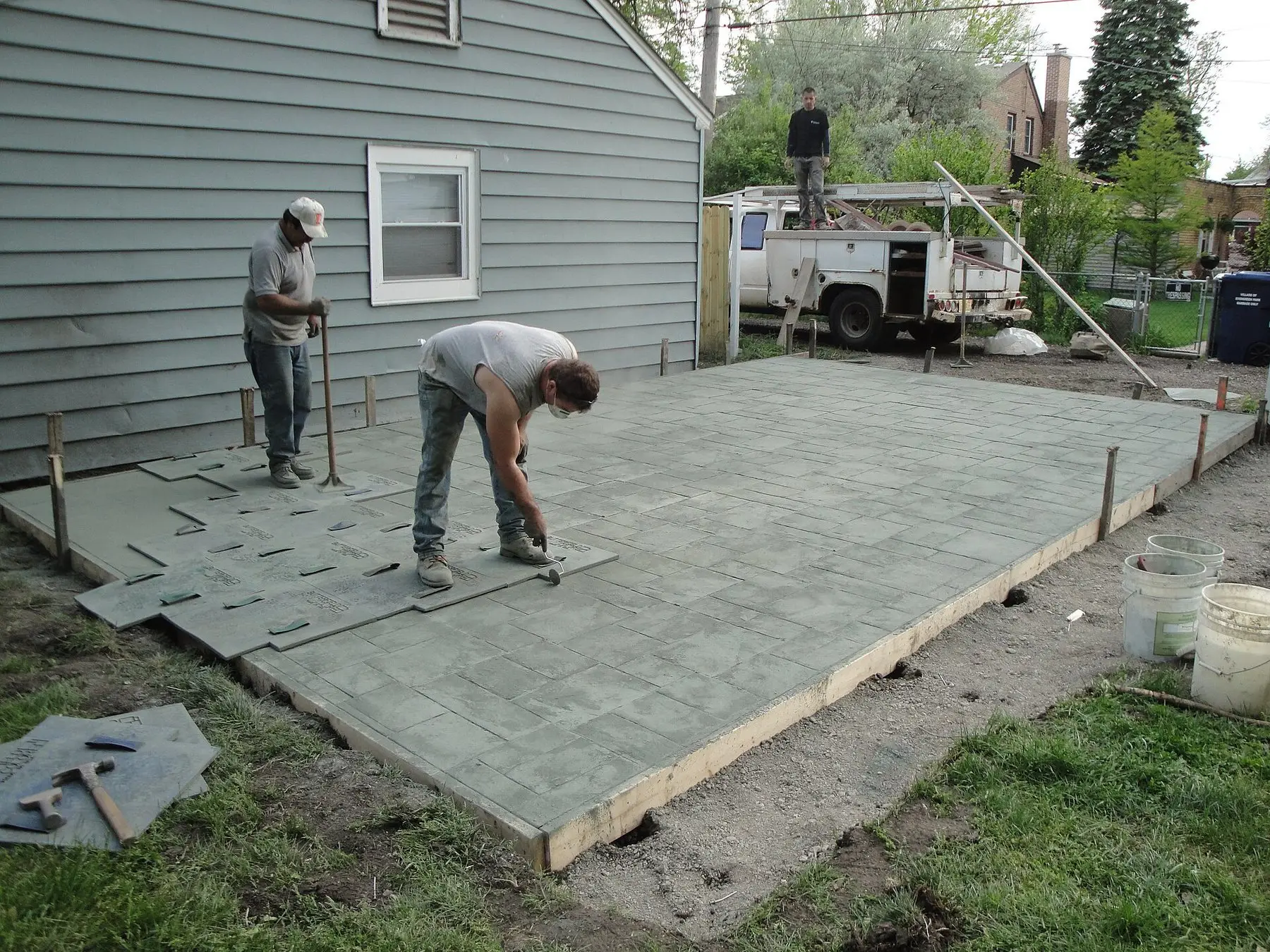
Concrete Patio Thickness: 4 Inches, and What Matters More
Four inches is the standard for foot traffic, but the base under it and the control joints in it cause more failures than depth ever does.