How to Prune Lavender (and Never Cut Into Old Wood)
Lavender goes woody and splits open when it is pruned too timidly. The one rule that prevents it, the two cuts a year, and what to do with a plant already leggy.

On this page
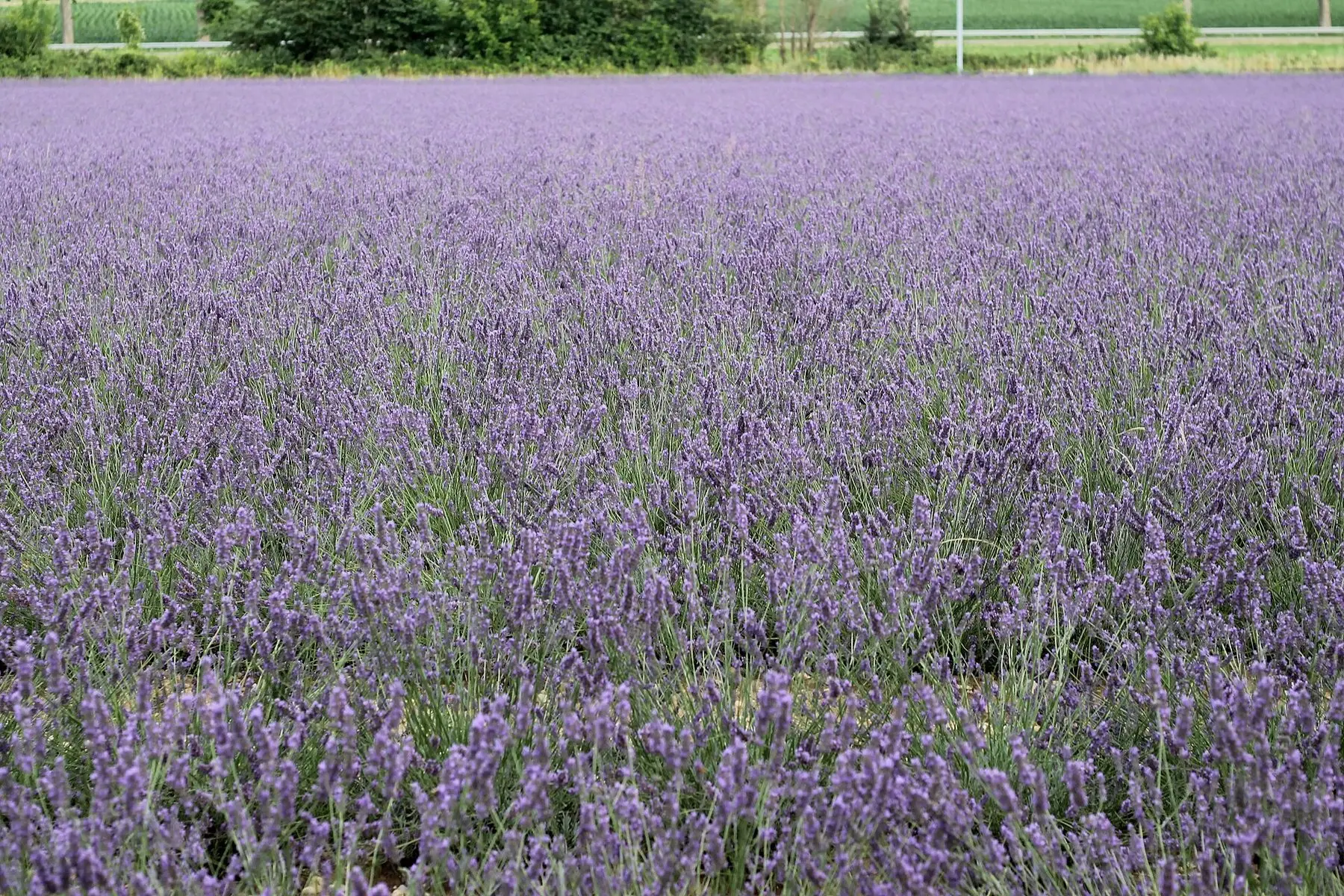
Lavender does not die of old age in most gardens. It dies of being pruned politely — a light trim of the flower stalks each year, never into the leafy growth, until the plant is a tall gray framework with a thin green fringe on top that eventually splits down the middle.
The fix is counterintuitive: prune harder, earlier, and every single year. But there is one line you cannot cross.
The one rule
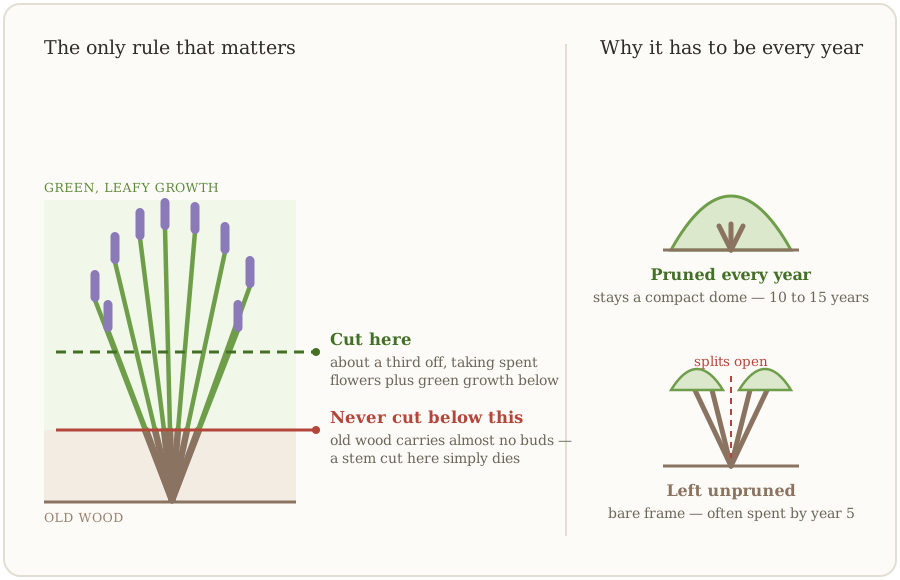
Take a plant and part the foliage at its base. You will find two distinct zones: bare gray-brown wood at the bottom, and soft leafy green growth above it.
Lavender is a subshrub, and unlike most garden shrubs it carries almost no dormant buds in that old wood. A stem cut below its lowest leaves has nothing left to grow from, so it simply dies — and if you shear the whole plant to that level, you kill the whole plant.
Everything else about pruning lavender is a consequence of this. The reason you prune every year is that a year of unpruned growth converts to permanent wood. Skip two or three years and the green zone has migrated so far up the plant that there is no longer enough of it left to cut into.
This is not reversible
There is no rescue pruning for lavender that has gone fully woody. Nurseries do not sell one, and neither does patience. Prevention is genuinely the only treatment, which is what makes the annual cut non-negotiable.
The two cuts
After flowering (the important one). Once the flower spikes fade in mid to late summer, shear the entire plant back by roughly a third — the spent stems plus a couple of inches of green growth below them. This is the cut that keeps the plant compact, and doing it in summer leaves plenty of time for the resulting new growth to harden before winter.
Early spring (cold climates only). Where winters are severe, wait until new growth is visibly breaking at the base, then trim off tips that were killed over winter and even out the shape. In mild climates this second cut is optional.
| Climate | After flowering | Early spring | Late fall |
|---|---|---|---|
| Mild winters (zone 8+) | Main shear, by a third | Optional tidy | Never |
| Cold winters (zone 5–7) | Main shear, slightly lighter | Remove winter dieback | Never |
| First-year plants | Light pinch only | Nothing | Never |
Shape it like a dome
Work around the plant rather than across it, and aim for a rounded mound that is a little wider at the base than at the top.
This is not aesthetic. A flat or dished top collects rain and snow, holds it against the crown, and is the usual reason an established plant splits open in the middle over winter. A dome sheds it. Hedge shears are fine for the bulk of the work on a large plant; switch to pruners wherever you are working close to the woody base.
Fixing a plant that has already gone leggy
Be realistic: you are unlikely to restore it. The bare wood will not reshoot, so there is no cut that brings a split, woody plant back to a compact mound.
What does work is replacing it from itself. In early summer, take 3-inch softwood cuttings from the non-flowering green tips, strip the lower leaves, and put them in a gritty, free-draining mix. They root readily — lavender is one of the easier plants to propagate this way — and you will have replacement plants within a season or two, at which point the old one can come out.
Start the habit on a young plant
On a first-year plant, do not shear hard. Pinch the tips a couple of times through the season to encourage branching low down, and start the full annual cut in its second summer. A plant that branches at the base is one that stays prunable for a decade.
Step by step
- Time
- PT30M
- Cost
- $0
- You need
- An established lavender plant
- Tools
- Sharp bypass pruners or hedge shears, Isopropyl alcohol or disinfectant wipe
Learn to see the woody base
Part the foliage at the bottom of the plant. The lower few inches are bare gray-brown wood with no leaves; above that is soft green growth. Every cut you make must land in the green zone. Lavender has almost no dormant buds in old wood and will not regrow from a bare stem.
Make the first cut just after flowering
In midsummer, once the flower spikes fade, shear the whole plant back by about a third. Take the spent stems and a couple of inches of the green growth below them, following the plant's natural dome.
Shape into a tight mound, not a flat top
Work around the plant keeping a rounded profile that is slightly wider at the base than the top. A domed top sheds rain and snow; a flat or hollow top collects water and splits the plant open at the crown.
Leave at least an inch of green growth everywhere
Check as you go that no stem has been cut below its lowest leaves. If shears take you close to bare wood, stop and finish that section by hand with pruners.
Make the second cut in early spring, in cold climates only
Where winters are hard, wait until spring and tidy any winter-damaged tips once new growth is clearly visible at the base. In mild climates one hard shear after flowering is enough for the year.
Never shear in late fall
Cutting in autumn stimulates soft new growth that has no time to harden before frost, and that growth is what dies back and takes the stem with it. If you missed the summer window, leave the plant alone until spring.
Common questions
When is the best time to prune lavender?
Can you cut lavender back hard into the woody part?
How do you fix leggy, woody lavender?
How long does a lavender plant live?
Should I deadhead lavender during the season?
Backyard Weekly
Know what to plant, week by week
Free planting calendar. Join the weekly email for seasonal jobs, fixes for what is going wrong, and gear worth buying.
Set MONETIZATION.email.endpoint in src/config/site.ts to enable this form.
By subscribing you agree to our privacy policy. Grow In Backyard will never sell your address.
Keep reading
How to Grow Basil: Pinch It Early, Pinch It Often
Basil is easy to grow and easy to lose to one mistake — letting it flower. How to sow it, where to put it, and the pinching routine that keeps it producing.
How to Harvest Basil So the Plant Gets Bushier
Cut above a leaf pair, never strip the bottom leaves, and pinch the flowers. The harvesting method that doubles the size of a basil plant instead of ending it.
How to Grow Cilantro Without It Bolting in Three Weeks
Cilantro bolts on heat and day length and nothing stops it, so the answer is succession sowing. Direct sowing, why it hates transplanting, and the seed crop.
How to Grow Lavender: Drainage, Sun, and Almost Nothing Else
Lavender dies of wet feet and kindness, not cold. Which species suits your winter, why you plant it in poor soil, and the spacing that prevents rot.