How to Ripen Green Tomatoes Indoors After the Season
Tomatoes ripen on ethylene, not sunlight, so a windowsill is the wrong place. What actually works, which fruit will never ripen, and what to do with those.

On this page
The advice to put green tomatoes on a sunny windowsill is not just unnecessary — it is often counterproductive.
Tomatoes ripen on ethylene and temperature. Once the fruit is off the plant, sunlight plays no part at all, and a hot windowsill can push it past the temperature where ripening works.
Which fruit is worth bothering with
This is the step that decides whether any of the rest works.
| Sign | Mature green — will ripen | Immature — will not |
|---|---|---|
| Size | Full size for the variety | Noticeably small |
| Skin | Slight gloss or sheen | Matte, dull |
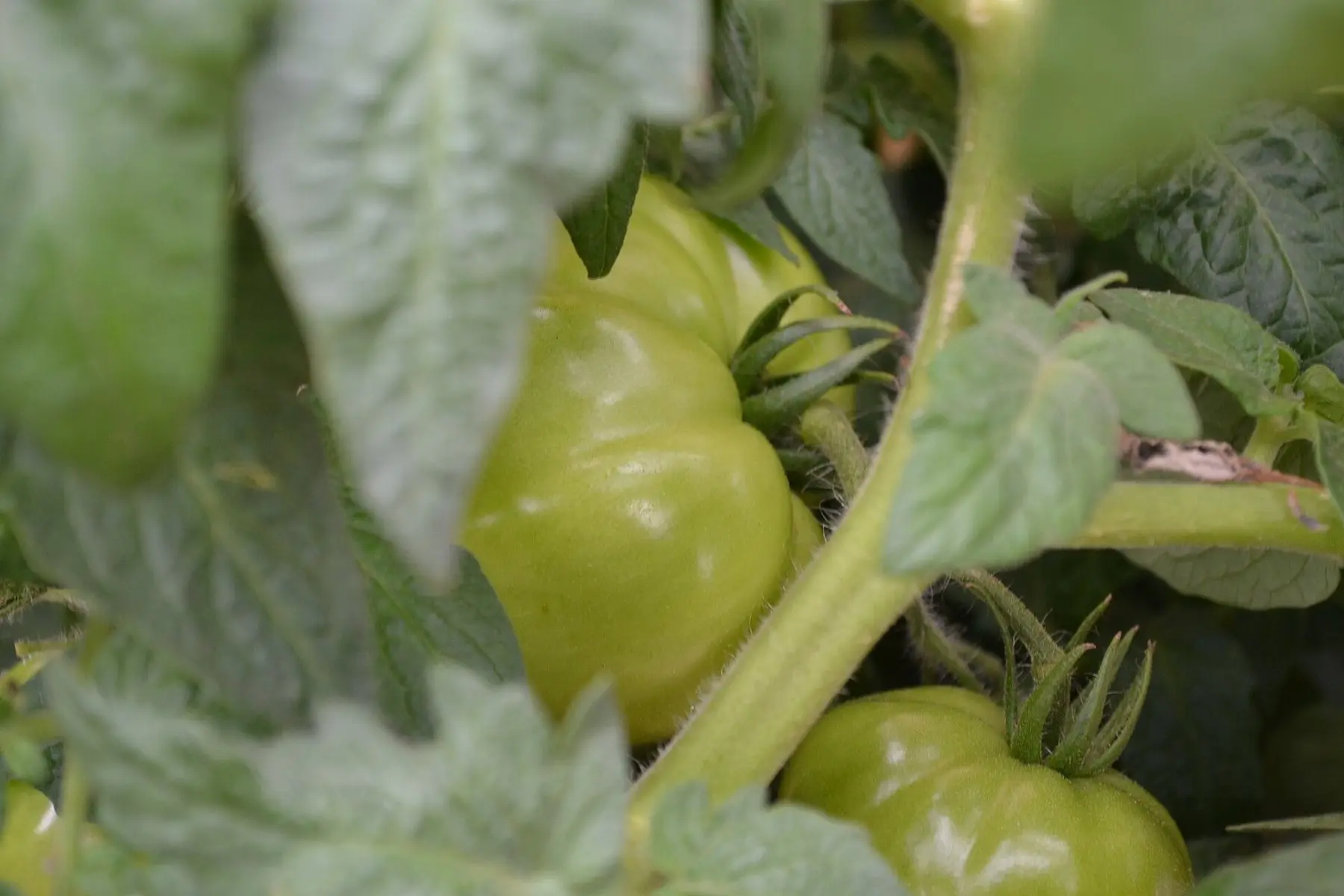
| Colour | Pale green, often yellowish at the blossom end | Uniform dark green |
| Feel | Firm, with a very slight give | Rock hard |
| Cut open | Jelly around the seeds; seeds slide off the knife | Solid, seeds cut through |
The blossom end — the base, opposite the stem — is the tell. A pale or creamy patch there means the fruit has finished growing internally and switched to ripening. Uniform dark green all over means it has not.
Immature fruit will soften and eventually rot without ever developing colour or flavour. Do not waste weeks on it.
The methods, in order of usefulness
1. Pull the whole plant. The most efficient method for a large end-of-season crop. Pull the entire plant, shake the soil from the roots, and hang it upside down in a frost-free garage, shed or basement. Fruit keeps drawing on the plant’s reserves and ripens over several weeks, generally with better flavour than picked fruit. Check it over weekly.
2. Single layer in a box or tray. Pick the mature green fruit, leave the stem stub on, and lay it in a single layer, not touching, in a shallow box or tray. Cover loosely with newspaper. Somewhere around 65 to 70°F, out of direct sun. Check every few days and remove anything soft or marked.
3. Paper bag with a banana. For a small batch you want quickly. A few tomatoes in a paper bag with a ripe banana or apple — both release a lot of ethylene, and the bag concentrates it. Usually several days faster.
Paper, never plastic
A plastic bag traps the moisture the fruit gives off along with the ethylene, and the tomatoes rot before they ripen. Paper holds the gas in while letting water vapour through, which is the whole reason the trick works with a paper bag specifically.
4. Individual newspaper wrapping. Slowest and best for storage — wrap each fruit and box them. Ripening staggers over weeks rather than arriving all at once.
Temperature is the variable that matters
- Below 55°F — ripening stalls, and the fruit permanently loses flavour compounds. This is why a tomato that has been in a fridge never tastes right again, and why you should never refrigerate an unripe one.
- 65–70°F — the sweet spot.
- Above 85°F — the fruit stops producing lycopene, the pigment that makes it red, while still producing carotene. You get a yellowish-orange, mealy tomato. This is exactly what a sunny windowsill in late summer does.
To slow ripening down deliberately — spreading a glut over more weeks — store cooler, around 55 to 60°F. To speed it up, warmer and with ethylene.
Picking before frost
Watch the forecast and bring fruit in before the first frost. Frost-damaged tomatoes go soft and translucent and rot rather than ripening.
Pick with the stem stub attached and handle gently — bruised fruit rots. Wipe rather than wash; surface moisture invites mould, and you can wash it before eating.
If blight is in the crop, only bring in fruit that is completely firm and unmarked, and check it daily — blighted tomatoes rot fast and spread to their neighbours in the box. Do not preserve or can blighted fruit.
What to do with the ones that never ripen
Immature green tomatoes are a genuine ingredient, not a consolation prize:
- Fried green tomatoes — sliced, dredged in cornmeal, fried.
- Green tomato chutney — the classic British answer to an end-of-season glut, and it keeps for a year.
- Salsa verde, relish, piccalilli.
- Pickles, whole or sliced.
- Green tomato cake or chutney-style jam, which sounds wrong and works.
Green tomatoes are best cooked
Green tomatoes contain solanine and tomatine, the same family of alkaloids that makes green potatoes unsafe. The levels in tomatoes are much lower and normal culinary quantities are fine, but they are bitter raw and are better cooked, which is how every traditional recipe treats them anyway.
Common questions
Do green tomatoes need sunlight to ripen?
Which green tomatoes will actually ripen?
Does the paper bag with a banana trick work?
What temperature ripens tomatoes best?
Can you ripen tomatoes on the whole pulled plant?
What do you do with tomatoes that will not ripen?
Backyard Weekly
Know what to plant, week by week
Free planting calendar. Join the weekly email for seasonal jobs, fixes for what is going wrong, and gear worth buying.
Set MONETIZATION.email.endpoint in src/config/site.ts to enable this form.
By subscribing you agree to our privacy policy. Grow In Backyard will never sell your address.
Keep reading
How to Grow Tomatoes: Determinate or Indeterminate First
That one word on the seed packet decides your spacing, your pruning, and your harvest shape. Then it is warmth, consistent water, and feeding at the right time.
Why Are My Tomatoes Splitting? Water, Almost Always
Tomatoes split when a dry spell is followed by heavy water — the inside grows faster than the skin. How to read the crack, and how to stop it happening.
Tomato Blight: Telling Early From Late, and What to Do
Late blight destroys a plant in days and there is no cure. How to identify it against early blight, act fast enough to save the fruit, and prevent it next year.
How Deep to Plant Potatoes (And Why Hilling Matters More)
Four inches at planting, then hill as they grow. Why planting deep in cold spring soil backfires, and how depth differs in containers and no-dig beds.