Two-Zone Grilling: The Setup That Fixes Most Problems
Burnt outside, raw inside is a heat-layout problem, not a timing one. How to build a hot zone and a cool zone, and which foods belong on each.

On this page
Almost every grilling failure — chicken black outside and pink at the bone, sausages split and raw, sauce turned to tar — comes from the same cause. The whole grate is the same temperature, and it is too hot.
The fix is not a technique or a gadget. It is a layout.
Building the two zones
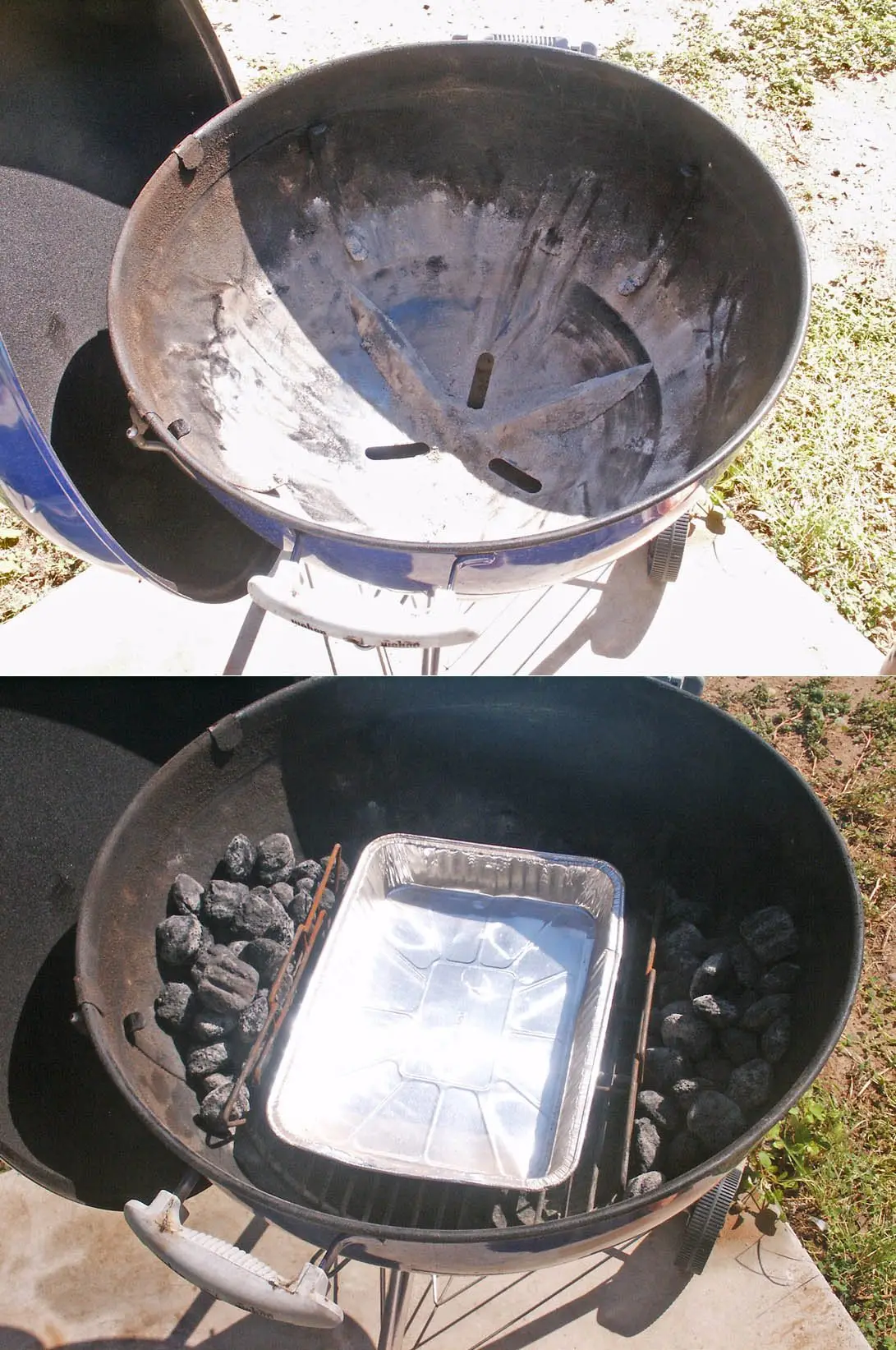
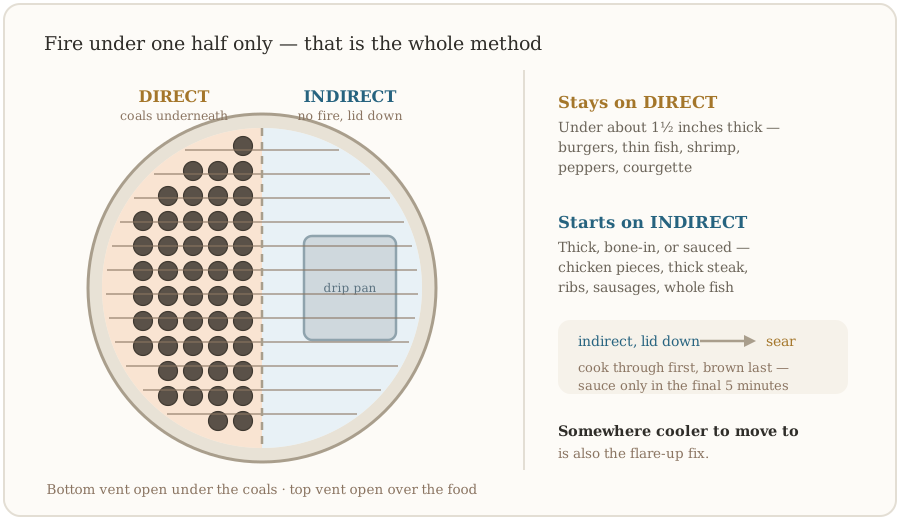
On charcoal: light your coals, and when they are ashed over, rake them all to one side of the kettle, two or three coals deep. Leave the other half of the charcoal grate bare. That is it. The banked side is your direct zone, the empty side your indirect zone.
On gas: light the burners on one side only. On a three-burner grill, light the outer two and leave the middle off, or light one end. The unlit section is the indirect zone.
Either way, close the lid for ten minutes before cooking so the whole chamber comes up to temperature and the grate is properly hot.
Set the vents and leave them
On a charcoal grill, the bottom vent controls the fire and the top vent controls the draw. Open both fully for searing; close the bottom vent to about a third for a steadier indirect temperature. Never close them completely with food on — you will smother the fire and coat everything in sooty smoke.
Which zone for which food
The rule of thumb is thickness. Food up to about an inch and a half cooks through in roughly the time it takes to build a good crust, so it can live over direct heat. Anything thicker browns long before the middle is done, and needs the indirect side to catch up.
| Food | Start | Finish | Why |
|---|---|---|---|
| Burgers, ¾ in | Direct | Direct | Cooks through in searing time |
| Thick steak, 1½ in+ | Indirect | Direct sear | Even interior, then crust |
| Bone-in chicken | Indirect, lid down | Direct, skin down | Heat must reach the bone |
| Sausages | Indirect | Direct | Prevents splitting and flare-ups |
| Ribs | Indirect, long | Direct with sauce | Sauce burns if applied early |
| Whole fish | Indirect | — | Too delicate to move much |
| Shrimp, thin fish fillets | Direct | — | Seconds, not minutes |
| Corn, in husk | Indirect | Direct | Steams first, then chars |
| Peppers, onions, courgette | Direct | — | Thin, wants char |
| Potatoes, whole | Indirect | — | Needs an oven, not a fire |
| Anything with BBQ sauce | Indirect | Direct, last 5 min | Sugar burns fast |
The sauce rule
Barbecue sauce is mostly sugar, and sugar burns at a temperature well below the one you sear at. Brushed on at the start it turns black and bitter long before the meat is done — which is where the belief that barbecue “should” taste slightly burnt comes from.
Cook the food through unsauced, then brush sauce on for the last five minutes over direct heat. You get the caramelised glaze without the carbon.
Lid up or lid down
On the direct side, lid up is fine for anything quick — you want to watch it and turn it.
On the indirect side, the lid must be down. Indirect cooking works by hot air circulating around the food. With the lid open, there is no circulation and no oven, just a cool patch of grate. This is the step most often skipped, and it is why “indirect” sometimes seems not to work.
Flare-ups are a fat problem, not a fire problem
When fat drips onto coals it ignites, and the flame that comes up deposits soot rather than flavour. The two-zone setup is also the flare-up fix: move the food to the indirect side, let the flare burn itself out, and move it back. Squirting water at it just raises ash onto your food.
Temperature, not time
Every timing chart assumes a grill temperature, a food temperature, and a thickness that will not match yours. An instant-read thermometer removes all of the guesswork for the price of a couple of ruined dinners.
Pull food a few degrees below your target — it keeps cooking after it comes off — and rest larger cuts for five to ten minutes so the juices redistribute. For food safety guidance on specific meats, your national food safety agency publishes current internal temperatures, and those are worth following rather than a chart on a grilling site.
The habits that matter more than kit
Preheat properly. Ten minutes with the lid down. Food sticks to a cold grate.
Clean the grate hot. Brush it just before cooking, when residue is soft.
Oil the food, not the grate. Oil on a hot grate burns off immediately; oil on the food stays where it is useful.
Stop moving things. Meat releases from the grate when a crust has formed. If it is stuck, it is not ready to turn.
Keep the lid shut. Every time you open it on the indirect side, the chamber temperature drops and the clock resets.
Common questions
What is two-zone grilling?
What is the difference between direct and indirect heat?
Which foods need indirect heat?
How do I stop chicken burning outside and staying raw inside?
Can you do two-zone cooking on a gas grill?
Backyard Weekly
Know what to plant, week by week
Free planting calendar. Join the weekly email for seasonal jobs, fixes for what is going wrong, and gear worth buying.
Set MONETIZATION.email.endpoint in src/config/site.ts to enable this form.
By subscribing you agree to our privacy policy. Grow In Backyard will never sell your address.
Keep reading

How a Smokeless Fire Pit Works (and Its Real Limits)
A smokeless fire pit burns the smoke rather than venting it, using a double wall and a second ring of air. Here is the mechanism, and when it stops working.
Outdoor Games That Actually Get Played
Most backyard games get used twice and live in the garage after that. Which ones hold up, how much space each really needs, and what to skip.
How to Clean Grill Grates (and Ditch the Wire Brush)
Wire brush bristles break off and end up in food, sending people to hospital every year. What works instead, and why the material of your grates changes the method.

Backyard Bar and Grill: Planning One That Gets Used
A garden bar fails on the same things a kitchen does — no landing space, no shade, no drainage. Layouts by budget, and the height that decides everything else.