Tomato Plant Leaves Curling: 7 Causes, and Which Matter
Most curling tomato leaves are harmless leaf roll from heat or water stress. A few causes are serious. Here is how to tell them apart in under a minute.
On this page
Curling tomato leaves cause more panic than almost any other garden symptom, and most of the time nothing is wrong. The plant is managing water. But two of the seven causes below will cost you the crop, so it is worth spending a minute telling them apart.
Work out which one you have
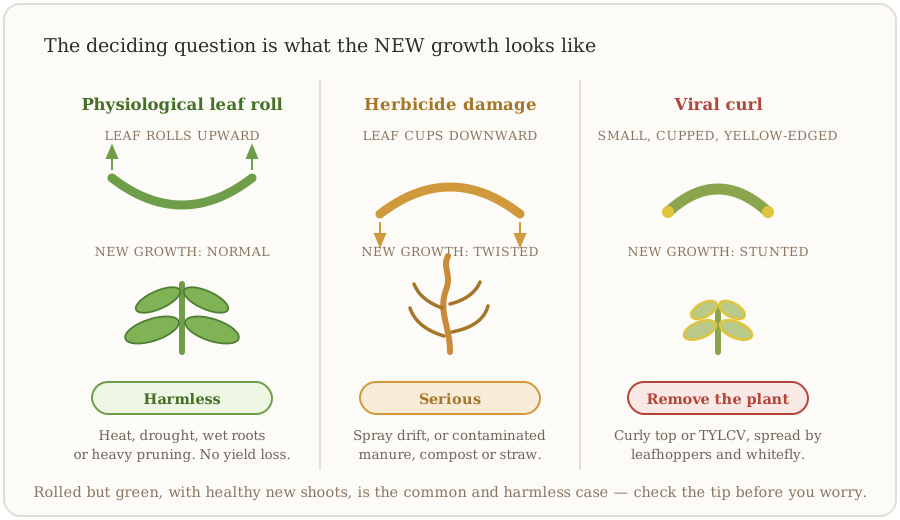
Start with the newest growth at the top of the plant. That single check separates the harmless causes from the serious ones faster than anything else.
| What you see | Likely cause | Serious? | What to do |
|---|---|---|---|
| Leaves roll upward, thick and green, new growth normal | Physiological leaf roll | No | Nothing. Mulch and water consistently |
| Curling in afternoon heat, recovers by morning | Heat stress | No | Shade cloth above 90°F; water early |
| Curl plus dry soil 3 in down, wilting tips | Drought stress | No | Water deeply, less often; mulch 3 in |
| Curl plus wet soil, yellowing lower leaves | Overwatering | Mild | Stop watering; improve drainage |
| Curl after heavy pruning or transplanting | Transplant or pruning shock | No | Wait 7–10 days; stop pruning |
| Twisted, fern-like, strap-shaped NEW growth | Herbicide damage | Yes | See below |
| Small, cupped, yellow-edged leaves, stunted plant | Virus (curly top, TYLCV) | Yes | Remove and bin the plant |
Physiological leaf roll — the usual answer
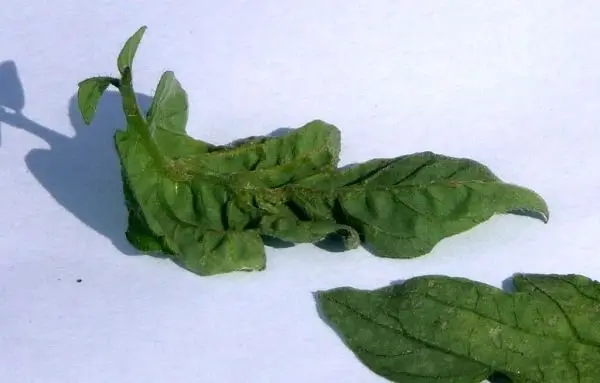
If the leaves roll upward and inward from the margins, feel thick and leathery, stay a normal green, and the growing tip looks fine, this is physiological leaf roll. It is the plant reducing the surface area it loses water from.
It is triggered by heat above roughly 85°F, by soil that swings between soaked and bone dry, by heavy pruning, and by transplanting. Some varieties — particularly indeterminate heirlooms and paste types like Roma and San Marzano — roll far more readily than others.
It does not reduce yield, and there is nothing to fix beyond consistency: mulch 3 inches deep, water deeply and less often, and stop removing leaves.
Consistency is easier in ground than in a container or a shallow bed, which swing between soaked and dry far faster — if your tomatoes curl every summer, bed depth may be the underlying cause rather than anything you are doing wrong. See choosing a raised bed for the depths that hold moisture.
Check the soil, not the leaves
Too much water and too little water produce visually identical curl. Push a finger three inches into the soil before you decide. Damp at that depth means the plant is not thirsty, and watering it again makes things worse.
Herbicide damage — the one people miss
This is the cause most often mistaken for disease, and the one worth learning to recognise.
Herbicide damage shows up in new growth first: leaves emerge twisted, cupped downward, narrow and strap-like, or fern-like, while older leaves lower down stay perfectly normal. Stems may thicken or grow in a spiral.
Three routes bring it into a garden that never sprayed anything:
- Drift from a neighbour’s lawn weed-and-feed on a breezy day. It travels much further than people expect.
- Contaminated compost or manure from animals fed hay treated with aminopyralid or clopyralid. These persist through the animal, through composting, and into your bed.
- Straw mulch from a treated field.
There is no cure. Plants sometimes grow out of a mild dose over several weeks; a heavy dose will not recover. What matters is identifying the source, because contaminated compost will affect the bed next season too.
Test suspect compost before you use it
Sow a few pea or bean seeds in a pot of the compost and a few in known-clean potting mix. Compare after two weeks. Distorted, cupped, or fern-like growth in the suspect pot means the batch is contaminated — do not spread it, and do not put it on the beds “thinned out”.
Viral curl — remove the plant
Viral leaf curl looks different from everything above: leaves are small, cupped, thickened, yellow at the margins, the plant is visibly stunted, and it does not grow out of it. Curly top virus is spread by leafhoppers; tomato yellow leaf curl virus by whitefly.
There is no treatment. Pull the plant, bag it, and put it in the bin rather than the compost heap. Leaving it in place gives the insect vector a reservoir to spread from to the rest of the row.
What not to do
- Do not strip the curled leaves. A stressed plant needs its leaf area; removing it compounds the problem.
- Do not add fertiliser hoping to push the plant through it. Excess nitrogen makes leaf roll worse.
- Do not spray fungicide. None of the seven causes here is a fungus.
- Do not water more just because leaves are curling — check the soil first.
Preventing it next season
Most of the harmless causes trace back to inconsistent soil moisture and heat stress, both of which are easier to design out than to fix mid-season. Mulch deeply, water at the roots on a schedule rather than on sight, and give the plants neighbours that shade the soil without competing for it — companion plants for tomatoes covers which ones earn the space and which five to keep well away.
For the herbicide and contaminated-compost routes specifically, the safest prevention is knowing what went into the bed. If you are starting fresh, filling with a known blend rather than an unlabelled bulk delivery removes the single most common source of aminopyralid damage.
Common questions
Should I remove curled tomato leaves?
Will curled tomato leaves affect my harvest?
Do tomato leaves curling up or down mean different things?
Can too much water cause tomato leaves to curl?
How do I know if it is herbicide damage?
Backyard Weekly
Know what to plant, week by week
Free planting calendar. Join the weekly email for seasonal jobs, fixes for what is going wrong, and gear worth buying.
Set MONETIZATION.email.endpoint in src/config/site.ts to enable this form.
By subscribing you agree to our privacy policy. Grow In Backyard will never sell your address.
Keep reading
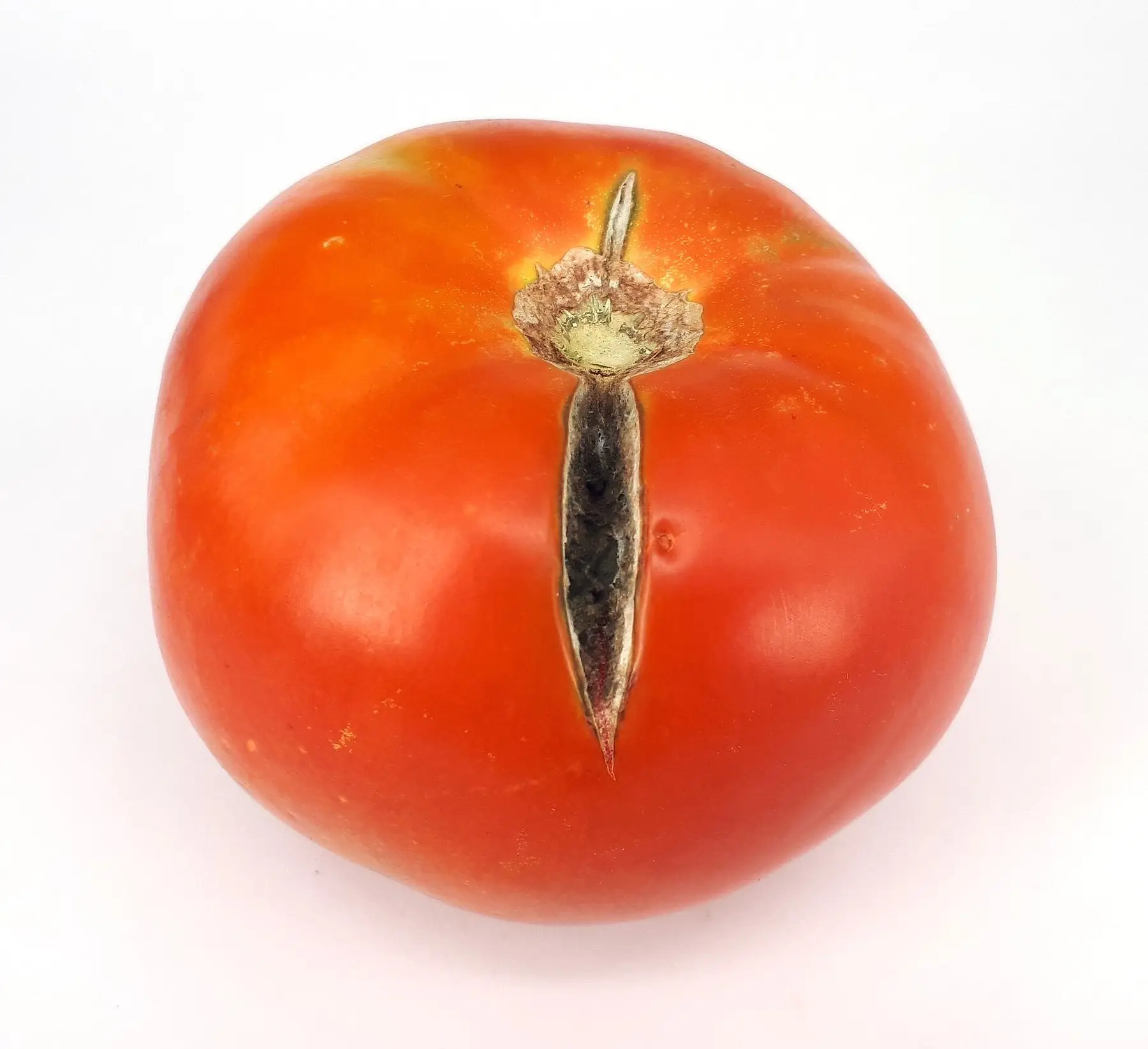
Why Are My Tomatoes Splitting? Water, Almost Always
Tomatoes split when a dry spell is followed by heavy water — the inside grows faster than the skin. How to read the crack, and how to stop it happening.
What Smells Do Mosquitoes Hate? What Works and What Does Not
Citronella, lavender and peppermint all repel mosquitoes in a lab. Almost none of it survives contact with a real backyard — here is what actually reduces bites.
How to Use Neem Oil on Plants Without Burning Them
The right dilution, why it needs soap to mix, when to spray, and which pests it works on. Neem is slow and specific — treat it as a knockdown and it fails.
Fungus Gnats: Kill the Larvae, Not the Flies You See
The adults are harmless; the larvae in the top inch of compost are what damage roots. Why letting the surface dry works, and what actually breaks the cycle.