What Do Deer Eat? Garden Plants and What Not to Feed Them
Deer will eat far more of a garden than most plant lists admit, and a few backyard treats are genuinely dangerous. What is safe to feed, and what to skip.

On this page
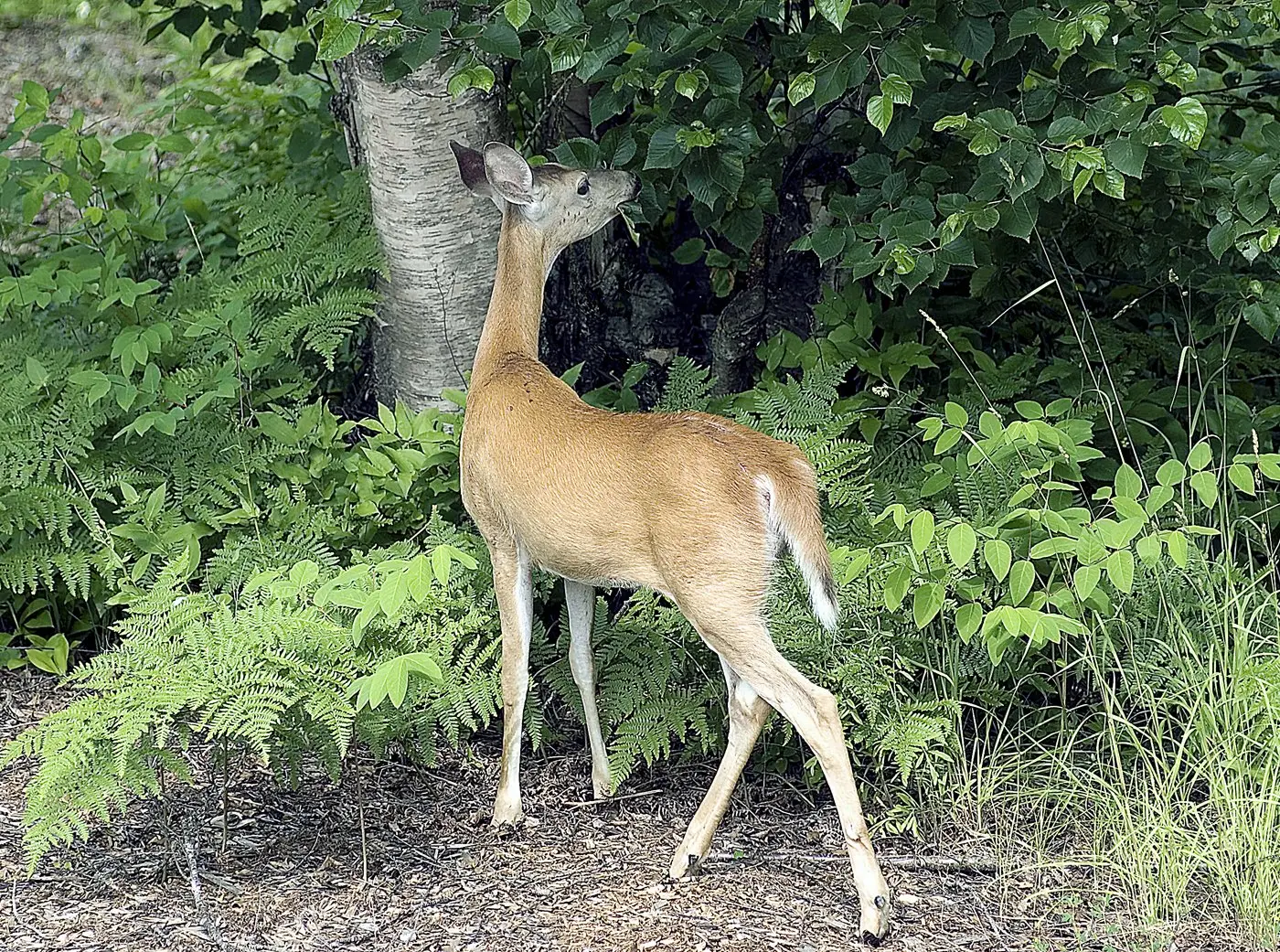
Deer are browsers with a wide natural diet, which is exactly why “deer-resistant” plant lists are so often wrong in practice — a hungry deer in a lean season will sample plants that supposedly repel it.
What they actually eat
| Category | Examples | Notes |
|---|---|---|
| Natural browse | Twigs, leaves, buds of shrubs and trees | The bulk of the wild diet, especially in winter |
| Garden vegetables | Beans, peas, lettuce, carrots (tops and roots) | Frequently targeted when accessible |
| Ornamentals | Hostas, tulips, roses, begonias | Widely damaged despite “resistant” reputations |
| Fruit and nuts | Apples, acorns, berries | Seasonally important, high-value food |
| Grasses | Lawn and pasture grasses | Regular but lower-preference food |
"Deer-resistant" plant lists overstate the case
Most such lists describe plants deer prefer to avoid when better food is available, not plants they will never eat. In a hard winter, a drought year, or a yard where deer pressure is heavy, supposedly resistant plants — hostas and tulips especially — get eaten anyway. Treat these lists as a starting point, not a guarantee.
What is safe to feed them deliberately
If you want to feed deer intentionally — for viewing, or to draw pressure away from garden beds — root vegetables, apples, and natural browse are reasonable, close to what they eat naturally.
Corn is commonly offered but is not an ideal primary food; in large quantities, especially outside the season a deer’s gut is adapted to digest starchy food, it can cause the same digestive problems as bread.
Why bread and corn are riskier than they seem
Deer rely on a specific population of gut microbes tuned to their normal seasonal diet. A sudden shift to a high-starch food — bread, corn in quantity, other processed carbohydrates — can throw that balance off badly enough to cause serious digestive illness, not just an upset stomach. This is why wildlife agencies generally discourage supplemental feeding with these foods even though deer will eat them readily.
Reducing damage without a full fence
A fence tall enough to exclude deer reliably needs to be at least 7–8 feet — most garden fencing falls well short. Short of that:
- Plant the least-preferred species near the garden’s edge as a mild deterrent buffer, and accept that nothing is fully deer-proof.
- Motion-activated sprinklers startle deer effectively and are one of the more reliably reported deterrents.
- Rotate scent-based repellents — deer habituate to a single product faster than to a changing one.
- Net or cage specific high-value plants rather than trying to protect an entire garden.
Are they dangerous?
Unprovoked attacks on people are rare, but deer are large wild animals capable of real harm, and two situations deserve genuine caution: bucks during the autumn rut, when they are more aggressive and territorial, and does with fawns in spring, which will defend a fawn if they perceive a threat.
A fawn found alone and apparently abandoned is very often not — does deliberately leave fawns hidden and return periodically to nurse, and a fawn’s lack of scent while alone is itself a defence against predators. Leave it where it is rather than approaching or “rescuing” it.
Common questions
Do deer eat carrots?
Can you feed deer bread?
Do deer eat begonias?
Do deer attack humans?
Backyard Weekly
Know what to plant, week by week
Free planting calendar. Join the weekly email for seasonal jobs, fixes for what is going wrong, and gear worth buying.
Set MONETIZATION.email.endpoint in src/config/site.ts to enable this form.
By subscribing you agree to our privacy policy. Grow In Backyard will never sell your address.
Keep reading
Will Squirrels Eat Your Garden? What's Actually at Risk
Squirrels dig up bulbs, strip tomatoes, and raid every nut tree in reach — but leave most vegetables alone. What they actually target, and what stops them.
How to Keep Chickens Out of the Garden
Chickens will strip a vegetable bed in an afternoon. Fence the garden rather than the birds, and use the six other methods in the order that actually works.
Are Corn Snakes Poisonous? No, and Not Venomous Either
Corn snakes are harmless constrictors often killed on sight because they mimic copperheads. How to tell them apart, and why one is worth keeping around.
Can Rats Climb Walls? Brick and Pipes, Yes. Glass, No.
Rats climb rough vertical surfaces easily, jump three feet up and squeeze through a 20mm gap. What that means for sealing a house, and what actually stops them.