Garden Hose Reels: Wall-Mounted, Retractable, or Cart
A reel fails at the wall fixing or the swivel seal, not the drum. What each type suits, the fixings a full reel actually needs, and winter care that prevents splits.

On this page
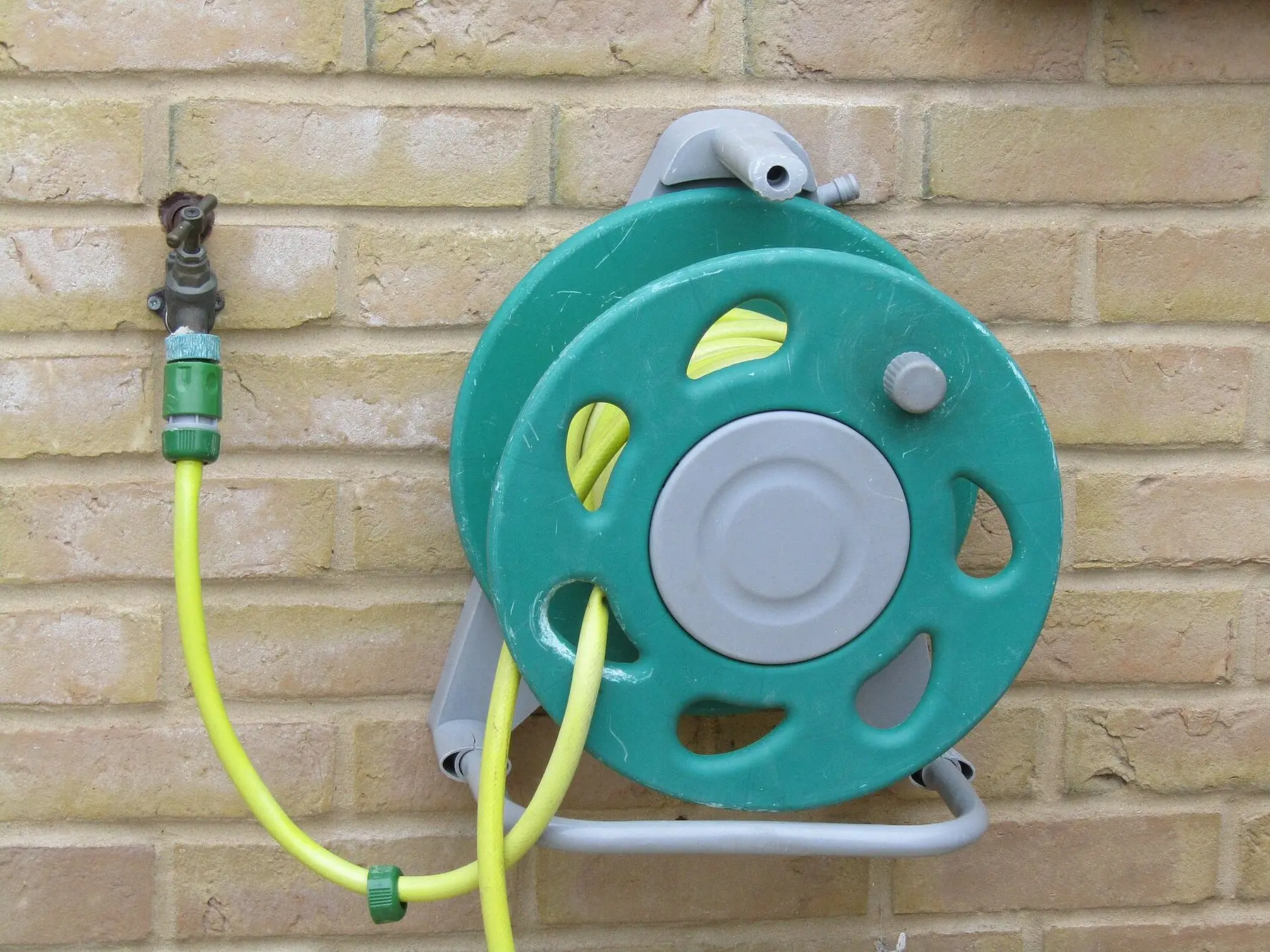
Hose reels do not usually fail at the drum. They fail at the wall fixing, which pulls out, or at the swivel seal, which drips onto the wall for a season and then floods.
Both are predictable, and both are avoidable at purchase and installation.
Which type
| Type | Best for | Durability | Notes |
|---|---|---|---|
| Wall-mounted, manual crank | A fixed tap, one watering zone | Highest | Fewest parts; the sensible default |
| Wall-mounted, retractable | Convenience, frequent short use | Medium | Spring and lock are the failure points |
| Cart / trolley | Large or awkward gardens | Medium–high | Take the hose to the job; needs storage |
| Reel box / hose box | Tidy appearance, front gardens | Medium | Encloses the hose; hardest to service |
| Freestanding post reel | No suitable wall | Medium | Needs a concreted post to resist pull |
| Hose hanger only | Short hoses | Highest | No mechanism at all; cheapest |
Wall-mounted manual is the durable choice. A drum, a crank, a swivel — that is all there is to go wrong.
Retractable reels are genuinely convenient and vary enormously in quality. The mechanism to look for is a controlled or braked return; cheap units let the hose whip back, which is how the lock wears and how people get hurt. Check that spare springs and seal kits are sold before buying.
Carts win in gardens where one tap cannot reach everything. The trade-off is that a cart with 30 metres of hose is heavy and needs storing somewhere.
Mounting it properly
This is where installations fail.
Weight: 30 metres of half-inch hose full of water is roughly 25 to 30 kg, plus the reel. And the load is not just downward — dragging the hose out pulls the bracket outward, which is the direction most fixings are weakest in.
So:
- Fix into solid masonry. Brick or block, not the mortar joints, and never into render, cladding or insulation alone.
- Use the right anchors. Expansion anchors sized to the bracket in solid brick; resin anchors in older or softer masonry; proper hollow-wall fixings rated for the load if there is no alternative.
- All fixing points used. Manufacturers specify four for a reason.
- Height: high enough that the crank turns freely and the hose does not drag on the ground, low enough to reach comfortably.
- Position: close to the tap, with a short feed hose, and where the hose runs out without wrapping around a corner.
- Check the fixings once a season. Vibration and repeated pull loosen them gradually.
Render is not a structural material
A reel fixed into render or through insulated cladding will hold for a while and then pull out, usually taking a patch of wall with it and often while someone is dragging the hose. Fixings must reach the masonry behind. If the wall is not suitable, use a freestanding post set in concrete or a cart instead.
Leaks
At the swivel — the rotating joint where the feed hose enters the drum. This is the normal failure point: the seal wears with rotation and perishes with UV and frost. Replacement O-rings or a seal kit usually fixes it in ten minutes, which is a strong argument for buying a brand that still stocks parts.
At the connectors — a perished washer, almost always. Keep spares; they cost pennies.
From the hose itself — see choosing a hose for what determines longevity.
Sizing
Measure from the tap to the furthest point you actually water, add about 15 percent for routing round obstacles, and take the next standard size up.
Do not simply buy the longest. Extra hose is extra weight to wind, slightly lower pressure at the nozzle, and more to store. Most domestic gardens are covered by 20 to 30 metres.
Check the reel’s stated capacity is for your hose diameter — a reel rated for 30 m of half-inch hose holds considerably less five-eighths hose.
What to look for
- Metal drum and frame, or heavy-duty UV-stabilised plastic. Thin plastic goes brittle in sun.
- A swivelling wall bracket, so the reel turns to face where you are pulling. This is the single most useful feature and it is not universal.
- A guide roller or hose guide, which stops the hose chafing on the housing.
- Available spare parts — seals, springs, connectors.
- A removable reel, so it comes off the bracket for winter storage.
- Enough crank leverage. A short handle on a full drum is hard work.
Winter
Freezing water expands with enough force to split hose walls, crack fittings and destroy a swivel, and none of that shows until you turn the tap on in spring.
Before the first frost:
- Turn off and disconnect at the tap.
- Drain the hose completely — unwind it down a slope or over a wall and let it empty.
- Drain the swivel and the reel.
- Isolate and drain the outdoor tap at its indoor stopcock, or fit an insulated cover.
- Store the reel under cover if it lifts off its bracket.
Ten minutes in November, and the hose lasts years longer.
Common questions
What type of hose reel is best?
How do you mount a hose reel on a wall?
Why does my hose reel leak?
Are retractable hose reels any good?
Should you leave a hose reel outside in winter?
What size hose reel do you need?
Backyard Weekly
Know what to plant, week by week
Free planting calendar. Join the weekly email for seasonal jobs, fixes for what is going wrong, and gear worth buying.
Set MONETIZATION.email.endpoint in src/config/site.ts to enable this form.
By subscribing you agree to our privacy policy. Grow In Backyard will never sell your address.
Keep reading
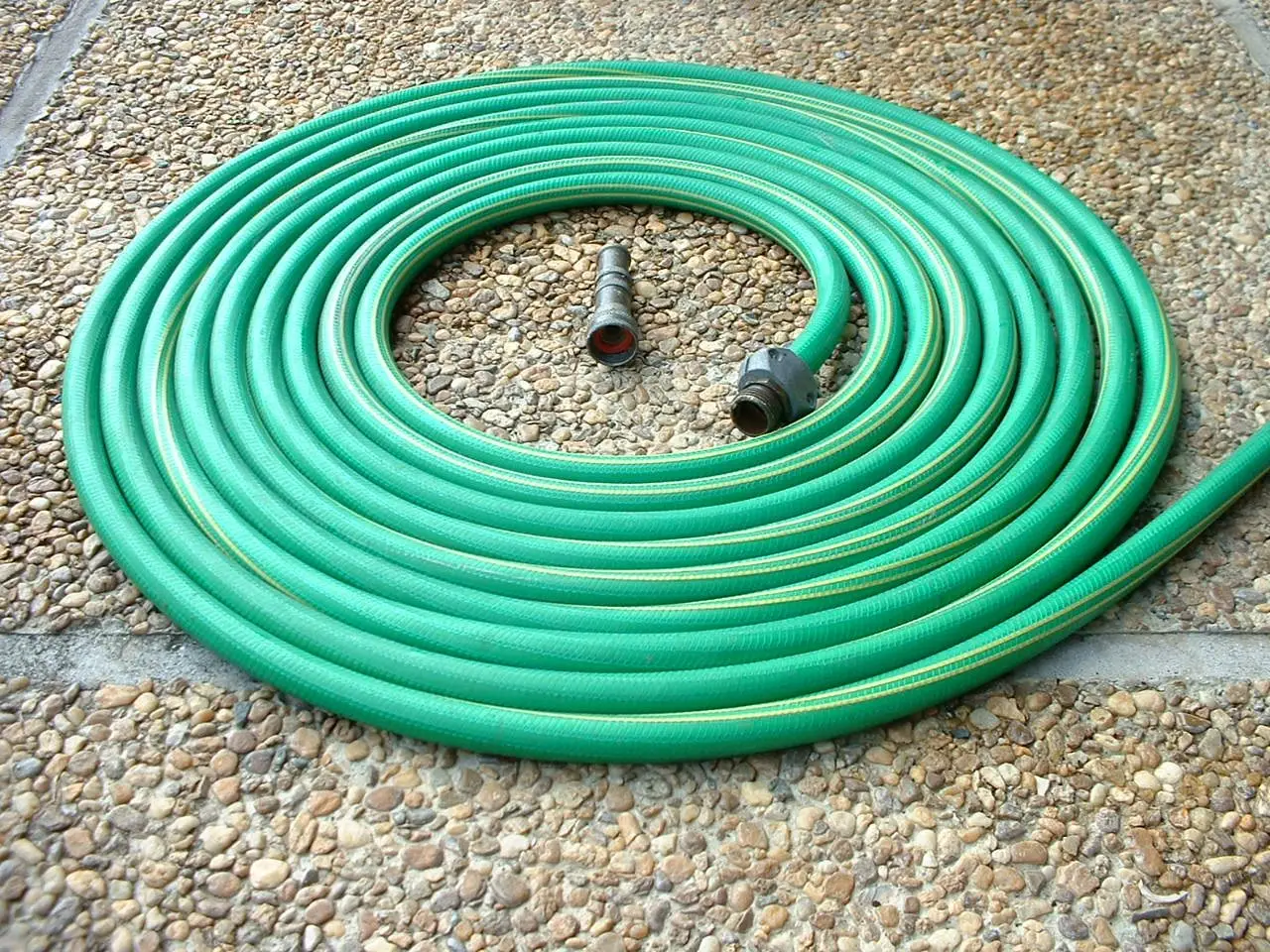
Choosing a Garden Hose: The Specs That Actually Matter
Length costs you pressure, fittings decide the leaks, and expandable hoses have a real trade-off. What to check on the label before you buy a hose.
Push Mower vs Self-Propelled vs Reel: Which to Buy
Lawn size and slope decide this, not budget. What each type actually costs you in effort, and why a reel mower cuts better but suits almost nobody's lawn.
Outdoor Plants in Pots: What Survives, and What Kills Them
A pot outdoors is a harsher place than the ground — hotter, drier, and colder in winter. How to pick plants and pots that cope, and get through the cold.
How to Fill a Raised Garden Bed (Without Spending a Fortune)
What to put in the bottom, the soil mix that actually works, and why hugelkultur layering is a good idea in a deep bed and a bad one in a shallow bed.