How to Grow a Coconut Tree From a Coconut
A supermarket coconut almost never sprouts, because the husk is removed. What you actually need, how to germinate it, and why it will not fruit indoors.

On this page
The reason most attempts fail is decided at the shop. The coconut you can buy has already had its husk removed, and the husk is what the germinating embryo depends on.
So the honest version: this works, it is slow, and it starts with sourcing the right nut.
Sourcing the nut
Three requirements, and the first is the one that catches everyone:
- Still in its husk. The thick fibrous casing — green, yellow or brown — protects the embryo and holds moisture through germination. The hairy brown ball in a supermarket is the inner shell with the husk already stripped, and it usually will not sprout.
- It sloshes. Shake it firmly. You should hear liquid moving. That water is the embryo’s entire food supply, and a silent nut has dried out and is dead.
- Fresh and undamaged. No cracks, no mould, no soft spots. The older the nut, the worse the odds.
Specialist suppliers, tropical grocers and growers sell unhusked nuts. It is worth the effort — starting with a husked supermarket coconut is starting with a failure.
Germinating it
- Soak for two to three days in a bucket of warm water. This rehydrates the husk and signals germination.
- Fill a large deep container with free-draining sandy mix — potting compost cut heavily with sharp sand or perlite.
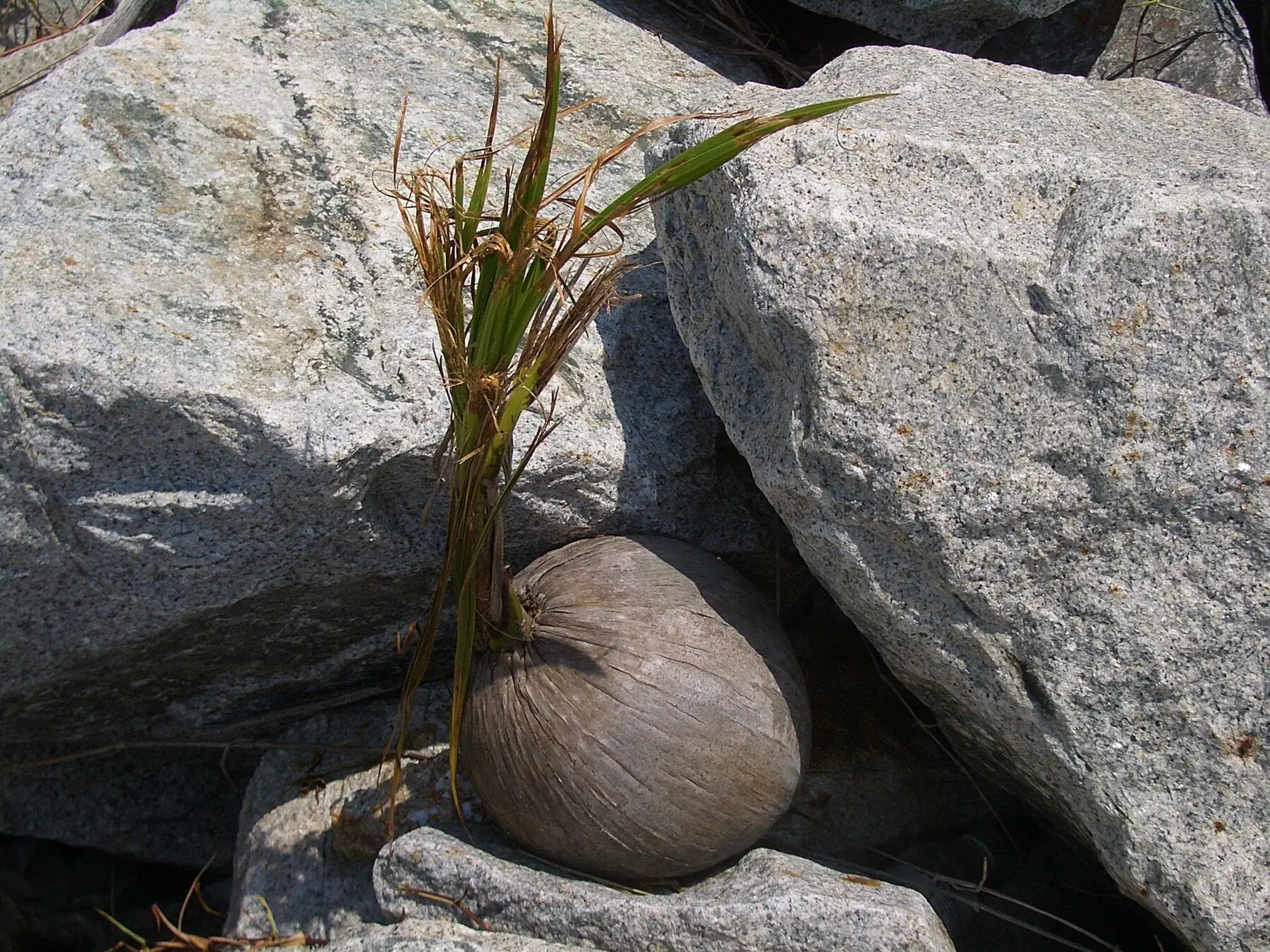
- Lay the nut on its side and bury it only halfway, with the three pores at the pointed end just above the surface. This is where the shoot emerges.
- Keep it at 80 to 90°F. A heat mat, a propagator or a warm greenhouse. This is not optional — below about 70°F it simply will not start.
- Keep the mix damp, never waterlogged. Mist regularly and keep humidity high.
- Wait three to six months. Sometimes longer.
Do not bury it completely
A fully buried coconut rots. The nut needs to sit half-exposed, which keeps the emerging shoot and the pore area from staying permanently wet while the roots below stay damp. Burying it feels like planting and is the second commonest reason after starting with a husked nut.
The shoot appears from one of the three dark pores at the end — the “eyes”. Roots come from the same area and grow downward into the mix.
Growing it on
Once it has sprouted, the nut stays attached and continues feeding the seedling for the first year or more. Do not remove it, however untidy it looks.
- Light: full sun, or the brightest position available. This is the main limiting factor indoors.
- Temperature: consistently above 70°F, never below about 50°F.
- Humidity: very high. Dry indoor air causes brown crisping leaf tips within weeks.
- Water: consistently moist, free-draining. Coconuts tolerate salt but not stagnation.
- Feed: a balanced feed with magnesium and potassium through the growing season. Palms are prone to magnesium deficiency, which shows as yellowing on older fronds.
- Container: deep, because the root system goes down before it goes out.
It will not fruit, and it will not last forever indoors
A coconut palm needs six to ten years of full tropical sun, humidity and warmth to bear fruit, and reaches 60 to 80 feet. Nothing about a house or a conservatory supplies that.
Indoors, most coconut palms decline after two to five years — the light and humidity are simply below what the plant needs, and it slowly runs down. That is worth knowing at the start. Grow it as a striking temporary plant, in the same spirit as sprouting an avocado pit or a pineapple crown, rather than as a tree you are establishing.
What goes wrong
Mould instead of a shoot — too wet, too cold, or a nut that was not viable.
Nothing at all for months — usually normal. Three to six months is the range, and patience is most of the technique.
Brown crisping frond tips — humidity, almost always. Sometimes salt build-up from tap water.
Yellowing older fronds — magnesium or potassium shortage; feed with a palm-specific fertiliser.
Slow decline over a couple of years — light. This is the expected indoor ending rather than a mistake.
If you want a palm that actually lives indoors
Coconut is among the hardest palms to keep in a house. If the goal is a palm rather than the coconut specifically, parlour palm, kentia and majesty palm all tolerate indoor light and humidity far better and will still be there in ten years.
The coconut is worth doing for the process — splitting open a husk, watching a shoot come out of a nut you bought whole — rather than for the plant you end up with.
Common questions
Can you grow a coconut tree from a supermarket coconut?
How do you know if a coconut will germinate?
How long does a coconut take to sprout?
Will a coconut palm grown indoors ever produce coconuts?
What conditions does a coconut palm need?
Why did my coconut go mouldy instead of sprouting?
Backyard Weekly
Know what to plant, week by week
Free planting calendar. Join the weekly email for seasonal jobs, fixes for what is going wrong, and gear worth buying.
Set MONETIZATION.email.endpoint in src/config/site.ts to enable this form.
By subscribing you agree to our privacy policy. Grow In Backyard will never sell your address.
Keep reading
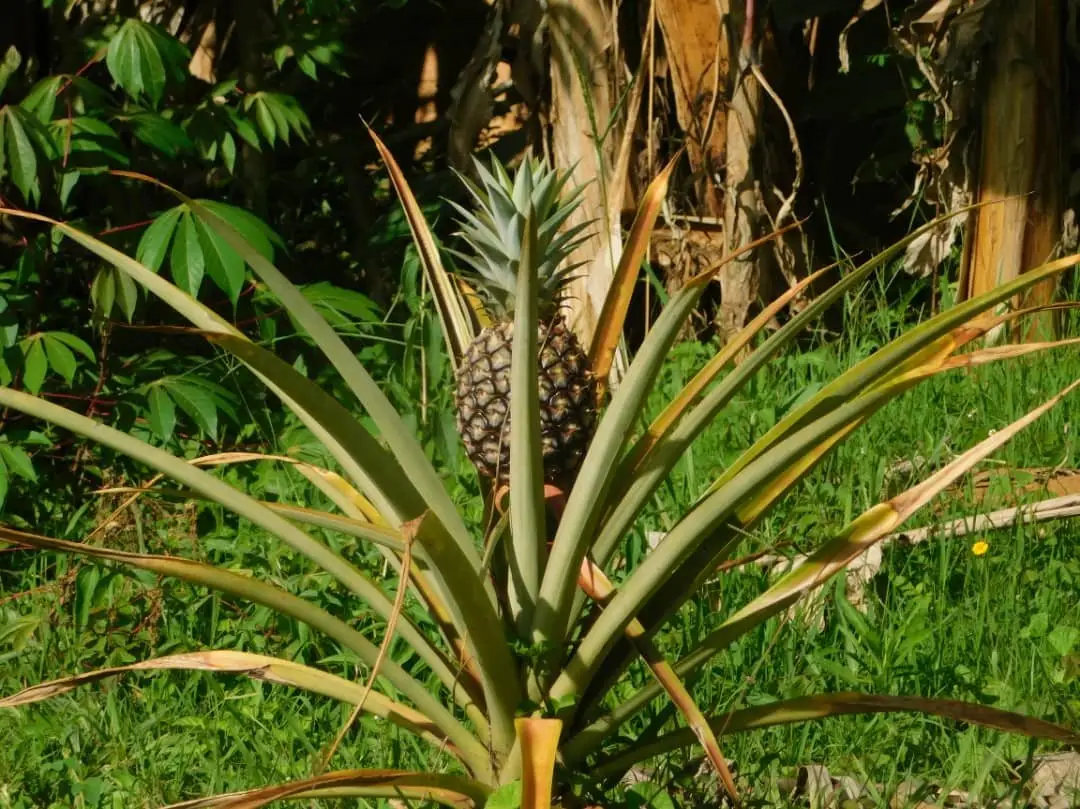
How Do Pineapples Grow? On the Ground, One Per Plant
Pineapples do not grow on trees but on a low ground plant, one fruit per plant, from hundreds of flowers fused into one. How they grow, and how long it takes.
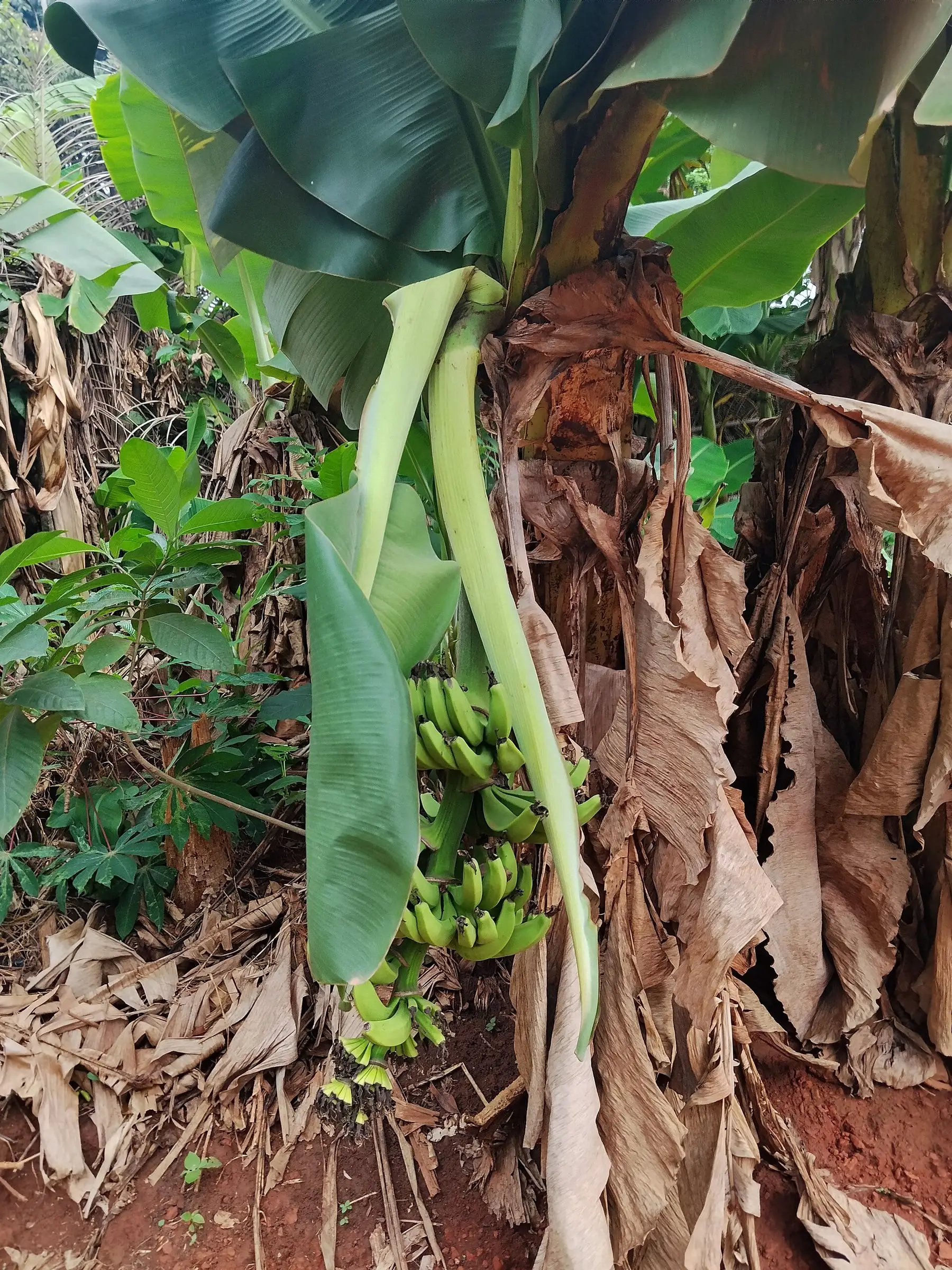
Can You Grow a Banana Tree From a Banana? Not From That
Supermarket bananas are seedless clones, so there is nothing in one to plant. What actually works is a pup or a corm — and a banana is not a tree at all.
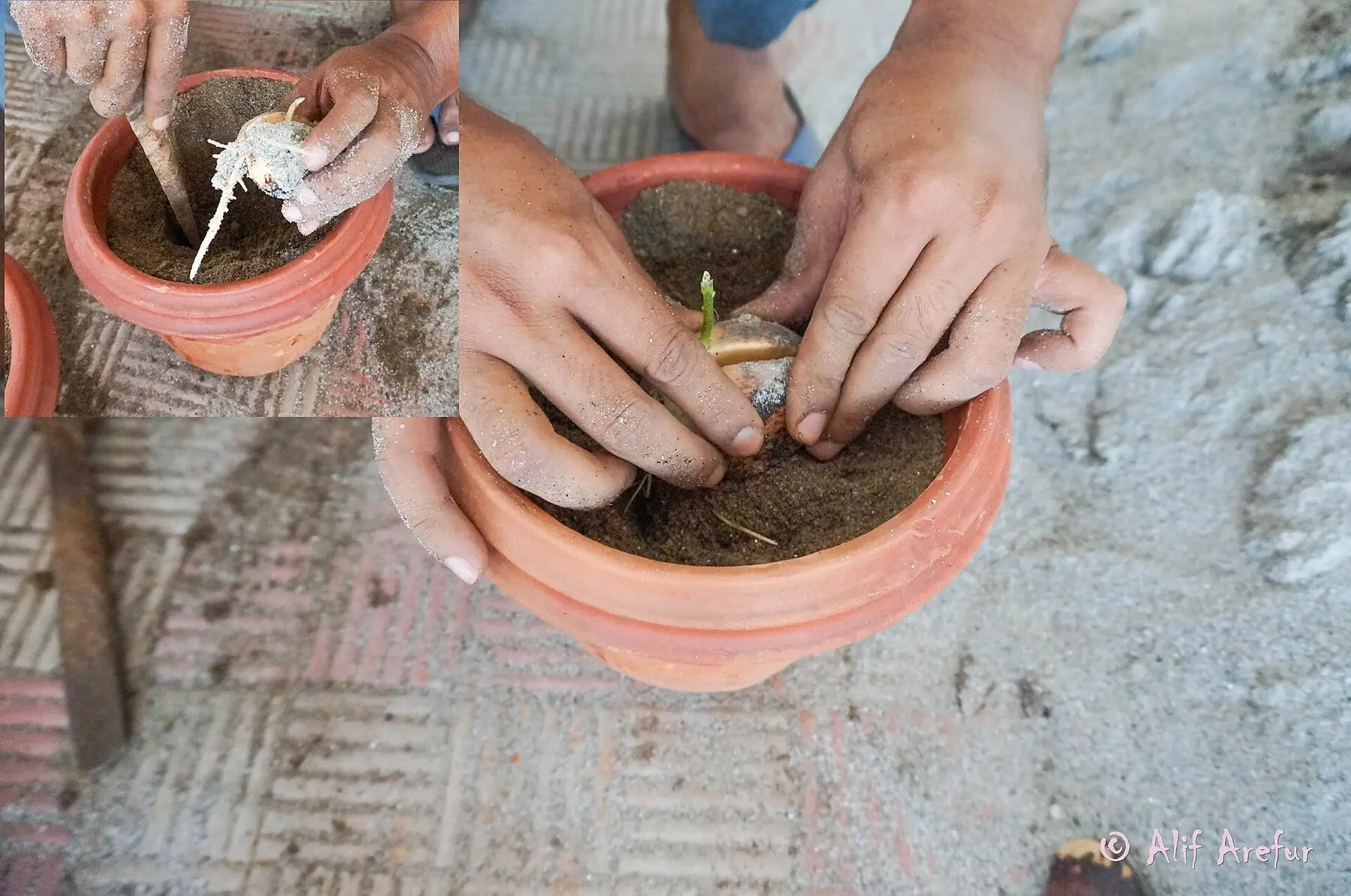
How to Grow an Avocado: From a Pit, and From a Tree
A pit sprouts easily and almost never fruits. What the toothpick trick produces, why grafted trees exist, and the A/B flowering quirk that decides pollination.
How to Grow Hydrangeas: Where to Plant and When to Prune
Morning sun, afternoon shade, and never let them dry out. Which type you have decides when to prune — and getting that wrong is why hydrangeas stop flowering.