How to Grow Asparagus: Three Years to the First Real Cut
Asparagus is a twenty-year perennial that pays nothing for two seasons. Bed preparation, crowns versus seed, and the cutting discipline that keeps it going.

On this page
Asparagus asks for something no other vegetable does: two years of work before it feeds you, and a site you will not be able to change afterwards.
The payoff is that a bed planted properly produces every spring for fifteen to twenty years. Very little else in a garden does that.
What is actually happening underground
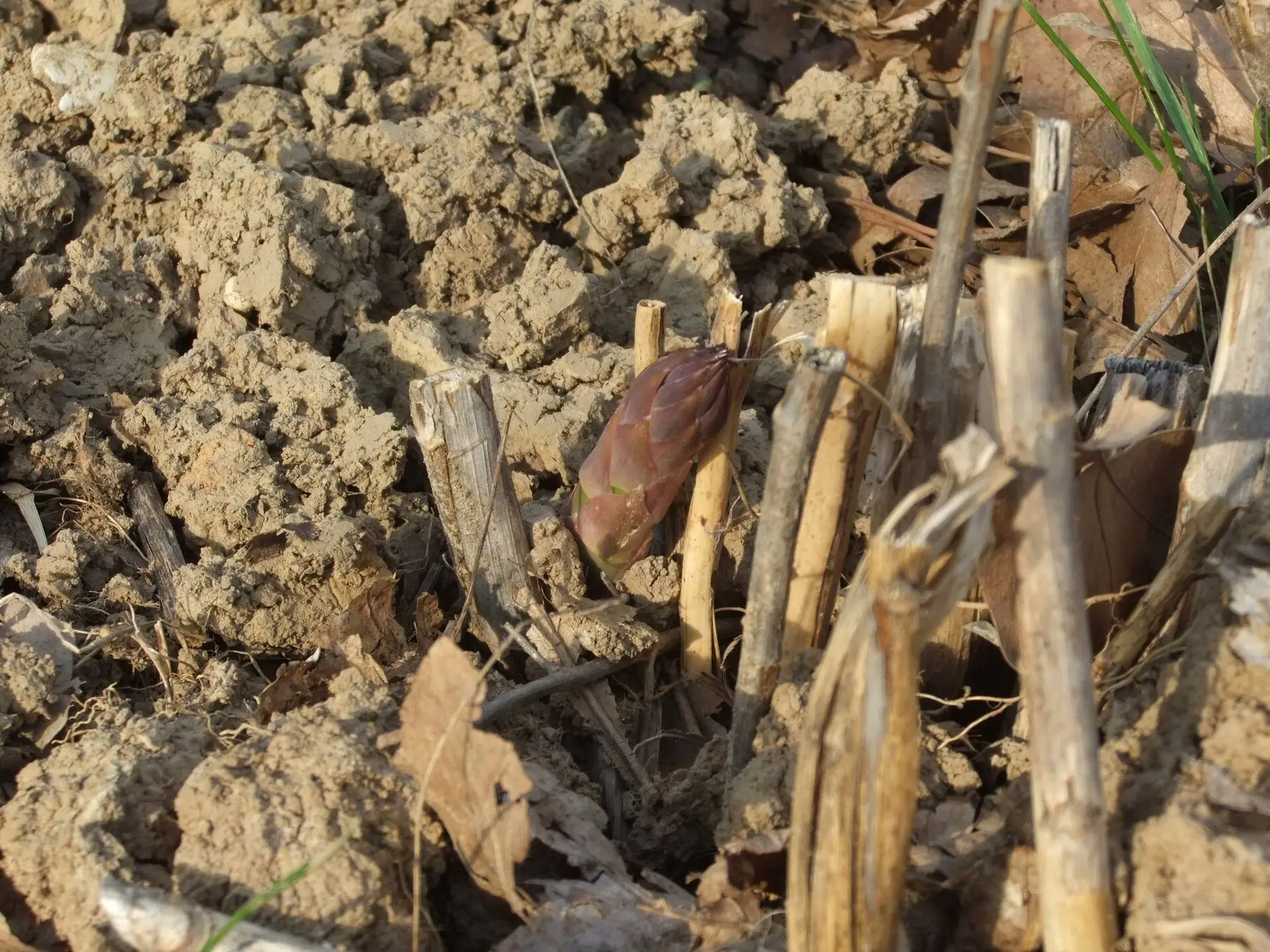
The spear is a shoot. The plant is the crown — a flat mass of buds sitting on top of thick storage roots, a few inches down.
Left uncut, each spear opens into a fine, feathery fern that can reach five feet, photosynthesises all summer, and pushes reserves back down into the crown. Next spring, the plant builds its spears entirely out of those reserves, before it has any leaves at all.
That is the whole logic of asparagus management. Every cut is a withdrawal, and the fern is the deposit. Harvest too long and the account runs down, which shows up the following year as thin spears.
Siting the bed
You will not get another chance at this.
- Full sun. Shade gives thin, sparse spears.
- Drainage above everything. Asparagus crowns rot in wet ground. On heavy clay, build a raised bed rather than digging a trench that becomes a sump.
- Shelter. Summer fern is tall and top-heavy, and wind rocks the crowns.
- pH around 6.5 to 7.5 — asparagus is one of the few crops that likes soil on the alkaline side.
Clear every perennial weed before planting. Once crowns are in, you can never dig the bed over again, and a couch grass rhizome threaded through an asparagus crown cannot be extracted. Give the site a full season of clearing if you need to.
Crowns, and which sex
Buy one-year-old crowns. Two-year crowns cost more, suffer more transplant shock, and rarely end up ahead.
Choose an all-male variety — Jersey Knight, Jersey Giant, Guelph Millennium, Pacific Purple. Female plants spend energy on berries and seed rather than spears, and their seedlings come up as weeds among the crowns. All-male varieties simply yield more.
From seed, if you would rather
Seed works and is far cheaper for a large bed, at the cost of one extra year and the job of rogueing out female plants once they berry. Sow indoors in early spring, grow on, and plant out as your own one-year crowns the following spring.
Planting
Spring, once the soil is workable.
- Dig a trench about 8 inches deep and 12 inches wide, and fork compost into the bottom.
- Make a ridge of soil along the centre of the trench.
- Sit each crown astride the ridge, buds upward, roots spread down both sides like a spider.
- Space 12 to 18 inches apart, rows 3 feet apart.
- Cover with 2 to 3 inches of soil — not the whole trench.
- Backfill gradually through the summer as shoots appear, until the trench is level by autumn.
Soak the crowns for an hour before planting if they arrived dry, and get them in the ground the day they arrive if you can.
The three-year discipline
| Year | Harvest | What you are doing |
|---|---|---|
| 1 | None at all | Building crown size |
| 2 | 2–3 weeks, a few spears | A first small withdrawal |
| 3 | 6 weeks | Approaching full production |
| 4+ | 6–8 weeks | Full harvest, then stop |
This is the part people cannot make themselves do, and it is the part that decides whether the bed lasts five years or twenty. A crown harvested hard in year two never fully catches up.
Cutting technique and the stop date
Cut spears at 6 to 8 inches, before the tip starts to open. In warm weather that means going through the bed every day or two — asparagus can grow several inches in a day.
Cut at or just below soil level with a knife, angled so you do not slice into neighbouring buds underneath. Snapping at the natural break point is fine too and carries no risk to the crown.
Then stop on a date, not when you feel like it. Six to eight weeks in an established bed, usually ending in early summer. The other signal is spear thickness: when what comes up is consistently thin, the crown is telling you it is done.
Thin spears mean an exhausted crown
Thin spears are almost always a reserves problem, not a nutrition problem you can spray away. Stop harvesting immediately, let every remaining spear grow into fern, feed and mulch the bed, and take a shorter harvest next year. The bed usually recovers within one or two seasons.
The rest of the year
Let the fern grow, all of it. It looks untidy by late summer, and cutting it back early is the most damaging thing you can do to the bed.
Support it if wind rocks it — a couple of stakes and a string run around the row is enough.
Weed by hand, shallowly. No hoeing deeper than an inch; crown buds sit just under the surface.
Cut the fern down to about an inch once it has yellowed in late autumn, and remove it, which also removes overwintering asparagus beetle.
Mulch with compost or well-rotted manure over winter. That is the annual feed, and it is largely all the bed needs alongside a general fertiliser in early spring — organic options work fine here.
The one pest worth knowing
Asparagus beetle — small, black with cream squares and a red border — chews the fern and strips the bark from stems, weakening the crown for the following year. Pick them off by hand, keep the bed clear of debris, and remove the fern promptly in autumn so they have nowhere to overwinter.
Step by step
- Time
- P1095D
- Cost
- $60
- You need
- One-year-old asparagus crowns, Well-rotted manure or compost, Mulch
- Tools
- Spade, Fork, Asparagus knife or a sharp kitchen knife
Choose a permanent site in full sun
The bed will be there for fifteen to twenty years, so pick accordingly: full sun, shelter from strong wind, and soil that never waterlogs. Asparagus tolerates poor fertility far better than it tolerates wet feet, and a badly sited bed cannot be fixed later without starting again.
Clear every perennial weed first
Once crowns are in you can never dig the bed over, so couch grass, bindweed and ground elder must be gone before planting. This is the single most important preparation step and the one most often rushed.
Dig in plenty of organic matter
Work well-rotted manure or compost into the whole bed to a spade's depth. Asparagus is a heavy feeder over decades, and improving drainage and structure now is far easier than after planting. On heavy clay, raise the bed instead of digging into it.
Plant one-year-old crowns in spring
Dig a trench 8 inches deep and 12 inches wide, make a ridge of soil along the bottom, and set each crown astride it with the roots draped down either side. Space crowns 12 to 18 inches apart, rows 3 feet apart, and cover with 2 to 3 inches of soil.
Backfill gradually as the spears grow
Do not fill the trench at once. Add soil in stages through the first season as the shoots come up, until the trench is level with the surrounding bed by the end of summer.
Harvest nothing in year one, lightly in year two
Cut no spears in the first year and only a few over two or three weeks in the second. Every spear you leave becomes fern that feeds the crown, and a bed harvested too early stays weak for the rest of its life.
Take a full six to eight week harvest from year three
Cut spears at about 6 to 8 inches, at or just below soil level, every day or two during the season. Then stop — a fixed end date, usually early summer, is what lets the crown rebuild for next year.
Let the fern grow, then cut it down in autumn
After the harvest ends, let the plants grow into tall ferny foliage all summer. Cut it to about an inch above the ground once it has yellowed in late autumn, and mulch the bed with compost.
Common questions
How long does asparagus take to grow?
Should you grow asparagus from seed or crowns?
When should you stop cutting asparagus?
Why are my asparagus spears thin?
Do you need male and female asparagus plants?
How does asparagus actually grow?
Backyard Weekly
Know what to plant, week by week
Free planting calendar. Join the weekly email for seasonal jobs, fixes for what is going wrong, and gear worth buying.
Set MONETIZATION.email.endpoint in src/config/site.ts to enable this form.
By subscribing you agree to our privacy policy. Grow In Backyard will never sell your address.
Keep reading
How to Grow Potatoes: Chitting, Depth, and Earthing Up
Potatoes form on stem, not roots, which is why you plant them deep and keep burying them. Seed potatoes, timing by variety group, and the mistakes that cost a crop.
How to Grow Garlic: Plant in Fall, Harvest in July
Garlic is the easiest crop in the garden if you plant it at the right time. Here is the full cycle — choosing bulbs, planting depth, mulch, scapes, and harvest.
Organic Fertilizers: What Each One Is Actually For
Blood meal, bone meal, kelp, fish emulsion and compost do different jobs at different speeds. The NPK numbers, and which to reach for when.
How Deep to Plant Potatoes (And Why Hilling Matters More)
Four inches at planting, then hill as they grow. Why planting deep in cold spring soil backfires, and how depth differs in containers and no-dig beds.