How to Grow Ginger From a Piece of Supermarket Root
Ginger grows readily from a shop-bought rhizome, given warmth, humidity and a wide shallow pot. Why it sprouts sideways, and the eight to ten months it needs.
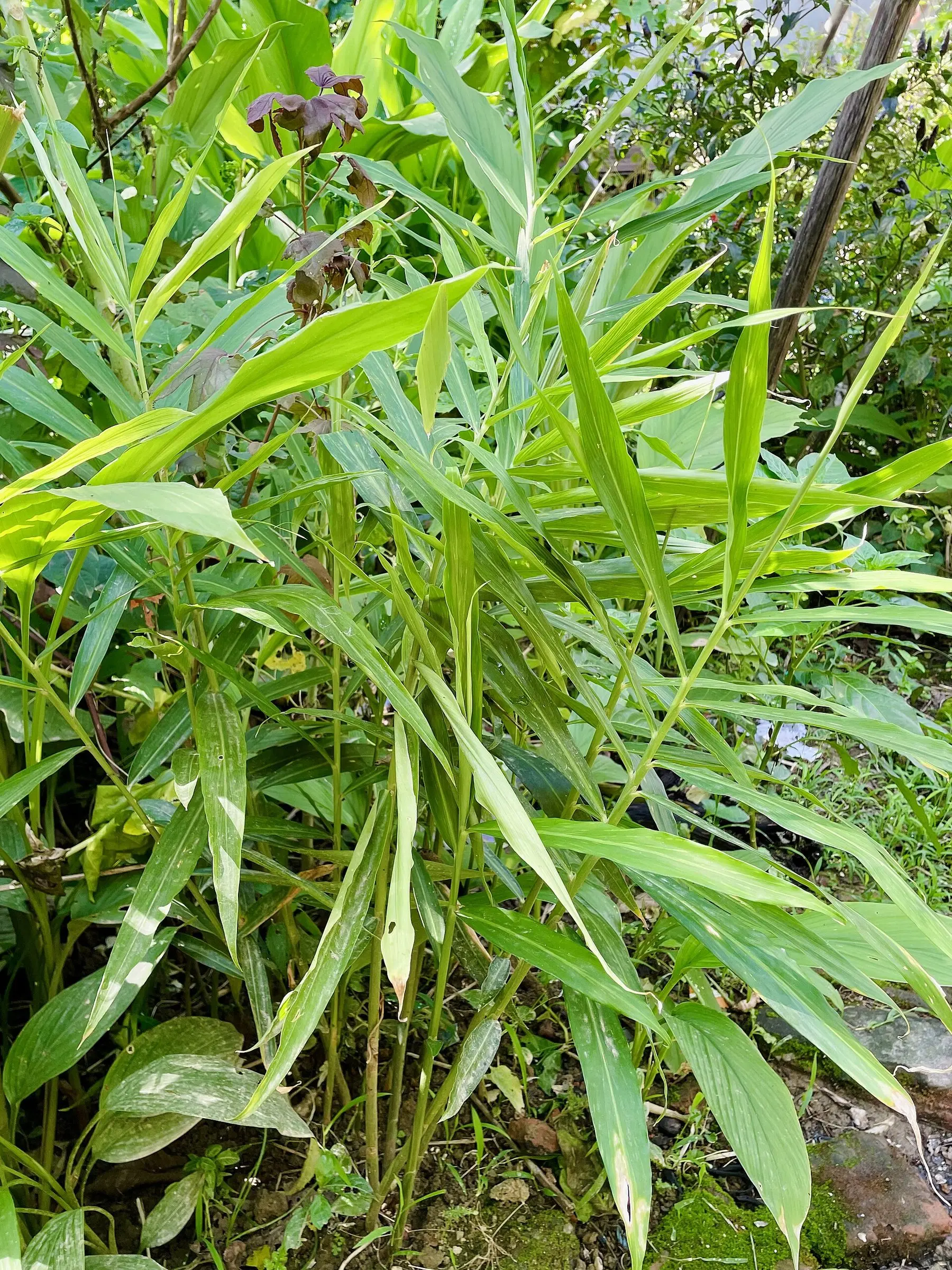

On this page
Ginger is one of the few things in the vegetable aisle you can plant and actually grow. It is also slow enough that most people give up on it before anything appears above the compost.
Nothing may happen for eight weeks. That is normal, and warmth is the only lever you have.
Why it grows sideways
The knobbly thing you buy is a rhizome — a horizontal underground stem, not a root. It creeps outward just below the surface, sending shoots up and roots down as it goes, and the fingers you recognise are its branches.
Two practical consequences follow, and they are the two things people get wrong:
- Plant it shallow. One to two inches of cover. Burying it deeper delays emergence and helps nothing.
- Give it width, not depth. A wide, shallow pot 12 inches or more across beats a deep narrow one every time, because horizontal room is what the crop actually needs.
Choosing and preparing the piece
Look for a rhizome that is firm, plump, and smooth-skinned, with pale, pointed buds at the ends of the fingers. Those buds are the eyes, and they are what sprouts.
Avoid anything shrivelled, soft, or mouldy. Prefer organic where you can: conventional ginger is more often treated with a sprout inhibitor, which is by far the most common reason a piece sits in compost for months and does nothing.
Soak it overnight in lukewarm water — 8 to 12 hours. This rehydrates it and rinses the surface.
Then cut into pieces of 1.5 to 2 inches, each with at least one eye, and leave the cut faces somewhere dry and airy for a day or two until they callus. A wet cut in damp compost rots.
If nothing happens after a month, it is probably temperature
Ginger will not sprout in a cool room. Below about 65°F it effectively sits still, and below 50°F it will not grow at all. A heat mat, the top of a fridge, or an airing cupboard makes the difference between three weeks and never. Warmth first, light second — it needs no light until it emerges.
Planting and the waiting
Fill the pot with free-draining potting mix — a standard mix with some perlite or grit is fine, since ginger dislikes sitting wet.
Lay the pieces flat, eyes upward, a few inches apart, and cover with 1 to 2 inches of mix. Water once, lightly.
Then keep it barely moist until shoots appear. This is counter-intuitive but important: there are no roots yet to take water up, so wet compost around a dormant rhizome does nothing except rot it. A cover or a propagator lid helps hold warmth and humidity without the compost being soaked.
Once it is growing
Light. Bright indirect, or dappled shade. Direct midday sun scorches the leaves — this is a forest-floor plant.
Humidity. The thing ginger misses most indoors. Mist it, group it with other plants, or use a wet pebble tray. Dry air gives crisp brown leaf edges.
Water. Now keep the compost consistently moist, but still free-draining. Container watering rules apply — see growing in pots.
Feed. Every two to four weeks with a balanced liquid feed through the growing season. Ginger is a long-season crop in a limited volume of compost and will run out otherwise.
Temperature. 70–85°F is the sweet spot. It stops below 50°F and frost kills it outright, so outdoors it is a summer container plant almost everywhere outside the tropics.
Harvesting
| Young ginger | Mature ginger | |
|---|---|---|
| Timing | From ~4 months | 8–10 months |
| Skin | Thin, pale, no need to peel | Tan, papery, peel it |
| Flavour | Mild, juicy, floral | Pungent, fibrous, hot |
| Storage | Days | Weeks; freezes well |
| Method | Cut a piece from the edge, re-cover | Lift the whole clump |
For the full crop, wait until the leaves yellow and die back, usually eight to ten months in. Stop watering as that starts, then tip the whole pot out and separate the clump.
Keep a few pieces with plump eyes to replant, and store the rest somewhere cool and dry. Freezing whole rhizomes works better than the fridge — grate from frozen, no peeling needed.
Turmeric and galangal are grown identically
They are all rhizomes in the same family, with the same requirements: warmth, humidity, shallow planting, a wide pot, and a long season. If ginger works for you, turmeric will too, and it is noticeably more ornamental.
Step by step
- Time
- P270D
- Cost
- $10
- You need
- A plump piece of fresh ginger with visible growth buds, Free-draining potting mix, Balanced liquid feed
- Tools
- A wide, shallow pot at least 12 inches across, Sharp knife, Spray bottle or a humid spot
Choose a rhizome with visible eyes
Pick a plump, firm piece with several pale, pointed growth buds — the eyes — at the tips of the fingers. Shrivelled or soft ginger will not sprout. Organic ginger is a safer bet, because some conventional stock is treated with a sprout inhibitor.
Soak it overnight
Soak the rhizome in lukewarm water for 8 to 12 hours. This rehydrates it and washes off any growth inhibitor on the surface, which is the most common reason a supermarket piece refuses to sprout.
Cut into pieces and let the cuts dry
Cut into sections of about 1.5 to 2 inches, each with at least one eye, then leave them somewhere dry and airy for a day or two so the cut surfaces callus over. Planting a fresh wet cut into damp compost invites rot.
Plant shallow in a wide pot
Ginger spreads sideways, so width matters far more than depth — a pot at least 12 inches across and 8 to 12 inches deep. Lay each piece flat with the eyes facing up, and cover with only 1 to 2 inches of free-draining potting mix.
Keep it warm and be patient
Ginger needs 70 to 85°F to sprout, and it takes two to eight weeks. Keep the compost lightly moist but never wet during this period, because there are no roots to take the water up yet and soggy compost simply rots the rhizome.
Give bright indirect light and humidity
Once shoots appear, move it to bright indirect light or dappled shade. Direct midday sun scorches the leaves. Ginger is an understorey plant from humid forest, so mist it, group it with other plants, or stand the pot on a wet pebble tray.
Water and feed through the growing season
Keep the compost consistently moist once the plant is growing strongly, and feed every two to four weeks with a balanced liquid feed. Reduce watering sharply in autumn as growth slows and the leaves begin to yellow.
Harvest young or wait for the full crop
You can steal a piece from the edge from about four months, replacing the soil afterwards. For mature, pungent, storable ginger, wait eight to ten months until the foliage has yellowed and died back, then tip the whole pot out.
Common questions
Can you grow ginger from a supermarket piece?
How deep should you plant ginger?
How long does ginger take to grow?
Does ginger need full sun?
When do you harvest ginger?
Backyard Weekly
Know what to plant, week by week
Free planting calendar. Join the weekly email for seasonal jobs, fixes for what is going wrong, and gear worth buying.
Set MONETIZATION.email.endpoint in src/config/site.ts to enable this form.
By subscribing you agree to our privacy policy. Grow In Backyard will never sell your address.
Keep reading
Outdoor Plants in Pots: What Survives, and What Kills Them
A pot outdoors is a harsher place than the ground — hotter, drier, and colder in winter. How to pick plants and pots that cope, and get through the cold.
How Do Pineapples Grow? On the Ground, One Per Plant
Pineapples do not grow on trees but on a low ground plant, one fruit per plant, from hundreds of flowers fused into one. How they grow, and how long it takes.
How to Grow Garlic: Plant in Fall, Harvest in July
Garlic is the easiest crop in the garden if you plant it at the right time. Here is the full cycle — choosing bulbs, planting depth, mulch, scapes, and harvest.
How Deep to Plant Potatoes (And Why Hilling Matters More)
Four inches at planting, then hill as they grow. Why planting deep in cold spring soil backfires, and how depth differs in containers and no-dig beds.