How to Harvest Lettuce So It Grows Back Again
Cut-and-come-again gets three or four crops from one sowing, but only if you cut above the growing point. Where that is, and why lettuce turns bitter.

On this page
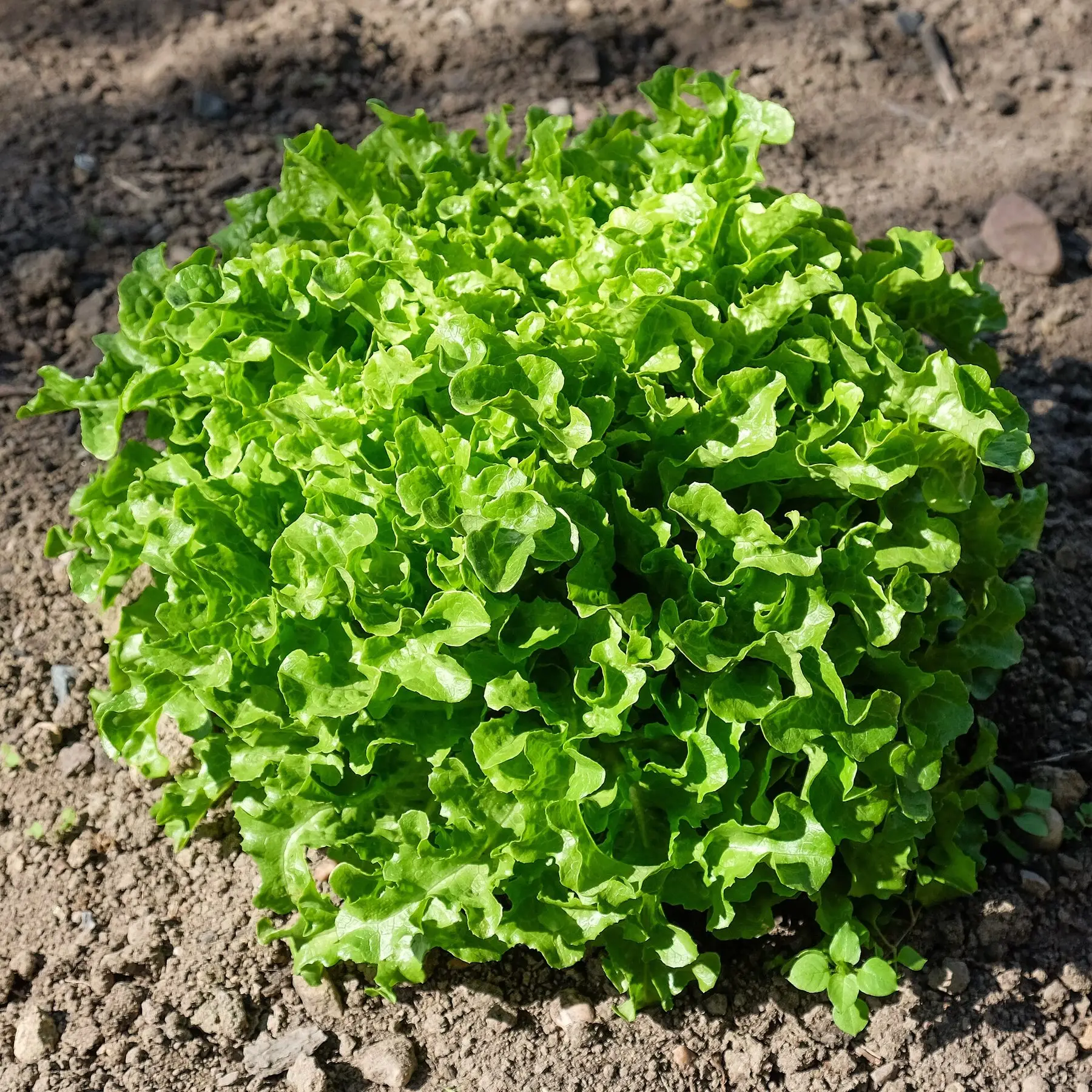
Lettuce is one of the few crops where how you cut it decides how many harvests you get. Cut in the right place and one sowing feeds you three or four times. Cut an inch lower and the plant is finished.
The difference is a growing point about an inch above the soil.
The two methods, and when to use each
| Method | How | Regrows? | Suits |
|---|---|---|---|
| Outer-leaf picking | Snap or cut outer leaves at the base | Yes, continuously | Loose-leaf, oakleaf, salad bowl |
| Cut-and-come-again | Cut the whole plant 1–2 in above soil | Yes, 3–4 times | Loose-leaf, mesclun, baby leaf |
| Whole head | Cut at the base with a knife | No | Iceberg, romaine, butterhead |
| Thinning as harvest | Pull whole small plants to space the rest | N/A | Any, at seedling stage |
Outer-leaf picking gives you a handful at a time over many weeks. Take the oldest, outermost leaves and leave the centre alone — that centre is where all new growth comes from.
Cut-and-come-again gives a full harvest at once. Take a sharp knife, gather the leaves in one hand, and cut the whole plant off cleanly one to two inches above the soil.
The growing point is what you must not cut
Lettuce grows from a compressed crown at the base of the plant. Leave that crown and its tiny central leaves intact and it regenerates a full plant in one to two weeks. Cut flush with the soil, or pull the plant while cutting, and there is nothing left to regrow from. That inch is the entire difference between one harvest and four.
Head-forming types — iceberg, romaine, butterhead — do not regrow usefully. Cut them once at the base when the head feels firm. Romaine sometimes produces small side shoots afterwards, which are worth eating but are not a second head.
Timing
Early morning, before the sun reaches the plants. Overnight the leaves rehydrate fully and are at their crispest, and they store far better.
Lettuce cut in afternoon heat wilts within the hour, and chilling it afterwards never quite brings it back.
Baby leaf is ready at three to four inches, roughly three to four weeks from sowing. Full leaf lettuce at six to eight weeks. Heads when firm to a gentle squeeze, at eight to twelve weeks.
Do not wait for size. A slightly small lettuce is far better than a large bitter one.
Bitterness and bolting
This is the thing that ends most lettuce crops, and it is worth recognising early.
As lettuce prepares to flower it elongates a central stem and produces a milky latex containing bitter sesquiterpene lactones. That is the bitterness, and it does not reverse.
The triggers are heat — most varieties start once temperatures hold above about 75°F — and long days. Drought stress accelerates it.
What actually helps:
- Harvest at the first sign of the centre elongating.
- Sow little and often, every two or three weeks, rather than one large sowing.
- Grow through summer in part shade, or behind taller crops.
- Keep it watered. Lettuce is shallow-rooted and checks quickly.
- Choose bolt-resistant varieties for summer sowings.
- Sow for autumn, which is the easiest lettuce season of the year.
Leave one plant to flower rather than composting it. Lettuce flowers feed hoverflies, whose larvae eat aphids, and if it sets seed you have next year’s sowing free.
Storing it
- Rinse in cold water. A brief soak revives slightly wilted leaves.
- Dry thoroughly — salad spinner, or between clean towels. This is the step that matters.
- Store loosely in a container or bag with a dry paper towel to absorb residual moisture.
- Refrigerate, and keep it away from apples, bananas and tomatoes, whose ethylene makes lettuce brown at the edges.
Dried properly, leaf lettuce keeps a week to ten days; a firm head, up to two weeks.
Do not wash it before storing if you can avoid it — the same principle as storing cilantro. Surface water is what turns leaves to slime.
Getting more from one bed
Lettuce is fast, shallow-rooted and shade-tolerant, which makes it the most useful intercrop in a vegetable garden. Sow it between slower crops — under cucumbers on a trellis, between brassicas, along a row of carrots — and harvest it before the main crop needs the space.
In containers it works well and needs consistent water, since a pot dries out fastest exactly where lettuce roots are.
Common questions
How do you harvest lettuce so it keeps growing?
Should you pick outer leaves or cut the whole plant?
When is the best time of day to harvest lettuce?
Why is my lettuce bitter?
How do you store harvested lettuce?
Can you eat lettuce after it bolts?
Backyard Weekly
Know what to plant, week by week
Free planting calendar. Join the weekly email for seasonal jobs, fixes for what is going wrong, and gear worth buying.
Set MONETIZATION.email.endpoint in src/config/site.ts to enable this form.
By subscribing you agree to our privacy policy. Grow In Backyard will never sell your address.
Keep reading
How to Grow Carrots: Stones, Thinning, and Carrot Fly
Forked carrots come from obstacles and fresh manure, not bad seed. Sowing direct into stone-free soil, why you should barely thin, and the fly barrier that works.
How to Store Cilantro So It Lasts More Than Two Days
Cilantro wilts fast because it is mostly water with thin leaves. The jar method, what actually freezes well, and why drying it is largely a waste.

Outdoor Plants in Pots: What Survives, and What Kills Them
A pot outdoors is a harsher place than the ground — hotter, drier, and colder in winter. How to pick plants and pots that cope, and get through the cold.
How Deep to Plant Potatoes (And Why Hilling Matters More)
Four inches at planting, then hill as they grow. Why planting deep in cold spring soil backfires, and how depth differs in containers and no-dig beds.