How to Grow Carrots: Stones, Thinning, and Carrot Fly
Forked carrots come from obstacles and fresh manure, not bad seed. Sowing direct into stone-free soil, why you should barely thin, and the fly barrier that works.
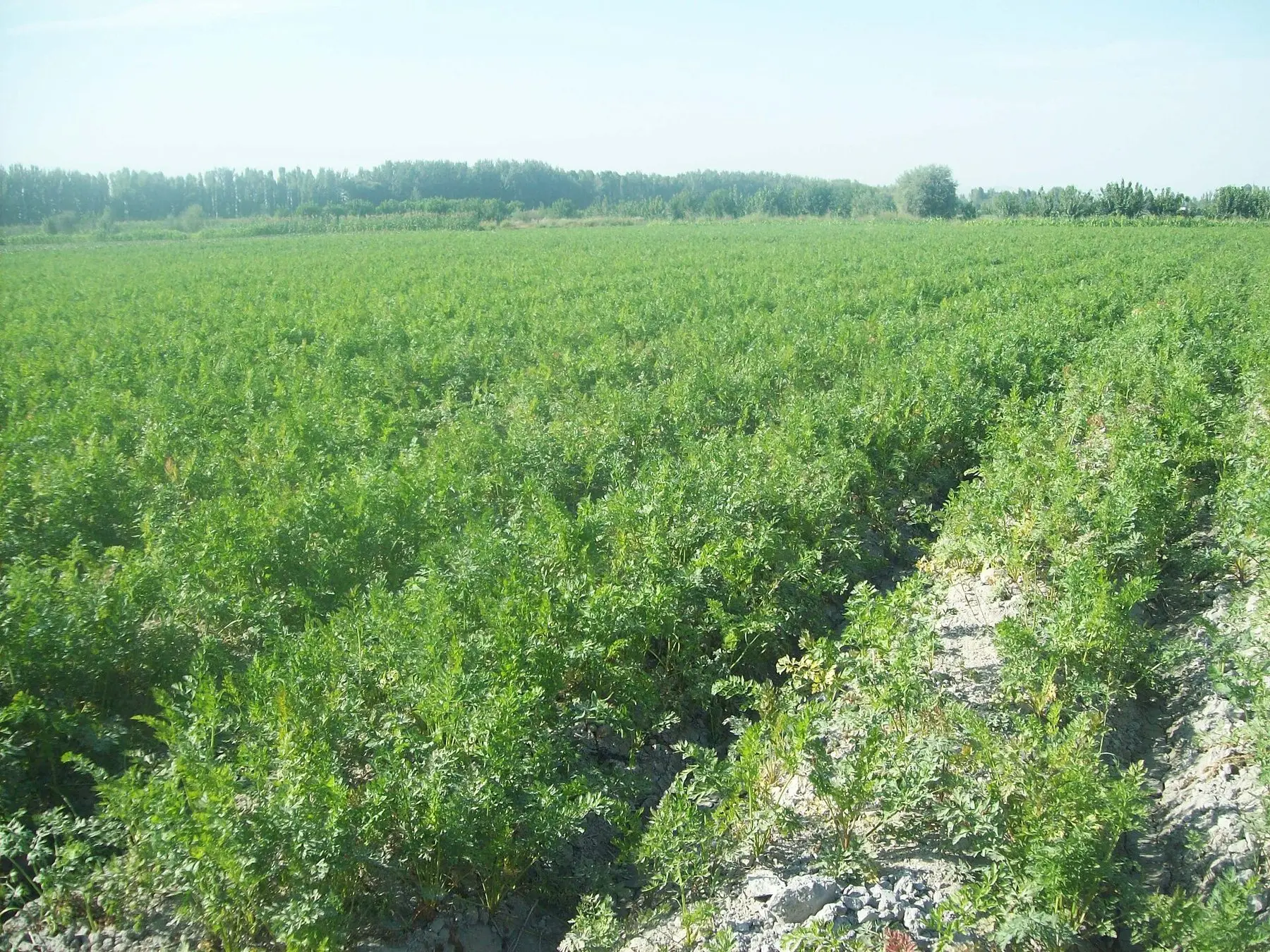
.JPG)
On this page
The two things that ruin homegrown carrots are decided before the seed goes in: what is in the soil, and what can reach the crop.
Forked carrots are a soil problem. Rusty tunnels through the root are a carrot fly problem. Both are prevented at sowing and neither can be fixed afterwards.
Soil decides the shape
The carrot is a taproot, and it grows straight down until something stops it. A stone, a clod, a compacted layer, or the base of a shallow bed all produce the same result: the root splits and forks around the obstacle.
The other cause is nitrogen. Freshly manured ground gives forked, hairy carrots with lots of top growth. Manure the bed the year before, for a different crop, and grow carrots on the residue.
So: fork or dig to a spade’s depth, break up clods, remove stones, and rake to a fine tilth. On heavy clay, either work in sharp sand and sieved compost, or accept the soil you have and choose the variety around it.
| Soil | Variety type | Examples |
|---|---|---|
| Deep, light, sandy | Long tapering | Imperator, Autumn King |
| Average loam | Nantes, cylindrical | Nantes, Napoli |
| Heavy, shallow, stony | Stump-rooted, round | Chantenay, Parisian, Paris Market |
| Containers | Round or short | Parisian, Adelaide |
Sowing
Always sow direct. A carrot moved as a seedling forks or stalls, because the root you disturbed is the crop itself. Module-sown carrots are the one exception, and only when the whole module goes in undisturbed.
Draw a drill about half an inch deep, rows 6 to 12 inches apart. Sow as thinly as you possibly can — this single habit prevents most of the work later. Cover lightly, firm, and water with a fine rose.
Then keep the surface damp. Germination takes two to three weeks, which is slow enough that people assume failure and re-sow over the top. A dry-out in that window is the usual reason nothing comes up.
Sow a short row every three to four weeks from spring to midsummer rather than everything at once. A long single row gives you far more carrots than you want in one fortnight.
Thinning, carefully
Thin in stages to about 2 to 3 inches apart, taking the smallest first.
The complication is that bruised carrot foliage smells strongly, and carrot fly finds a crop by scent from a considerable distance. So:
- Thin in the evening, when the fly is less active.
- Remove every thinning from the plot — do not leave them on the soil.
- Water afterwards to settle the disturbed soil around the remaining roots.
Or sow thinly enough that you hardly thin at all, which is better than doing it well.
Carrot fly: exclusion or nothing
The larvae tunnel into the root, leaving rusty brown channels that make the carrot inedible. By the time you see foliage going reddish and stunted, the damage is done.
There is no effective treatment. What works is keeping the fly away from the crop:
- Fine insect mesh or fleece over the bed from the day of sowing, edges sealed to the soil with earth or boards. This is the reliable method.
- A vertical barrier 24 to 30 inches high around the bed. Carrot fly flies low and does not climb over.
- Resistant varieties — Flyaway, Resistafly, Maestro — reduce damage but do not eliminate it.
- Containers raised off the ground, which use height as the barrier.
The mesh has to go on at sowing
Covering the bed once you have seen damage achieves nothing — the larvae are already inside the roots. And a mesh with a gap at one edge is simply a mesh with a door in it. Seal the perimeter properly and lift it only to weed, ideally in the evening.
Water, and splitting
Keep the soil evenly moist. Carrots do not need heavy watering, but they do need consistency: a dry spell followed by a soaking makes the root swell faster than its skin can stretch, and it splits lengthways.
A mulch between rows helps once the plants are established, and so does watering deeply once or twice a week rather than lightly every day.
Growing in containers
A good option, and it solves the soil and the fly at once.
Use a container at least 12 inches deep — deeper for anything but a round variety — filled with a fine, stone-free potting mix. Sow thinly across the surface, thin to a couple of inches, and keep the watering steady. Standing the pot on a table puts the crop above carrot fly’s flight path entirely.
Harvesting
Pull from finger thickness onward — carrots are edible at any size, and the packet’s days-to-maturity is a guide, not a deadline.
On heavy soil, loosen alongside the row with a fork first, or the top snaps off and leaves the root behind. Harvest in the evening for the same scent reason as thinning, and firm the soil back around the neighbours you left in place.
Step by step
- Time
- P90D
- Cost
- $5
- You need
- Carrot seed suited to your soil depth, Sharp sand or sieved compost, if your soil is heavy, Insect mesh or fleece
- Tools
- Rake, Hoe or a stick for drawing drills, Watering can with a fine rose
Prepare deep, stone-free, unmanured soil
Dig or fork to at least a spade's depth and remove stones and clods. Do not add fresh manure — carrots grown in freshly manured ground fork and split. Any organic matter should have gone in for the previous crop, not this one.
Match the variety to your soil depth
On shallow, heavy or stony ground, grow short, stump-rooted or round varieties such as Chantenay, Parisian or Nantes. Long tapering types like Imperator need deep, light, sandy soil to size up properly and will fork in anything else.
Sow direct, thinly, in shallow drills
Carrots resent transplanting because the taproot is the crop, so always sow where they will grow. Draw a drill half an inch deep, sow as thinly as you can manage, cover lightly and water with a fine rose. Rows 6 to 12 inches apart.
Sow in succession from spring to midsummer
Sow a short row every three to four weeks rather than one long row at once. Soil needs to be around 45°F or above to germinate. Early sowings under fleece and a late-summer sowing extend the season at both ends.
Keep the surface damp until germination
Carrots germinate slowly, typically two to three weeks, and a surface that dries out during that window kills the seedlings outright. Water gently and often rather than heavily, and do not let a crust form on the soil.
Thin as little as possible, in the evening
Thin in stages to about 2 to 3 inches apart, but sow thinly enough that you barely need to. Thinning crushes foliage and releases the scent that carrot fly navigates by, so do it in the evening, remove every thinning from the plot, and water afterwards.
Exclude carrot fly with mesh from the day you sow
Cover the bed with fine insect mesh or fleece, sealed at the edges, from sowing until harvest. Carrot fly is a low-flying insect, so a barrier of at least 24 to 30 inches also works. Nothing you spray afterwards fixes an infestation.
Water steadily and harvest as you need them
Keep the soil evenly moist — a drought followed by heavy watering splits the roots. Pull from finger thickness onward. Loosen the soil with a fork first on heavy ground so the root does not snap off at the shoulder.
Common questions
Why are my carrots forked and twisted?
Do you have to thin carrots?
How do you stop carrot fly?
How long do carrots take to grow?
Can you grow carrots in containers?
Why did my carrot seed never come up?
Backyard Weekly
Know what to plant, week by week
Free planting calendar. Join the weekly email for seasonal jobs, fixes for what is going wrong, and gear worth buying.
Set MONETIZATION.email.endpoint in src/config/site.ts to enable this form.
By subscribing you agree to our privacy policy. Grow In Backyard will never sell your address.
Keep reading
How to Grow Potatoes: Chitting, Depth, and Earthing Up
Potatoes form on stem, not roots, which is why you plant them deep and keep burying them. Seed potatoes, timing by variety group, and the mistakes that cost a crop.
How to Grow Onions: Day Length Decides Your Bulb Size
Onions bulb on day length, not on age — so the wrong variety for your latitude never sizes up. How to pick the right type, plant it, and feed it to a full bulb.
Outdoor Plants in Pots: What Survives, and What Kills Them
A pot outdoors is a harsher place than the ground — hotter, drier, and colder in winter. How to pick plants and pots that cope, and get through the cold.
How Deep to Plant Potatoes (And Why Hilling Matters More)
Four inches at planting, then hill as they grow. Why planting deep in cold spring soil backfires, and how depth differs in containers and no-dig beds.