How to Store Garlic So It Keeps Until Next Summer
Cured garlic keeps six to ten months in a dark, dry, airy spot at room temperature. Why the fridge ruins it, and what to do with a bulb that has sprouted.
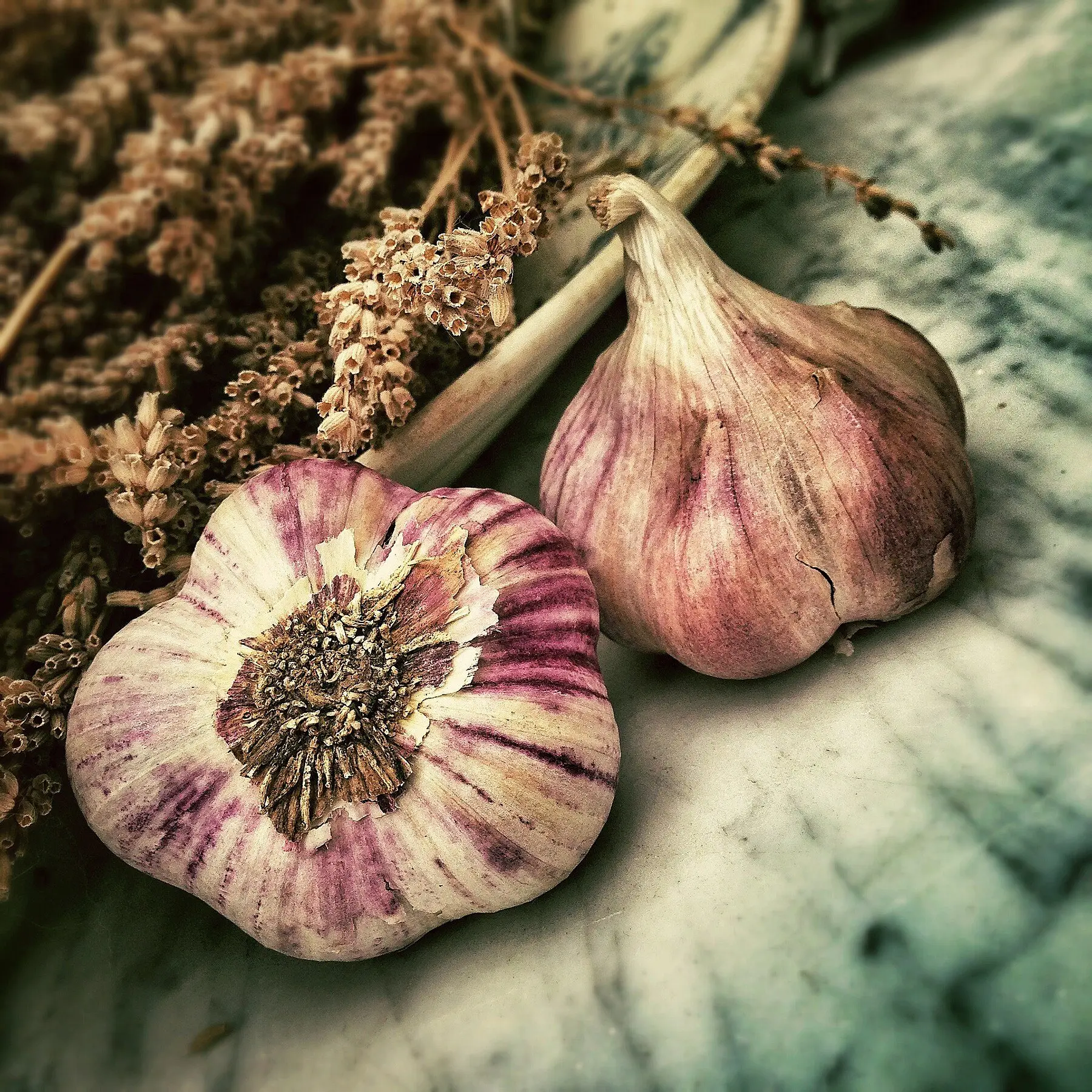
.jpg)
On this page
Garlic is one of the few crops you can grow once and eat all year — but only if it is cured properly first, and then kept somewhere that keeps it asleep.
Almost every storage failure comes down to one of two things: moisture, which grows mould, or the wrong temperature, which wakes the bulb up and starts it growing.
Curing is the part people skip
A freshly lifted bulb is still a living plant full of water. Curing dries the neck and the wrappers down until the bulb is sealed and dormant, and it is what separates garlic that keeps for a month from garlic that keeps for most of a year.
Three to four weeks, somewhere shaded, dry, and moving with air — a garage, a covered porch, an airy shed. Roughly 70–80°F is ideal. Hang it in bundles or lay it in a single layer on a rack.
Do not wash it. Brush the dry soil off with your hand and leave the stems and roots on until curing is done.
Direct sun is not curing
Sun scalds the cloves through the wrappers and gives you soft, grey patches that rot in storage. Shade and airflow are the whole recipe — heat on its own is not.
You know it is finished when the neck is dry and tight, the outer wrappers are papery, and the roots are stiff and bristly. A neck that still feels soft or squeaks when twisted needs another week.
The storage conditions that matter
| Condition | Target | What goes wrong otherwise |
|---|---|---|
| Temperature | 60–65°F | 40–50°F breaks dormancy and sprouts it; above 70°F dries the cloves to dust |
| Humidity | 45–60% | Damp grows mould; very dry shrivels the cloves |
| Light | Dark | Light encourages sprouting |
| Air | Moving freely | Sealed containers trap moisture — the single commonest mistake |
In practice: a mesh bag, paper bag, or open basket in a cupboard, pantry, or cool back room. Not the fridge, not a zip bag, not a sealed jar, and not the counter next to the stove.
How long you should expect
Softneck varieties — the supermarket kind, and the ones that braid — keep eight to ten months. Hardneck varieties, which are better flavoured and hardier in cold winters, keep four to six. That trade-off is the main reason to grow some of each.
Sort through the crop once a month and pull anything soft, stained, or sprouting to the front of the queue. One rotting bulb will take its neighbours with it.
Sprouting, and what it means
A green shoot means the bulb has come out of dormancy — usually because it got cold, or because it has simply been stored long enough. It is completely safe to eat; the shoot is a little bitter, so halve the clove and flick it out if you mind.
But a sprouting bulb is on a clock. Use those first, freeze them, or plant them — garlic that is trying to grow is happy to.
Freezing, and the other preservation options
| Method | Keeps | Best for |
|---|---|---|
| Freezing, whole or chopped | ~1 year | Anything cooked; the simplest option |
| Dehydrating into powder | 1–2 years | Rubs, seasoning, saving shelf space |
| Black garlic (weeks at ~140°F) | Months | A different ingredient entirely — sweet, molasses-like |
| Peeled cloves in the fridge | 3–5 days | Immediate use only |
| Cloves in oil | 4 days refrigerated | Nothing, really — see below |
Garlic in oil is the one genuine safety issue
Raw garlic under oil at room temperature is low-acid and oxygen-free, which is the exact environment Clostridium botulinum needs to produce toxin. Homemade garlic oil or confit must be refrigerated and used within four days, or frozen. Shop-bought versions are safe because acid has been added to them; yours has not.
Save your own seed garlic
Set aside the biggest, healthiest bulbs from the crop and store them the same way until autumn planting. Big bulbs come from big cloves, so selecting for size each year compounds — within a few seasons a variety adapts noticeably to your own soil and climate.
Keep seed garlic in the same cool, dark, airy conditions, and never in the fridge. And keep it separate from the kitchen supply, or it will get eaten.
Step by step
- Time
- P21D
- Cost
- $0
- You need
- Freshly lifted garlic, Mesh bags, paper bags, or a slatted crate
- Tools
- Garden fork, Scissors or secateurs, A fan, if your curing space is still
Lift the bulbs before the wrappers rot
Dig when about a third to a half of the leaves have browned but the rest are still green. Each green leaf is one intact papery wrapper around the bulb, and those wrappers are what make it keep. Lift with a fork rather than pulling by the stem.
Do not wash them
Brush off loose soil with your hand once it has dried. Washing soaks the wrappers, and a damp wrapper is where storage rot starts. Leave the roots and stems on for now.
Cure for three to four weeks
Hang in bundles or lay in a single layer somewhere shaded, dry, and airy — a garage, porch, or shed at roughly 70-80F with moving air. Never in direct sun, which scalds the cloves.
Check that curing is finished
The neck should be dry and tight, the outer wrappers papery, and the roots stiff and bristly. If the neck is still soft or squeaky when twisted, give it another week.
Trim the tops and roots
Cut the stem to about an inch above the bulb, or leave it long for braiding softneck varieties. Trim roots to about a quarter inch. Rub off only the dirtiest outer wrapper — no more.
Store dark, dry, and ventilated
Mesh bags, paper bags, or an open basket at 60-65F with low humidity, out of the light. Never a sealed container or a plastic bag, which traps moisture and grows mould.
Sort through the crop monthly
Pull out anything soft, stained, or sprouting and use it first. One rotting bulb will spoil the ones touching it.
Common questions
How long does garlic last in storage?
Should you store garlic in the fridge?
Can you freeze garlic?
Is sprouting garlic safe to eat?
Why is storing garlic in oil dangerous?
What is the difference between curing and drying garlic?
Backyard Weekly
Know what to plant, week by week
Free planting calendar. Join the weekly email for seasonal jobs, fixes for what is going wrong, and gear worth buying.
Set MONETIZATION.email.endpoint in src/config/site.ts to enable this form.
By subscribing you agree to our privacy policy. Grow In Backyard will never sell your address.
Keep reading
When to Harvest Garlic (Count the Brown Leaves)
Garlic is ready when three or four lower leaves have browned and five or six are still green — usually July. How to read the plant and test before you dig.
How to Grow Garlic: Plant in Fall, Harvest in July
Garlic is the easiest crop in the garden if you plant it at the right time. Here is the full cycle — choosing bulbs, planting depth, mulch, scapes, and harvest.
How to Store Cilantro So It Lasts More Than Two Days
Cilantro wilts fast because it is mostly water with thin leaves. The jar method, what actually freezes well, and why drying it is largely a waste.
When to Pick Jalapeños: Green, Red, and Corked
Pick green at full size and firm for classic heat, or leave them to red for sweetness. What the white corking lines mean, and why picking gives you more.