When to Pick Jalapeños: Green, Red, and Corked
Pick green at full size and firm for classic heat, or leave them to red for sweetness. What the white corking lines mean, and why picking gives you more.

On this page
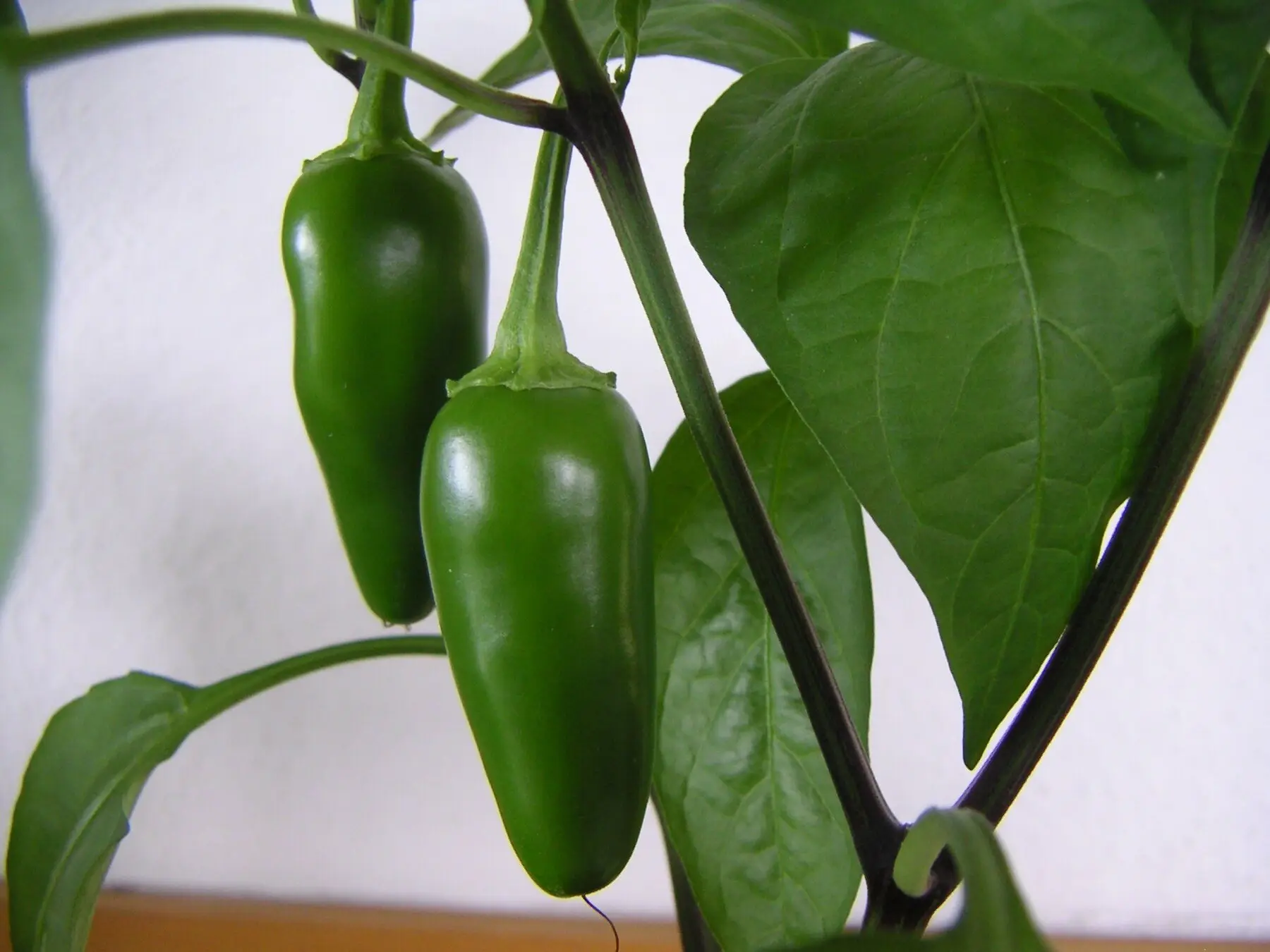
A jalapeño is edible at every stage, so “when to pick” is not a ripeness question — it is a flavour and yield question. Green gives you bright, grassy heat and more peppers overall; red gives you sweetness and fewer.
The green stage
70 to 85 days from transplant, depending on variety. What to look for:
- Full size — 3 to 4 inches for most varieties
- Firm, with a definite heft in the hand
- Glossy, deep green skin
- Rounded shoulders, not still tapering
A pepper that is still soft or light has not filled out. One that has gone slightly dull and slightly soft is heading toward ripening, and is still perfectly good.
Green, corked, or red
| Stage | Flavour | Heat | Best for |
|---|---|---|---|
| Green, full size | Bright, grassy, sharp | Classic | Poppers, salsa, pickling, nachos |
| Green with corking | Fuller, more complex | Classic to hot | Everything; a good sign |
| Turning (dark, blushing) | In between | Slightly up | Cooking |
| Red, fully ripe | Sweet, fruity | Often hotter | Chipotle, hot sauce, drying |
Corking — those tan or white striations across the skin — is the flesh having grown faster than the skin could stretch. It is a maturity marker, and in Mexico corked peppers are often the preferred ones. Some varieties cork heavily, others almost never; either way it is not damage and not disease.
Red jalapeños are what chipotles are made from
A chipotle is a ripe red jalapeño, smoke-dried. If you like chipotle, let a handful of peppers go red late in the season when the plant is winding down anyway — you lose nothing at that point.
Picking often means picking more
Pepper plants respond to ripe fruit the way most annuals do: a fully ripened pepper is a completed seed, and the plant reads that as the job being done. Fruit set slows.
Harvest green and harvest regularly and a healthy plant will keep setting through the season — 25 to 35 peppers is a realistic figure, against far fewer from a plant left to ripen everything.
Save the red ones for the end of the season.
How to pick
Cut the stem with scissors or secateurs, leaving about a quarter inch attached. Pepper plants look tougher than they are, and pulling by hand regularly takes a whole branch with it.
Pick in the morning, when the fruit is firm and fully hydrated.
Capsaicin does not rinse off
Wear gloves for a big harvest, and do not rub your eyes afterwards. Capsaicin is oil-soluble, not water-soluble — washing with plain water spreads it around. Dish soap, oil, or milk removes it; water alone does not.
Making them hotter, or milder
Heat comes from capsaicin, concentrated in the pale pith around the seeds — not in the seeds themselves, which merely sit against it.
Hotter: less water once fruit has set, full sun, and longer on the plant. Mild drought stress reliably raises capsaicin.
Milder: steady generous watering, and picking younger.
Either way, expect enormous variation. Jalapeños run roughly 2,500–8,000 Scoville, and two peppers off the same plant can sit at opposite ends of that range. There is no way to tell by looking.
End of season
Peppers are frost-tender and stop ripening below about 55°F.
Before the first frost, pick everything, including underdeveloped fruit. Small green jalapeños are fine pickled. Peppers left on a plant in a light frost go soft and translucent and are not worth keeping.
Jalapeños are perennial in frost-free climates, and a plant can be overwintered indoors — cut back hard, kept barely watered in a cool bright spot — for a much earlier crop the following year.
For storing: unwashed in the fridge crisper for two or three weeks, frozen whole in bags for months (they soften completely, so cooking only), or dried, smoked, or pickled for the long term.
Common questions
When should you pick jalapeños?
Should you let jalapeños turn red?
What are the white lines on my jalapeños?
Does picking jalapeños make more grow?
How do you make jalapeños hotter?
How do you pick jalapeños without damaging the plant?
Backyard Weekly
Know what to plant, week by week
Free planting calendar. Join the weekly email for seasonal jobs, fixes for what is going wrong, and gear worth buying.
Set MONETIZATION.email.endpoint in src/config/site.ts to enable this form.
By subscribing you agree to our privacy policy. Grow In Backyard will never sell your address.
Keep reading
How to Grow Peppers: Start Early, Then Keep Them Warm
Peppers need more heat than tomatoes and stall in cool nights. When to sow, the temperature range that makes flowers drop, and why to feed them less than you think.
Types of Hot Peppers, Ranked by Heat and What They Taste Like
Scoville is only half the story — a habanero and a serrano at similar heat behave completely differently in a pan. Thirty peppers by heat, flavour, and best use.
How to Ripen Green Tomatoes Indoors After the Season
Tomatoes ripen on ethylene, not sunlight, so a windowsill is the wrong place. What actually works, which fruit will never ripen, and what to do with those.
How to Store Garlic So It Keeps Until Next Summer
Cured garlic keeps six to ten months in a dark, dry, airy spot at room temperature. Why the fridge ruins it, and what to do with a bulb that has sprouted.