When Is Corn Harvested? The Milk Test, Not the Calendar
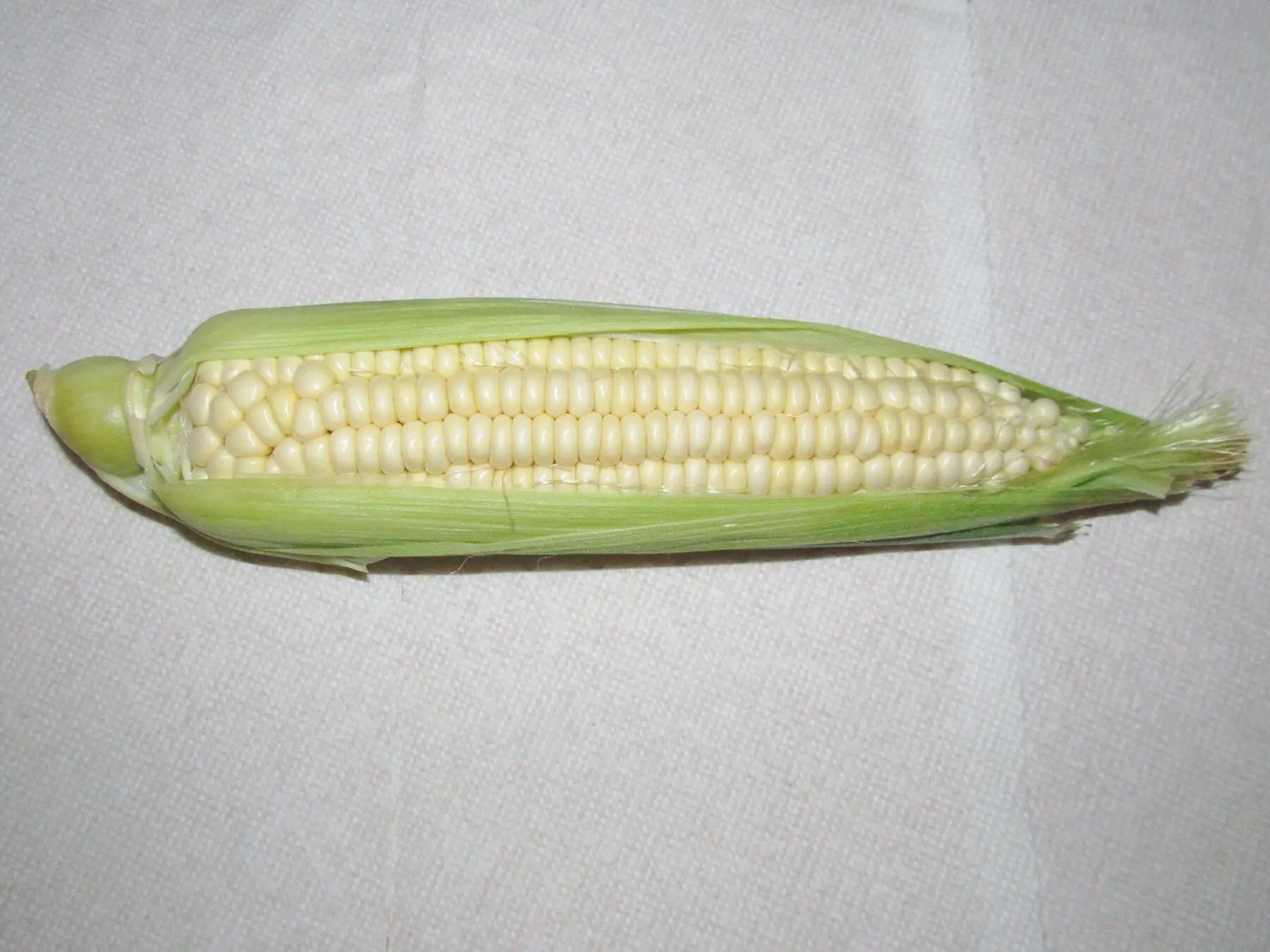
Sweetcorn has a harvest window of a few days and starts losing sugar within an hour of picking. The three signs, and why you check by piercing a kernel.
.jpg)
On this page
Sweetcorn has one of the shortest harvest windows of anything in a vegetable garden — often two to four days — and it starts losing sweetness within an hour of being cut.
Which makes it the one crop where the picking decision matters as much as the growing.
The three signs
1. The silks. The tassels emerging from the top of the cob turn brown and dry, usually about three weeks after they first appeared. Green silks mean wait.
2. The feel. Squeeze the cob through the husk. It should feel full and rounded right to the tip, not tapering away. A cob that narrows at the end is not filled.
3. The milk test. This is the decisive one.
Peel back a small strip of husk, pierce a kernel near the top with a thumbnail, and look at what comes out:
| What comes out | Stage | What to do |
|---|---|---|
| Clear and watery | Too early | Wait 2–4 days and check again |
| Milky white | Milk stage — perfect | Pick now |
| Thick, pasty, doughy | Past it | Pick and use for soup or flour |
| Nothing, kernels dented | Well past | Leave to dry for seed or cornmeal |
Sacrifice one cob to learn the test
Peeling back a husk means that cob should be used soon — resealing it works but invites insects and birds. That is worth it once. The milky-versus-clear distinction is obvious when you have seen it and almost impossible to describe precisely, and one cob buys you the judgement for the rest of the row and every year after.
Timing is roughly 60 to 100 days from sowing depending on variety, and about 18 to 24 days after the silks first appear — but weather moves both, so the signs override the count.
Why the window is so short
Sweetcorn varieties are bred for sugar content, and that sugar is unstable. The cob passes from underripe through the milk stage into the dough stage in a matter of days, faster in hot weather.
Older standard sugary (su) varieties move fastest. Sugary enhanced (se) and especially supersweet (sh2) varieties hold their sugar longer both on the plant and after picking, which is what supermarket corn relies on.
Pick in the morning, and cook it fast
Sugar begins converting to starch within an hour of picking. In a standard variety, a cob left at room temperature for a day can lose a large share of its sweetness.
This is the entire reason homegrown sweetcorn tastes different from shop corn, and the reason for the old instruction to put the water on to boil before walking out to pick.
Practically:
- Pick in the early morning, when sugar content is highest.
- Cook within hours if you can.
- Refrigerate immediately, in the husk, otherwise — cold slows the conversion substantially.
- Blanch and freeze on the day for longer storage. Corn frozen within hours of picking routinely tastes better than fresh corn that has sat for three days.
To pick: hold the stalk with one hand, grip the cob, and twist downward while pulling. It snaps off cleanly. Do not yank, which can bring the stalk over.
Half-filled cobs
The commonest sweetcorn disappointment, and it is a pollination problem rather than a growing one.
Each silk connects to a single kernel, and every silk needs to catch a grain of pollen for that kernel to develop. A cob with scattered gaps is a cob whose silks were missed.
Corn is wind pollinated, so:
- Plant in a block, at least four rows by four — never a single long row, which pollinates badly whatever its length.
- Tap or shake the tassels on a still, dry morning so pollen falls onto the silks below.
- Do not plant different types close together. Supersweet varieties crossed with standard or popcorn produce starchy, disappointing kernels. Separate them by distance or by sowing date.
What to do with corn you missed
A cob past the milk stage is not wasted:
- Dough stage — still good in soups, chowders and fritters, where texture matters less than sweetness.
- Fully dry on the plant — leave it, and use it for cornmeal, popcorn if it is a popping variety, or save the seed for next year.
And the stalks are excellent compost material once shredded, or a ready-made support for climbing beans in a Three Sisters planting the following season.
Common questions
How do you know when sweetcorn is ready to pick?
How long is the harvest window for sweetcorn?
Does sweetcorn lose sweetness after picking?
Why are my corn cobs only half filled with kernels?
How do you store sweetcorn after picking?
How many cobs does one corn plant produce?
Backyard Weekly
Know what to plant, week by week
Free planting calendar. Join the weekly email for seasonal jobs, fixes for what is going wrong, and gear worth buying.
Set MONETIZATION.email.endpoint in src/config/site.ts to enable this form.
By subscribing you agree to our privacy policy. Grow In Backyard will never sell your address.
Keep reading
When to Harvest Pumpkins: Three Signs, Not the Calendar
Rind hardness, stem colour and a hollow sound tell you it is ready. Why you must cut the stem rather than carry by it, and the curing that decides storage life.
How to Grow Peas: Sow Cold, Support Early, Pick Often
Peas are a cool-season crop that stops in heat, so sowing early beats sowing well. Support at three inches, and the sugar-to-starch clock after picking.
How to Harvest Lettuce So It Grows Back Again
Cut-and-come-again gets three or four crops from one sowing, but only if you cut above the growing point. Where that is, and why lettuce turns bitter.
How Deep to Plant Potatoes (And Why Hilling Matters More)
Four inches at planting, then hill as they grow. Why planting deep in cold spring soil backfires, and how depth differs in containers and no-dig beds.