How to Plant Grass Seed So It Actually Comes Up
Seed fails from poor contact and a surface that dried out once, not from bad seed. Soil prep, sowing rates, and the watering routine that carries it to germination.
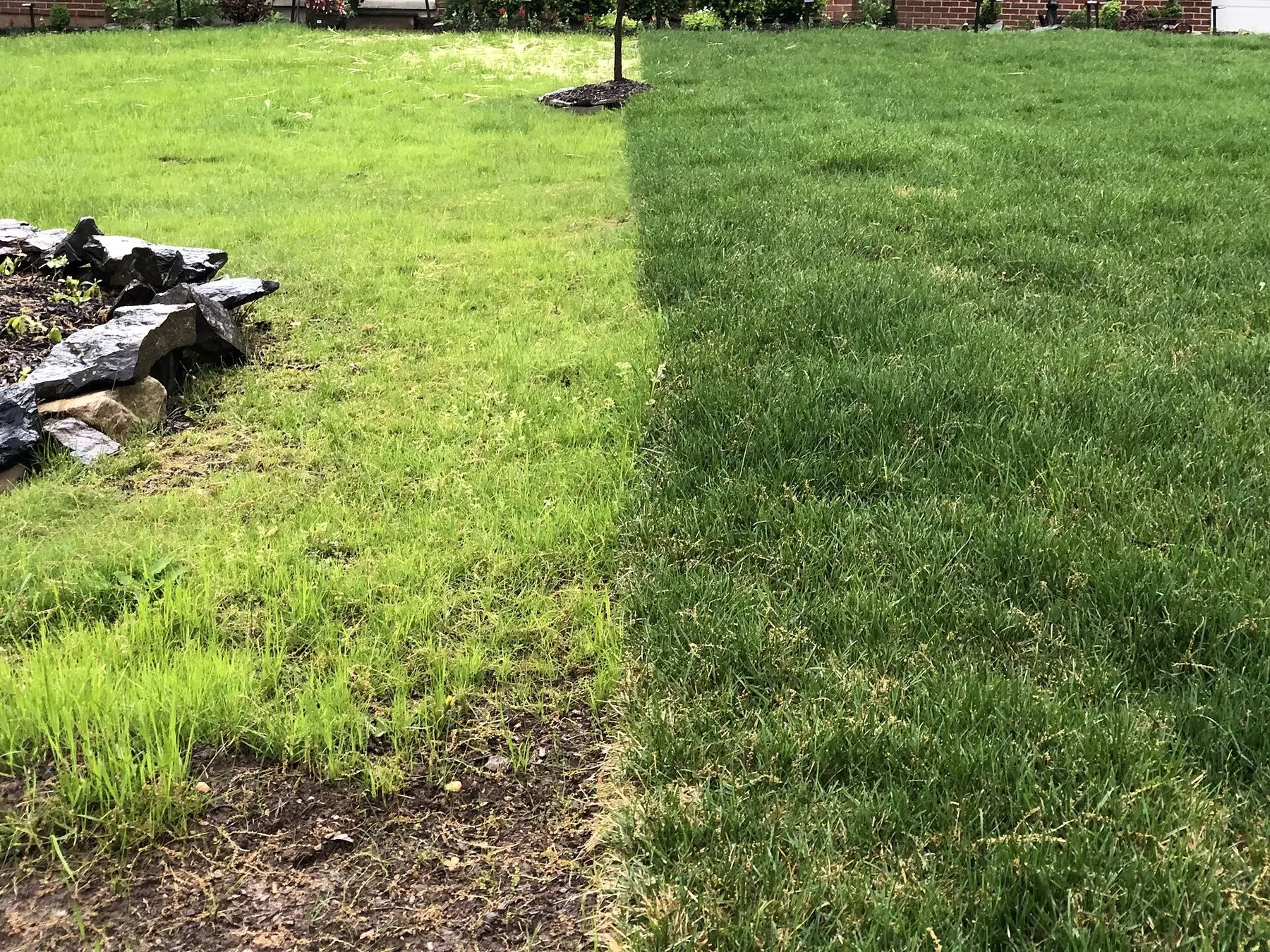
_and_newly-seeded_lawn_(left)_along_Forest_Lane_in_the_Mountainview_section_of_Ewing_Township,_Mercer_County,_New_Jersey.jpg)
On this page
Grass seed rarely fails because the seed was bad. It fails because it never touched soil, or because the surface dried out once during the few days that mattered.
Both are preparation problems, and both are fixed before the seed leaves the bag.
Timing does most of the work
| Grass type | Best window | Second best | Soil temp |
|---|---|---|---|
| Perennial ryegrass, fescues, bluegrass | Late summer – early autumn | Spring | 50–65°F |
| Bermuda, Zoysia, buffalo | Late spring – early summer | — | 65–70°F+ |
Autumn wins for cool-season grass because it gives the combination the seed actually wants: soil still warm from summer, air cooler so the surface stays damp longer, and far less competition from germinating weeds. Spring works, but the new lawn goes straight into summer heat with a shallow root system.
Preparation is the whole job
Clear and open the surface. Remove debris and weeds, then rake or scarify hard enough to expose loose soil. Thatch is the enemy here — seed that lands on a mat of dead grass never reaches soil at all.
Relieve compaction. On hard ground, core aerate first. Seed on compacted soil washes into the low spots and germinates in stripes.
Level and firm. Break up clods, fill hollows, and tread or lightly roll. Then rake to a fine, crumbly finish. Hollows drown seed; high points dry out and stay bald.
Overseeding an existing lawn
Same principles, less earthwork. Mow shorter than usual, scarify to pull out thatch and open gaps, spread seed, then topdress with a thin layer of compost — about a quarter-inch — and water. The topdressing is what gives the seed the soil contact the existing turf would otherwise deny it.
Sowing
Use a spreader rather than your hand. Sow half the seed in one direction and half at right angles — a single pass always leaves stripes where the pattern overlapped or missed.
Follow the rate on the bag, which differs between species and between new lawns and overseeding. Resist the urge to go heavy: crowded seedlings compete with one another for light and water, grow thin and weak, and are far more prone to damping off.
Then rake lightly so the seed is just covered — a quarter-inch at most — and firm the surface again with a roller or a flat board. That final firming is what turns loose seed into seed in contact with soil, and it is the step most often skipped.
Never use weed-and-feed on new seed
The herbicide in weed-and-feed products is designed to stop seeds establishing, and it does not distinguish between weed seed and your grass seed. Most labels require you to wait until the new lawn has been mowed several times. Use a phosphorus-rich starter fertilizer instead.
Watering: the part that decides it
Once a seed takes up water and begins to germinate, it has committed. If the surface dries out at that point, it dies — there is no second attempt.
So until germination, water little and often: light applications two or three times a day, enough to keep the top inch damp, not enough to puddle or wash seed into drifts.
Once seedlings are up and growing, deliberately change the pattern: less frequent, deeper watering. That draws roots downward. Continuing with light daily sprinkling produces a lawn with roots in the top inch of soil, which is the lawn that browns first in every dry spell.
Germination timing varies a lot by species — ryegrass in about a week, Kentucky bluegrass up to a month — which is covered in how long grass seed takes to grow. In a blend you will see the fast species first and assume the rest failed; give the slow ones their full window before reseeding.
The first six weeks
Stay off it. Foot traffic on seedlings is genuinely damaging. Rope it off if you can.
First mow at about 3 inches, with a sharp blade, removing no more than a third of the height. A blunt blade tears young grass out by the roots rather than cutting it.
Do not fertilise heavily yet. Wait until after the second or third mow before a standard feed.
Ignore the weeds for now. Most broadleaf herbicides cannot be used on grass that young. Mow first, several times, and deal with weeds once the lawn is established — a dense lawn suppresses most of them without help.
Step by step
- Time
- P56D
- Cost
- $60
- You need
- Grass seed suited to your climate and light, Compost or topdressing, Starter fertilizer
- Tools
- Rake, Broadcast or drop spreader, Roller or a flat board, Sprinkler
Sow at the right time of year
For cool-season grasses, late summer to early autumn is the best window and spring is second — autumn gives warm soil, cooler air, and less weed competition. For warm-season grasses, sow in late spring once the soil is consistently above about 65°F. Sowing outside these windows is the most common reason seed never establishes.
Test and correct the soil first
Grass wants roughly pH 6.0 to 7.0. A soil test through a county extension office is cheap and tells you whether you need lime or sulfur, and it is far easier to correct before the lawn is there than after.
Clear and loosen the surface
Remove debris and existing weeds, then rake or scarify so you expose loose soil. Seed needs to sit in soil, not on thatch. On compacted ground, core aerate first — seed dropped onto hard ground simply washes off.
Level and firm, then rake a fine tilth
Break up clods, fill hollows, and firm the surface by treading or rolling lightly, then rake to a fine crumbly finish. Hollows collect water and drown seed; humps dry out first and stay bare.
Spread seed at the stated rate, in two passes
Use a spreader and sow half the seed walking in one direction and half at right angles. This eliminates the stripes a single pass leaves. Follow the rate on the bag — heavier is not better, because crowded seedlings compete with each other and damp off.
Rake in lightly and firm the contact
Rake so seed is covered by no more than a quarter-inch of soil, then roll or tamp gently. Seed-to-soil contact is the single biggest factor in germination rate; seed lying on the surface mostly feeds birds.
Apply a starter fertilizer
Use a starter feed higher in phosphorus, which supports root development, rather than a standard high-nitrogen lawn feed. Skip weed-and-feed products entirely — the herbicide in them will kill germinating grass.
Keep the surface damp until germination
Water lightly two or three times a day so the top inch never dries out. This is the step that decides success. Once seedlings are up, water less often but more deeply to draw roots down.
Wait to mow, then cut high
Let the new grass reach about 3 inches before the first cut, use a sharp blade, and remove no more than a third of the height. Stay off the area as much as possible for the first month.
Common questions
When is the best time to plant grass seed?
Should you cover grass seed with soil?
How often should you water new grass seed?
Can you just throw grass seed on the ground?
Why did my grass seed not germinate?
Backyard Weekly
Know what to plant, week by week
Free planting calendar. Join the weekly email for seasonal jobs, fixes for what is going wrong, and gear worth buying.
Set MONETIZATION.email.endpoint in src/config/site.ts to enable this form.
By subscribing you agree to our privacy policy. Grow In Backyard will never sell your address.
Keep reading
How Long Does Grass Seed Take to Grow? (5–30 Days)
Germination runs 5–30 days depending on the grass type — ryegrass in under a week, bluegrass up to a month. Here is the timeline and what actually delays it.
How to Lower Soil pH: What Works and How Long It Takes
Elemental sulfur is the reliable way to acidify soil, and it takes months. What to use, how much, and why coffee grounds and vinegar do not work.
Organic Fertilizers: What Each One Is Actually For
Blood meal, bone meal, kelp, fish emulsion and compost do different jobs at different speeds. The NPK numbers, and which to reach for when.
Lawn Sweeper: What It Does That a Rake and Mower Can't
A sweeper brushes debris into a hopper as you tow or push it. Where it beats bagging leaves, where it fails, and the brush height that decides whether it works.