What Are Worm Castings, and Are They Worth Buying?
Worm castings are worm manure — a mild fertiliser whose real value is microbial, not nutritional. What the numbers mean and how much you actually need.

On this page
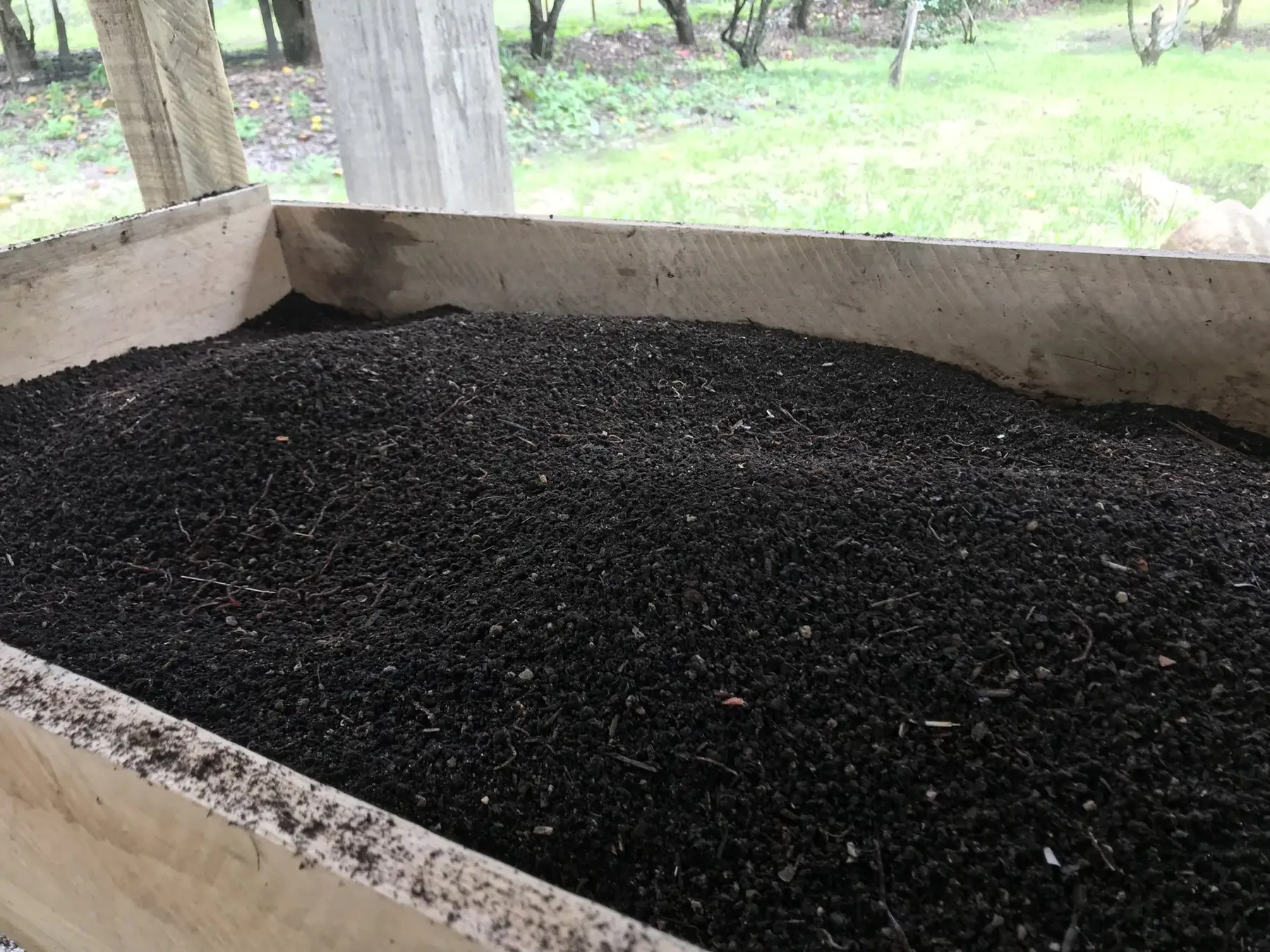
Worm castings are worm manure. That is the whole of what they are, and saying it plainly is useful, because the way they are marketed — “black gold”, miracle amendment, super-fertiliser — sets up an expectation the NPK numbers cannot possibly meet.
They are genuinely good stuff. They are just good for a different reason than most people assume.
How they are made
Composting worms — usually red wigglers, Eisenia fetida, which are surface feeders rather than the deep-burrowing earthworms in your lawn — are fed food scraps, paper, and bedding. Organic matter passes through the gut, is ground and processed by digestive enzymes and gut bacteria, and comes out as uniform dark granules.
That trip through the gut is the entire difference between castings and ordinary compost. It grinds the material finer than a compost heap manages, and it inoculates it heavily with microbes from the worm’s digestive tract.
Why the NPK number misleads
A bag of castings typically tests somewhere between 1-0-0 and 3-2-2. Set against a bagged tomato feed at 5-10-10 or more, that looks feeble, and as a straight nutrient source it is.
Three things make the comparison unfair:
Release rate. Nutrients in castings are bound in organic form and released as soil microbes break them down, over weeks and months rather than days. A plant gets a steady trickle instead of a spike, which is why castings do not burn roots.
Microbial population. This is the part that does not appear on the label. Castings carry a dense and diverse community of bacteria and fungi, and much of what they do for a plant is mediated by that community — making bound nutrients available, occupying root-zone space that pathogens would otherwise take.
Physical quality. They hold water well, they are crumbly, and they improve the structure of both a potting mix and a heavy soil.
| Worm castings | Garden compost | Bagged fertiliser | |
|---|---|---|---|
| NPK | ~1-0-0 to 3-2-2 | ~1-1-1, variable | 5-10-10 and up |
| Release | Slow, weeks–months | Slow | Fast |
| Microbial content | Very high | High | None |
| Burn risk | Effectively none | None | Real if overdone |
| Cost per volume | High | Very low or free | Low per unit N |
| Best used for | Pots, seedlings, transplants | Bulk beds, mulch | Correcting a known deficiency |
Where they earn their price
The honest framing is that castings are expensive per litre, so use them where a small amount does the most work.
Seed starting. Mixing 10 to 20 percent castings into a seed mix gives seedlings gentle nutrition from the moment they germinate, with no risk of burning. This is probably the single best use.
Transplanting. A generous handful in the planting hole puts biology and slow-release nutrition exactly where the new roots will go.
Potting mixes. Around 20 percent by volume in a container mix is a sensible ceiling — enough to matter, not so much that drainage suffers.
Top-dressing containers. A half-inch layer on the surface of a pot, scratched in and watered, feeds gradually over several weeks.
Compost tea. Steeped in aerated water, castings make a microbial drench. Worth noting that the evidence for brewed teas is much weaker than enthusiasts suggest, and the simple version — apply the castings directly — is more reliable.
Where not to spend the money
Amending a whole vegetable bed with bought castings is poor value. You would need volume, at a price per litre many times that of compost, for a nutrient contribution ordinary compost matches. Use compost for bulk and keep castings for the places where a handful counts.
Making your own changes the maths
A worm bin turns the cost problem inside out. A basic bin, a starter population of red wigglers, and your kitchen waste produces castings continuously for nothing beyond the initial setup.
The requirements are modest: a container with drainage and air holes, damp bedding of shredded cardboard or paper, a dark spot between roughly 55 and 77°F, and food scraps added in moderation. Avoid meat, dairy, oily food, and large quantities of citrus or onion.
The bin also produces “worm tea” — the liquid that drains out. Dilute it until it is the colour of weak tea before using it on plants.
Judging a bought bag
Good castings are dark, uniform, crumbly, and smell of nothing much beyond damp earth. Reject anything that smells sour or ammoniacal, arrives sodden and claggy, or is visibly full of unbroken bedding — all signs of a product harvested before the worms had finished with it. Note too that “worm castings” on a label is not a regulated term, and many products are a blend with ordinary compost.
A realistic expectation
Castings will not transform a poor soil on their own, and they will not substitute for correcting a genuine nutrient deficiency. What they reliably do is give seedlings a gentle, forgiving start, improve a potting mix, and add biology to soil that has been depleted.
That is a real benefit, worth paying for at the scale where you use handfuls. It is just not the scale the marketing implies.
Common questions
What are worm castings?
Are worm castings better than compost?
What is the NPK of worm castings?
Can you use too many worm castings?
Are worm castings worth the money?
Backyard Weekly
Know what to plant, week by week
Free planting calendar. Join the weekly email for seasonal jobs, fixes for what is going wrong, and gear worth buying.
Set MONETIZATION.email.endpoint in src/config/site.ts to enable this form.
By subscribing you agree to our privacy policy. Grow In Backyard will never sell your address.
Keep reading
Coffee Grounds in the Garden: What They Actually Do
Used coffee grounds are not acidic, do not repel slugs, and should never be spread thickly. What they are genuinely good for, and how to use them.
Chicken Manure Fertilizer: Compost It or Burn Your Plants
Fresh chicken manure is too strong to use directly and carries pathogens. How to compost it properly, the NPK you end up with, and the food-safety waiting periods.
How to Make a Compost Bin: Three Designs That Work
A heap needs about a cubic yard to heat up, air to keep going, and a lid in wet climates. Pallet, wire and bin designs, plus what actually goes in.
Is Epsom Salt Good for Plants? Mostly No, and Here Is Why
Epsom salt is magnesium sulphate. It helps the small number of plants actually short of magnesium, and does nothing at all for the rest — sometimes real harm.