Outdoor Garden Lighting Ideas That Get Used Past Month Two
Most outdoor lighting gets hung once and never turned on again. The five kinds worth the effort, and the color temperature that makes or breaks all of them.

On this page
Outdoor lighting has the strangest failure rate of any backyard project: almost nobody skips buying it, and a lot of people stop turning it on within a season. The lights aren’t broken — the plan behind them usually was.
The five ways to add light, compared
| Type | Best for | Power | Effort |
|---|---|---|---|
| String / fairy lights | Seating areas, pergolas, fences | Plug-in or battery | Low |
| Path lights | Walkways, steps, driveway edges | Low-voltage wired or solar | Low–medium |
| Uplighting | One tree, wall, or architectural feature | Low-voltage wired | Medium |
| Deck-rail / step LEDs | Stairs, deck edges, at night for safety | Low-voltage wired | Medium |
| Solar spike lights | Beds, borders, anywhere without wiring | Solar | Very low |
Start with string lights over where people actually sit
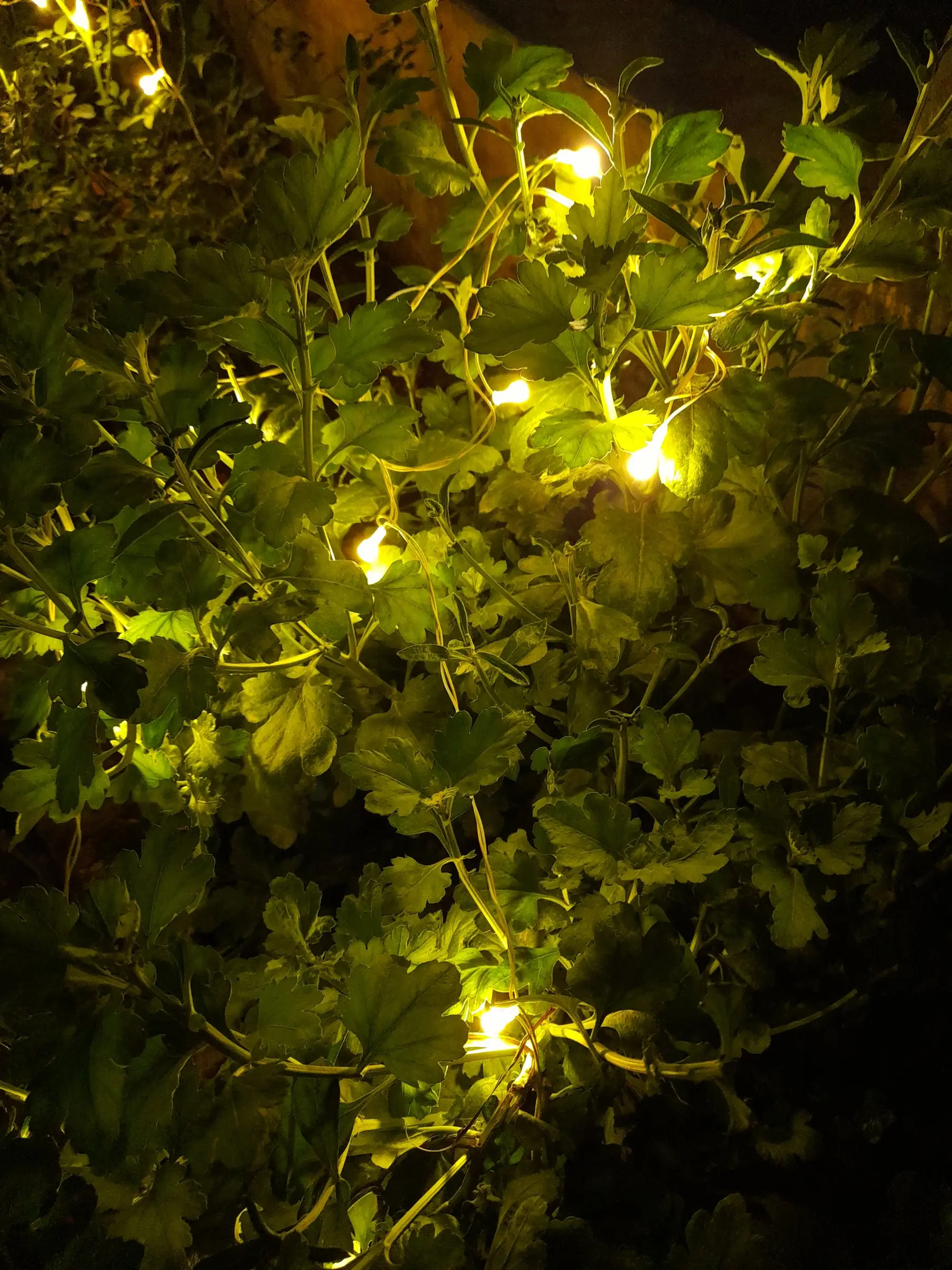
A run of string lights over a patio, pergola, or fence line does more for how a backyard feels in the evening than almost anything else on this list, for close to the lowest cost and effort. The mistake is stringing them somewhere decorative instead of somewhere people sit — lights over an empty side yard get noticed once and then ignored, while the same lights over a dining table get used every week.
Buy warm white, every time
Warm white — 2700 to 3000K on the packaging, the same color as an old incandescent bulb — is what makes string lights and path lights look inviting against plants, wood, and brick. Cool white or daylight bulbs (4000K and up) look like a construction site once it’s dark, and it’s the single most common reason an otherwise well-planned lighting setup feels wrong.
Light the path, not the whole yard
Low, downward-facing path lights along a walkway or driveway edge solve an actual problem — seeing the ground at night — while adding almost as much ambiance as decorative lighting. Aim for 100–200 lumens per fixture, spaced every 6–8 feet; more than that produces glare and washes out everything else nearby.
Solar path lights have improved enough in the last few years to be a genuinely good default, provided the run gets real sun during the day. A shaded path under trees is the one case where a low-voltage wired kit still reliably beats solar.
Uplight one thing, not everything
Aiming a single well-placed uplight at one specimen tree, a textured wall, or an architectural feature creates a focal point after dark the same way one real focal point works during the day. Uplighting every shrub in the bed is the opposite instinct — it looks theatrical, draws power to every fixture, and turns into one more system to maintain for a much smaller effect than picking one thing and lighting it well.
Low-voltage still needs a transformer, done right
Low-voltage wired systems (path lights, uplighting, deck-rail LEDs) run on a transformer that steps household power down to 12V, and the transformer needs to be rated for the total wattage of everything connected to it — adding fixtures later without checking that total is the most common reason a system starts flickering or fails outright a season or two in.
Solar, plug-in, or wired — match it to the spot
| Power source | Upside | Downside | Best fit |
|---|---|---|---|
| Solar | No wiring, no running cost | Needs real daily sun; weaker in winter | Beds, borders, sunny paths |
| Plug-in | Cheap, flexible, easy to move | Needs an outdoor outlet and a cord run | String lights, seasonal setups |
| Low-voltage wired | Reliable, works in shade, dimmable | Upfront install, transformer sizing | Path lighting, uplighting, permanent setups |
Most backyards end up using more than one: solar for a border that gets full sun, a low-voltage wired run for the path that doesn’t, and plug-in string lights for the patio because moving them for a party is easier than moving anything hardwired.
Bring in what isn't rated for winter
Most string lights and solar fixtures are rated for outdoor use but not for the harshest stretch of a cold winter — check the fixture’s rating before leaving it out year-round, and bring in anything that isn’t explicitly rated for freezing temperatures.
Where this pays off fastest
If a backyard has no lighting at all yet, string lights over the main seating area come first — they are the cheapest way to make the space usable after dark. Path lighting comes second, mostly for safety. Uplighting and deck-rail LEDs are worth adding once the first two are in place and the spot still feels like it’s missing something specific, not before.
Common questions
What is the most effective type of outdoor garden lighting?
How many lumens do I need for backyard lighting?
What color temperature is best for outdoor lighting?
Are solar garden lights actually worth it?
Backyard Weekly
Know what to plant, week by week
Free planting calendar. Join the weekly email for seasonal jobs, fixes for what is going wrong, and gear worth buying.
Set MONETIZATION.email.endpoint in src/config/site.ts to enable this form.
By subscribing you agree to our privacy policy. Grow In Backyard will never sell your address.
Keep reading
Garden Decor Ideas That Don't Look Cluttered in a Year
Most backyard decor gets added piece by piece until the yard looks like a garden center. A short list of what earns its place, and what to skip.
Front Yard Landscaping Ideas That Last Past Year Three
Most front yard makeovers look best the week they are finished. These nine ideas are chosen for what they look like after three seasons of real maintenance.
How to Restring a Wind Chime (10 Minutes, No Special Tools)
A wind chime with a snapped string is a five-dollar fix, not a reason to replace it. The order to rethread the tubes in, and the knot that actually holds.
How to Build a Retaining Wall That Does Not Lean
Base depth, gravel backfill, and drainage decide whether a wall lasts thirty years or bulges in three. The full build, and when to call an engineer.